
Producer, David Cuoio and Research Scientist, Matthew Alford contributed to this report.
ON THE BOAT
The Kilo Moana is an impressive 225-foot, twin-hulled ship built for oceanographic research. This morning, Photographer, Tom Hadzor and the University of Washington scientists, expedition leader Matthew Alford and his associate, John Mickett, are hard at work. They are assembling the instruments they plan to send to the bottom of the Samoan Passage, where the ocean floor bottoms out at about 5,500 meters.
The research team’s first goal was to map out the western portion of the region. This is done by sending a fan of sound beams beneath the ship and listening for the reflection of that sound off the bottom. The travel time at each gives a “swath” of the seafloor depth that is mapped out as the research team steams along. The previous bathymetry (seafloor topography) measurements were a patchwork of satellite gravity and an early version of this new mapping system from 20 years ago. So far, a valley and a ridge in the old measurements disappeared – artifacts of the old data. These are very important as they govern the path the flow takes as it makes its way through the region.
Research Scientist Matthew Alford is also keeping a blog of the journey. You can check it out here.
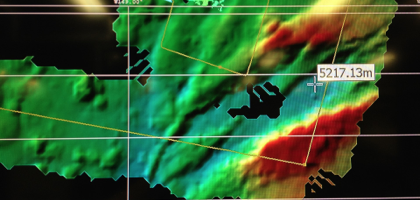
Mapping the Sea Floor. Redder colors mean shallower; bluer means deeper. Courtesy University of Washington.


Magnificent site. A lot of useful info here. I am sending it to several friends ans also sharing in delicious. And obviously, thanks for your effort!
you have a great blog here! would you like to make some invite posts on my blog?
This site is my breathing in, rattling good style and design and perfect articles.
Can I just say what a relief to find somebody who truly knows what theyre talking about on the internet. You definitely know how to deliver a difficulty to gentle and make it important. More individuals need to read this and understand this side of the story. I cant consider youre not more fashionable since you definitely have the gift.
After all, what a great site and informative posts, I will upload inbound link – bookmark this web site? Regards, Reader.
I appreciate, cause I found exactly what I was looking for. You have ended my 4 day long hunt! God Bless you man. Have a nice day. Bye
Very fantastic information can be found on weblog.
Enjoyed reading through this, very good stuff, appreciate it. “What the United States does best is to understand itself. What it does worst is understand others.” by Carlos Fuentes.
hi!,I really like your writing very much! percentage we keep in touch extra approximately your post on AOL? I require an expert on this house to unravel my problem. May be that is you! Looking ahead to see you.
excellent post.Ne’er knew this, regards for letting me know.
There is noticeably a bundle to know about this. I assume you made certain nice points in features also.
Hello there, just became alert to your blog through Google, and found that it’s truly informative. I am gonna watch out for brussels. I will appreciate if you continue this in future. A lot of people will be benefited from your writing. Cheers!
I just couldn’t depart your website prior to suggesting that I actually enjoyed the standard information a person provide for your visitors? Is going to be back often in order to check up on new posts
whoah this blog is magnificent i like studying your articles. Keep up the great work! You know, a lot of people are hunting round for this information, you could aid them greatly.
It?¦s actually a nice and useful piece of information. I?¦m happy that you just shared this useful information with us. Please keep us up to date like this. Thanks for sharing.
What i do not understood is in truth how you’re no longer actually much more well-liked than you might be now. You are so intelligent. You know thus considerably in terms of this matter, produced me individually believe it from numerous varied angles. Its like women and men don’t seem to be involved until it’s something to do with Lady gaga! Your individual stuffs excellent. All the time deal with it up!
It’s hard to find educated individuals on this matter, but you sound like you realize what you’re speaking about! Thanks
Very interesting details you have noted, regards for posting. “The best time to do a thing is when it can be done.” by William Pickens.
I like this post, enjoyed this one regards for putting up.
Hi, i believe that i noticed you visited my web site so i came to “go back the choose”.I’m attempting to to find issues to enhance my website!I assume its ok to use some of your ideas!!
Hello.This article was really remarkable, particularly since I was looking for thoughts on this issue last Friday.
Hi there! Do you use Twitter? I’d like to follow you if that would be okay. I’m definitely enjoying your blog and look forward to new updates.
You got a very fantastic website, Gladiola I found it through yahoo.
Very interesting details you have noted, regards for posting. “You can tell the ideas of a nation by it’s advertisements.” by Douglas South Wind.
Hi there very nice blog!! Guy .. Beautiful .. Wonderful .. I’ll bookmark your website and take the feeds also…I’m glad to seek out numerous helpful information here in the publish, we want work out more strategies in this regard, thanks for sharing. . . . . .
so much excellent info on here, : D.
As soon as I observed this website I went on reddit to share some of the love with them.
naturally like your website but you need to check the spelling on quite a few of your posts. Many of them are rife with spelling issues and I in finding it very bothersome to tell the reality nevertheless I’ll surely come again again.
Perfectly composed content material, thank you for entropy. “Necessity is the mother of taking chances.” by Mark Twain.
I like the valuable info you provide in your articles. I will bookmark your weblog and check again here frequently. I’m quite sure I’ll learn a lot of new stuff right here! Good luck for the next!
I’m not sure exactly why but this blog is loading incredibly slow for me. Is anyone else having this issue or is it a problem on my end? I’ll check back later on and see if the problem still exists.
Very interesting points you have observed, thanks for posting. “The judge is condemned when the criminal is absolved.” by Publilius Syrus.
Some truly nice stuff on this site, I enjoy it.
you’ve gotten an excellent blog right here! would you like to make some invite posts on my weblog?
Great amazing issues here. I am very glad to see your article. Thanks so much and i am having a look ahead to touch you. Will you please drop me a mail?
I am curious to find out what blog platform you have been utilizing? I’m experiencing some small security issues with my latest website and I’d like to find something more safe. Do you have any solutions?
Hello my friend! I want to say that this article is awesome, great written and come with approximately all significant infos. I would like to see more posts like this .
Its good as your other posts : D, thanks for posting.
Whats up! I simply would like to give a huge thumbs up for the nice info you have got right here on this post. I shall be coming back to your weblog for more soon.
Youre so cool! I dont suppose Ive learn something like this before. So good to search out any individual with some unique ideas on this subject. realy thanks for beginning this up. this web site is something that’s needed on the net, someone with slightly originality. useful job for bringing something new to the internet!
I am not rattling superb with English but I get hold this real easy to translate.
Please let me know if you’re looking for a article author for your site. You have some really good articles and I believe I would be a good asset. If you ever want to take some of the load off, I’d love to write some material for your blog in exchange for a link back to mine. Please blast me an email if interested. Regards!
Hiya, I am really glad I’ve found this information. Nowadays bloggers publish just about gossips and internet and this is really frustrating. A good site with interesting content, that is what I need. Thank you for keeping this web-site, I will be visiting it. Do you do newsletters? Can’t find it.
I got what you intend,saved to favorites, very decent web site.
I found your blog website on google and check a number of of your early posts. Continue to maintain up the very good operate. I just extra up your RSS feed to my MSN Information Reader. In search of ahead to reading more from you later on!…
Simply a smiling visitor here to share the love (:, btw outstanding style and design. “Reading well is one of the great pleasures that solitude can afford you.” by Harold Bloom.
Very interesting details you have remarked, thanks for posting.
Woh I enjoy your content, saved to fav! .
Thanks for the article, can I set it up so I receive an email every time you write a new update?
Keep up the wonderful work, I read few blog posts on this internet site and I believe that your web blog is very interesting and has got sets of superb info .
Keep working ,terrific job!
Wow! This blog looks just like my old one! It’s on a completely different topic but it has pretty much the same layout and design. Excellent choice of colors!
You have observed very interesting details! ps decent site.
whoah this blog is wonderful i love reading your articles. Keep up the great work! You know, a lot of people are searching around for this information, you can help them greatly.
I like this site because so much useful material on here : D.
I think other website proprietors should take this site as an model, very clean and excellent user genial style and design, as well as the content. You are an expert in this topic!
Thankyou for helping out, great info .
I always was interested in this topic and still am, thanks for posting.
I am not really wonderful with English but I get hold this very easy to read .
I have been checking out a few of your stories and i can state pretty clever stuff. I will make sure to bookmark your site.
Perfect piece of work you have done, this internet site is really cool with superb information.
Can I just say what a relief to find someone who actually knows what theyre talking about on the internet. You definitely know how to bring an issue to light and make it important. More people need to read this and understand this side of the story. I cant believe youre not more popular because you definitely have the gift.
Those are yours alright! . We at least need to get these people stealing images to start blogging! They probably just did a image search and grabbed them. They look good though!
I just like the helpful information you provide in your articles. I will bookmark your blog and take a look at once more right here regularly. I’m rather certain I’ll learn lots of new stuff proper here! Good luck for the following!
I am continuously browsing online for articles that can help me. Thanks!
It?¦s in reality a nice and helpful piece of info. I am satisfied that you shared this useful information with us. Please keep us informed like this. Thanks for sharing.
This web site is mostly a walk-by for all the info you wanted about this and didn’t know who to ask. Glimpse here, and you’ll undoubtedly discover it.
Hey, I think your website might be having browser compatibility issues. When I look at your website in Safari, it looks fine but when opening in Internet Explorer, it has some overlapping. I just wanted to give you a quick heads up! Other then that, excellent blog!
But a smiling visitant here to share the love (:, btw outstanding design and style. “Treat the other man’s faith gently it is all he has to believe with.” by Athenus.
Great awesome issues here. I?¦m very glad to peer your article. Thank you so much and i am having a look forward to touch you. Will you kindly drop me a mail?
Some truly rattling work on behalf of the owner of this web site, dead great articles.
I don’t even know how I ended up here, but I thought this post was great. I don’t know who you are but certainly you’re going to a famous blogger if you are not already 😉 Cheers!
I’ll right away grab your rss as I can’t find your email subscription link or e-newsletter service. Do you’ve any? Please let me know in order that I could subscribe. Thanks.
You can definitely see your expertise within the paintings you write. The world hopes for even more passionate writers such as you who are not afraid to say how they believe. At all times follow your heart.
Valuable info. Lucky me I found your website by accident, and I’m shocked why this accident did not happened earlier! I bookmarked it.
Really instructive and fantastic anatomical structure of written content, now that’s user friendly (:.
Just want to say your article is as astonishing. The clarity in your post is just great and i could assume you’re an expert on this subject. Fine with your permission allow me to grab your feed to keep up to date with forthcoming post. Thanks a million and please keep up the enjoyable work.
Nice blog here! Additionally your website rather a lot up fast! What web host are you using? Can I am getting your affiliate hyperlink in your host? I want my website loaded up as quickly as yours lol
I’ve learn some good stuff here. Certainly price bookmarking for revisiting. I surprise how so much attempt you put to make the sort of fantastic informative site.
Thanks a bunch for sharing this with all people you actually realize what you’re speaking about! Bookmarked. Kindly also consult with my site =). We could have a hyperlink exchange agreement between us!
Hi, I think your website might be having browser compatibility issues. When I look at your website in Firefox, it looks fine but when opening in Internet Explorer, it has some overlapping. I just wanted to give you a quick heads up! Other then that, terrific blog!
You really make it appear really easy together with your presentation but I in finding this topic to be actually something which I believe I’d never understand. It kind of feels too complex and extremely huge for me. I am looking ahead for your next put up, I¦ll try to get the hold of it!
Woah! I’m really enjoying the template/theme of this blog. It’s simple, yet effective. A lot of times it’s tough to get that “perfect balance” between usability and visual appearance. I must say you’ve done a excellent job with this. Also, the blog loads super quick for me on Firefox. Superb Blog!
Awesome blog! Is your theme custom made or did you download it from somewhere? A theme like yours with a few simple adjustements would really make my blog shine. Please let me know where you got your theme. Bless you
I used to be very happy to search out this internet-site.I needed to thanks to your time for this glorious read!! I undoubtedly enjoying every little bit of it and I’ve you bookmarked to take a look at new stuff you blog post.
WONDERFUL Post.thanks for share..extra wait .. …
You should take part in a contest for one of the best blogs on the web. I will recommend this site!
You really make it appear really easy together with your presentation but I in finding this matter to be actually something that I think I would by no means understand. It sort of feels too complicated and extremely extensive for me. I’m looking forward in your next put up, I will attempt to get the hang of it!
I truly appreciate this post. I¦ve been looking all over for this! Thank goodness I found it on Bing. You have made my day! Thank you again
I enjoy you because of all your valuable effort on this site. Kate enjoys participating in internet research and it’s simple to grasp why. We all know all relating to the lively medium you produce vital tips through the web site and as well encourage participation from some others on this subject and my daughter is undoubtedly discovering a lot of things. Take advantage of the remaining portion of the year. You are doing a brilliant job.
Your place is valueble for me. Thanks!…
of course like your website however you have to take a look at the spelling on several of your posts. A number of them are rife with spelling issues and I to find it very bothersome to tell the truth on the other hand I will surely come back again.
Glad to be one of many visitors on this amazing internet site : D.
You have mentioned very interesting details ! ps decent site.
Very good information can be found on site.
I do believe all of the ideas you have offered in your post. They are really convincing and will certainly work. Nonetheless, the posts are very short for starters. May you please prolong them a bit from subsequent time? Thanks for the post.
I like this post, enjoyed this one thanks for posting.
Magnificent goods from you, man. I’ve understand your stuff previous to and you’re just extremely wonderful. I actually like what you have acquired here, certainly like what you’re stating and the way in which you say it. You make it enjoyable and you still take care of to keep it smart. I can’t wait to read far more from you. This is actually a wonderful site.
Great blog! Is your theme custom made or did you download it from somewhere? A theme like yours with a few simple tweeks would really make my blog stand out. Please let me know where you got your theme. Thanks a lot
Thanks – Enjoyed this article, is there any way I can get an alert email when there is a fresh post?
Hey there would you mind letting me know which webhost you’re working with? I’ve loaded your blog in 3 different internet browsers and I must say this blog loads a lot quicker then most. Can you recommend a good internet hosting provider at a reasonable price? Thanks a lot, I appreciate it!
Great weblog right here! Additionally your site quite a bit up fast! What web host are you using? Can I get your associate hyperlink to your host? I desire my web site loaded up as fast as yours lol
Some truly interesting points you have written.Aided me a lot, just what I was looking for : D.
Great wordpress blog here.. It’s hard to find quality writing like yours these days. I really appreciate people like you! take care
Heya this is somewhat of off topic but I was wanting to know if blogs use WYSIWYG editors or if you have to manually code with HTML. I’m starting a blog soon but have no coding skills so I wanted to get guidance from someone with experience. Any help would be enormously appreciated!
I used to be very happy to seek out this net-site.I wished to thanks for your time for this wonderful learn!! I definitely enjoying every little little bit of it and I have you bookmarked to check out new stuff you blog post.
Hey very cool web site!! Guy .. Beautiful .. Superb .. I’ll bookmark your site and take the feeds also?KI am satisfied to seek out numerous useful info here in the put up, we need work out extra strategies in this regard, thanks for sharing. . . . . .
With havin so much content and articles do you ever run into any problems of plagorism or copyright violation? My blog has a lot of exclusive content I’ve either written myself or outsourced but it seems a lot of it is popping it up all over the web without my authorization. Do you know any techniques to help protect against content from being ripped off? I’d definitely appreciate it.
Merely a smiling visitor here to share the love (:, btw great design and style.
Someone necessarily lend a hand to make severely posts I would state. This is the first time I frequented your website page and thus far? I surprised with the analysis you made to make this actual post incredible. Wonderful job!
Excellent post. I was checking continuously this blog and I am impressed! Extremely useful information particularly the last part 🙂 I care for such info much. I was looking for this certain information for a very long time. Thank you and best of luck.
I and my guys came analyzing the good solutions from your web blog and unexpectedly I got an awful suspicion I never thanked the blog owner for them. Most of the ladies were definitely certainly excited to study them and have in effect seriously been taking advantage of those things. Many thanks for being indeed considerate and for selecting certain superb themes most people are really needing to discover. My personal sincere apologies for not saying thanks to sooner.
Hey are using WordPress for your blog platform? I’m new to the blog world but I’m trying to get started and set up my own. Do you need any coding expertise to make your own blog? Any help would be really appreciated!
I would like to thnkx for the efforts you have put in writing this blog. I am hoping the same high-grade blog post from you in the upcoming as well. In fact your creative writing abilities has inspired me to get my own blog now. Really the blogging is spreading its wings quickly. Your write up is a good example of it.
I simply couldn’t depart your website prior to suggesting that I actually loved the standard info a person provide for your guests? Is going to be again regularly in order to inspect new posts
I think other website proprietors should take this web site as an example , very clean and good user pleasant design.
Hey There. I found your blog the use of msn. That is an extremely smartly written article. I’ll make sure to bookmark it and come back to learn more of your helpful info. Thank you for the post. I will definitely return.
I truly appreciate this post. I have been looking everywhere for this! Thank goodness I found it on Bing. You have made my day! Thank you again
Thank you, I’ve recently been searching for info approximately this subject for a while and yours is the best I have came upon so far. But, what in regards to the conclusion? Are you positive in regards to the source?
I got what you mean , thankyou for putting up.Woh I am delighted to find this website through google. “If one does not know to which port one is sailing, no wind is favorable.” by Seneca.
This is the right weblog for anybody who wants to search out out about this topic. You notice so much its nearly arduous to argue with you (not that I really would need…HaHa). You undoubtedly put a new spin on a subject thats been written about for years. Nice stuff, just nice!
Saved as a favorite, I really like your blog!
I believe other website proprietors should take this web site as an model, very clean and good user genial style and design.
Hi there, simply become aware of your weblog thru Google, and found that it is truly informative. I am gonna be careful for brussels. I will be grateful for those who continue this in future. Many folks will be benefited out of your writing. Cheers!
There are actually numerous details like that to take into consideration. That could be a great point to deliver up. I offer the ideas above as common inspiration however clearly there are questions just like the one you carry up the place a very powerful thing might be working in trustworthy good faith. I don?t know if greatest practices have emerged round things like that, but I am certain that your job is clearly recognized as a good game. Each boys and girls feel the impression of only a second’s pleasure, for the remainder of their lives.
I really appreciate this post. I have been looking all over for this! Thank goodness I found it on Bing. You have made my day! Thx again
Hmm is anyone else experiencing problems with the images on this blog loading? I’m trying to figure out if its a problem on my end or if it’s the blog. Any suggestions would be greatly appreciated.
I think this is among the so much important information for me. And i’m satisfied reading your article. But want to remark on some general things, The website style is great, the articles is in point of fact nice : D. Just right process, cheers
Hello just wanted to give you a quick heads up and let you know a few of the pictures aren’t loading correctly. I’m not sure why but I think its a linking issue. I’ve tried it in two different browsers and both show the same outcome.
This is really interesting, You are a very skilled blogger. I’ve joined your rss feed and look forward to seeking more of your excellent post. Also, I’ve shared your site in my social networks!
This web site is really a walk-through for all of the info you wanted about this and didn’t know who to ask. Glimpse here, and you’ll definitely discover it.
It?¦s actually a great and helpful piece of info. I?¦m happy that you simply shared this helpful information with us. Please keep us informed like this. Thank you for sharing.
It’s a pity you don’t have a donate button! I’d definitely donate to this excellent blog! I guess for now i’ll settle for bookmarking and adding your RSS feed to my Google account. I look forward to brand new updates and will talk about this blog with my Facebook group. Talk soon!
I feel this is one of the most important info for me. And i’m happy studying your article. However should remark on few basic issues, The site taste is great, the articles is truly excellent : D. Good process, cheers
This is the right blog for anyone who wants to find out about this topic. You realize so much its almost hard to argue with you (not that I actually would want…HaHa). You definitely put a new spin on a topic thats been written about for years. Great stuff, just great!
I appreciate, cause I found exactly what I was looking for. You’ve ended my four day long hunt! God Bless you man. Have a great day. Bye
I appreciate, cause I found exactly what I was looking for. You have ended my four day long hunt! God Bless you man. Have a nice day. Bye
Saved as a favorite, I really like your blog!
Hello! I could have sworn I’ve been to this blog before but after browsing through some of the post I realized it’s new to me. Anyways, I’m definitely happy I found it and I’ll be book-marking and checking back frequently!
I will right away grab your rss feed as I can not to find your e-mail subscription hyperlink or newsletter service. Do you have any? Please allow me know so that I may just subscribe. Thanks.
Definitely believe that that you stated. Your favorite justification appeared to be on the web the easiest factor to take into account of. I say to you, I certainly get irked at the same time as people consider concerns that they plainly don’t know about. You controlled to hit the nail upon the highest and also defined out the entire thing without having side-effects , people could take a signal. Will likely be again to get more. Thanks
What’s Happening i’m new to this, I stumbled upon this I’ve found It positively useful and it has helped me out loads. I hope to contribute & assist other users like its aided me. Great job.
I am always thought about this, appreciate it for putting up.
I like the helpful info you provide in your articles. I will bookmark your blog and check again here regularly. I am quite sure I’ll learn many new stuff right here! Best of luck for the next!
This blog is definitely rather handy since I’m at the moment creating an internet floral website – although I am only starting out therefore it’s really fairly small, nothing like this site. Can link to a few of the posts here as they are quite. Thanks much. Zoey Olsen
Hello.This article was really motivating, especially because I was searching for thoughts on this topic last couple of days.
Nice post. I was checking continuously this weblog and I’m inspired! Very helpful information specially the closing part 🙂 I maintain such information much. I used to be seeking this certain info for a long time. Thanks and best of luck.
Hi! I could have sworn I’ve been to this site before but after browsing through some of the post I realized it’s new to me. Nonetheless, I’m definitely glad I found it and I’ll be bookmarking and checking back often!
I really enjoy reading through on this internet site, it contains excellent content. “Beware lest in your anxiety to avoid war you obtain a master.” by Demosthenes.
Appreciate it for this post, I am a big fan of this website would like to go along updated.
Really enjoyed this article, is there any way I can receive an email when you write a fresh post?
What i do not understood is if truth be told how you are now not actually much more smartly-appreciated than you may be right now. You’re very intelligent. You realize therefore considerably in relation to this matter, produced me for my part consider it from numerous numerous angles. Its like women and men don’t seem to be interested unless it’s one thing to accomplish with Woman gaga! Your personal stuffs outstanding. All the time deal with it up!
It’s a pity you don’t have a donate button! I’d without a doubt donate to this brilliant blog! I suppose for now i’ll settle for book-marking and adding your RSS feed to my Google account. I look forward to new updates and will share this blog with my Facebook group. Chat soon!
I was just looking for this information for some time. After 6 hours of continuous Googleing, at last I got it in your website. I wonder what is the lack of Google strategy that do not rank this kind of informative web sites in top of the list. Usually the top sites are full of garbage.
I dugg some of you post as I cogitated they were extremely helpful very beneficial
of course like your web-site but you need to take a look at the spelling on quite a few of your posts. Several of them are rife with spelling issues and I find it very troublesome to inform the truth however I will surely come back again.
I am not very excellent with English but I line up this rattling leisurely to translate.
I don’t even know how I ended up here, but I thought this post was good. I don’t know who you are but certainly you’re going to a famous blogger if you aren’t already 😉 Cheers!
You are my inspiration, I possess few web logs and infrequently run out from post :). “Fiat justitia et pereat mundus.Let justice be done, though the world perish.” by Ferdinand I.
I really enjoy looking through on this website, it contains good articles. “Beware lest in your anxiety to avoid war you obtain a master.” by Demosthenes.
After all, what a great site and informative posts, I will upload inbound link – bookmark this web site? Regards, Reader.
Thank you for sharing excellent informations. Your website is so cool. I am impressed by the details that you have on this blog. It reveals how nicely you perceive this subject. Bookmarked this website page, will come back for extra articles. You, my friend, ROCK! I found simply the info I already searched all over the place and simply could not come across. What a perfect site.
Very interesting points you have remarked, thankyou for posting.
Do you have a spam issue on this website; I also am a blogger, and I was wondering your situation; many of us have developed some nice procedures and we are looking to trade techniques with other folks, be sure to shoot me an email if interested.
I think this web site has got some really great information for everyone. “Drunkenness is temporary suicide.” by Bertrand Russell.
Hi my family member! I wish to say that this post is awesome, great written and include almost all vital infos. I?¦d like to see extra posts like this .
I am so happy to read this. This is the type of manual that needs to be given and not the accidental misinformation that is at the other blogs. Appreciate your sharing this best doc.
I am not sure where you’re getting your information, but great topic. I needs to spend some time learning much more or understanding more. Thanks for magnificent information I was looking for this info for my mission.
Great write-up, I?¦m normal visitor of one?¦s blog, maintain up the nice operate, and It’s going to be a regular visitor for a long time.
You need to participate in a contest for among the best blogs on the web. I will suggest this site!
Nice read, I just passed this onto a friend who was doing some research on that. And he actually bought me lunch since I found it for him smile Therefore let me rephrase that: Thank you for lunch!
Hi, i feel that i noticed you visited my website thus i got here to “go back the favor”.I am attempting to find things to improve my website!I guess its ok to use a few of your ideas!!
Hi there! Do you know if they make any plugins to safeguard against hackers? I’m kinda paranoid about losing everything I’ve worked hard on. Any suggestions?
Very interesting details you have noted, thanks for posting.
Hi, Neat post. There’s a problem with your web site in internet explorer, would check this… IE still is the market leader and a big portion of people will miss your fantastic writing due to this problem.
Lovely website! I am loving it!! Will be back later to read some more. I am bookmarking your feeds also
Hello. impressive job. I did not expect this. This is a impressive story. Thanks!
I carry on listening to the rumor lecture about getting free online grant applications so I have been looking around for the most excellent site to get one. Could you advise me please, where could i get some?
I was wondering if you ever thought of changing the layout of your site? Its very well written; I love what youve got to say. But maybe you could a little more in the way of content so people could connect with it better. Youve got an awful lot of text for only having one or 2 images. Maybe you could space it out better?
I am continuously browsing online for articles that can facilitate me. Thank you!
I am curious to find out what blog system you’re utilizing? I’m having some minor security problems with my latest blog and I would like to find something more safeguarded. Do you have any solutions?
Write more, thats all I have to say. Literally, it seems as though you relied on the video to make your point. You definitely know what youre talking about, why waste your intelligence on just posting videos to your blog when you could be giving us something informative to read?
Throughout this great design of things you’ll receive a B+ for effort and hard work. Where you lost me personally ended up being in the particulars. You know, as the maxim goes, details make or break the argument.. And that could not be more true right here. Having said that, permit me inform you what did do the job. Your authoring is certainly incredibly persuasive which is possibly the reason why I am taking the effort in order to opine. I do not really make it a regular habit of doing that. Next, although I can certainly see a jumps in logic you make, I am not sure of exactly how you appear to connect your details which in turn help to make the final result. For the moment I will yield to your position but hope in the future you actually connect your dots better.
Hello very cool website!! Guy .. Beautiful .. Superb .. I’ll bookmark your website and take the feeds also?KI’m satisfied to find so many useful info here within the publish, we want work out more strategies in this regard, thanks for sharing. . . . . .
I’ve recently started a web site, the information you provide on this website has helped me tremendously. Thank you for all of your time & work. “The only winner in the War of 1812 was Tchaikovsky” by Solomon Short.
I like this post, enjoyed this one thanks for putting up. “‘I have done my best.’ That is about all the philosophy of living one needs.” by Lin Yutang.
Magnificent site. Lots of helpful info here. I?¦m sending it to several pals ans additionally sharing in delicious. And certainly, thanks on your effort!
Thanks for your entire effort on this website. My niece take interest in working on research and it is simple to grasp why. Almost all know all about the powerful medium you create informative tactics through the web site and improve contribution from people on the issue and our favorite princess has always been learning so much. Have fun with the remaining portion of the year. You have been doing a good job.
Wonderful web site. Lots of helpful info here. I am sending it to several pals ans additionally sharing in delicious. And certainly, thanks in your effort!
I was suggested this website by means of my cousin. I’m now not sure whether or not this publish is written by means of him as nobody else recognize such distinctive about my difficulty. You are wonderful! Thanks!
I don’t unremarkably comment but I gotta state appreciate it for the post on this great one : D.
I believe you have noted some very interesting details, appreciate it for the post.
Some truly wonderful information, Sword lily I discovered this. “What’s a man’s age He must hurry more, that’s all Cram in a day, what his youth took a year to hold.” by Robert Browning.
I don’t usually comment but I gotta tell appreciate it for the post on this great one : D.
I simply wished to thank you very much once more. I am not sure the things that I would have achieved without the type of information provided by you relating to that concern. It seemed to be the scary setting in my position, nevertheless understanding this expert strategy you solved it took me to jump with contentment. I will be grateful for your service as well as hope that you recognize what an amazing job that you are providing educating the rest thru your websites. I am certain you have never got to know all of us.
Great blog here! Also your web site lots up very fast! What web host are you the usage of? Can I am getting your associate link in your host? I want my web site loaded up as quickly as yours lol
Thank you for the sensible critique. Me & my neighbor were just preparing to do some research about this. We got a grab a book from our area library but I think I learned more from this post. I am very glad to see such wonderful information being shared freely out there.
Have you ever thought about including a little bit more than just your articles? I mean, what you say is fundamental and everything. However think of if you added some great visuals or videos to give your posts more, “pop”! Your content is excellent but with pics and clips, this website could certainly be one of the best in its niche. Fantastic blog!
Hi there! This post couldn’t be written any better! Reading through this post reminds me of my previous room mate! He always kept talking about this. I will forward this article to him. Pretty sure he will have a good read. Thank you for sharing!
Some genuinely great content on this site, regards for contribution.
You actually make it appear really easy along with your presentation but I find this topic to be actually one thing that I think I’d never understand. It sort of feels too complicated and extremely broad for me. I’m taking a look ahead on your subsequent post, I’ll attempt to get the cling of it!
I got what you intend, regards for posting.Woh I am happy to find this website through google.
Today, I went to the beach with my kids. I found a sea shell and gave it to my 4 year old daughter and said “You can hear the ocean if you put this to your ear.” She put the shell to her ear and screamed. There was a hermit crab inside and it pinched her ear. She never wants to go back! LoL I know this is completely off topic but I had to tell someone!
Good post. I learn one thing more difficult on totally different blogs everyday. It’s going to at all times be stimulating to learn content material from other writers and follow a bit of something from their store. I’d desire to make use of some with the content material on my weblog whether you don’t mind. Natually I’ll provide you with a link in your web blog. Thanks for sharing.
Enjoyed reading through this, very good stuff, thanks.
Woah! I’m really digging the template/theme of this blog. It’s simple, yet effective. A lot of times it’s very difficult to get that “perfect balance” between usability and appearance. I must say you’ve done a fantastic job with this. Also, the blog loads very quick for me on Opera. Superb Blog!
I loved as much as you’ll receive carried out right here. The sketch is tasteful, your authored material stylish. nonetheless, you command get bought an nervousness over that you wish be delivering the following. unwell unquestionably come more formerly again as exactly the same nearly a lot often inside case you shield this increase.
Hello! Someone in my Myspace group shared this website with us so I came to check it out. I’m definitely loving the information. I’m bookmarking and will be tweeting this to my followers! Outstanding blog and amazing design and style.
Pretty portion of content. I simply stumbled upon your website and in accession capital to assert that I acquire actually enjoyed account your blog posts. Any way I’ll be subscribing on your feeds and even I fulfillment you get admission to constantly fast.
Thank you a lot for sharing this with all of us you actually recognise what you are talking approximately! Bookmarked. Kindly also visit my web site =). We will have a link alternate contract among us!
Very interesting points you have remarked, thankyou for posting.
Fascinating blog! Is your theme custom made or did you download it from somewhere? A design like yours with a few simple tweeks would really make my blog stand out. Please let me know where you got your design. Cheers
Pretty! This was a really wonderful post. Thank you for your provided information.
I¦ve been exploring for a bit for any high quality articles or blog posts on this sort of house . Exploring in Yahoo I ultimately stumbled upon this web site. Reading this information So i am glad to express that I’ve an incredibly good uncanny feeling I found out just what I needed. I so much indisputably will make certain to don¦t put out of your mind this website and provides it a look on a constant basis.
I will immediately clutch your rss as I can not to find your e-mail subscription hyperlink or newsletter service. Do you have any? Please allow me understand in order that I may subscribe. Thanks.
Very interesting information!Perfect just what I was looking for!
Hey very nice website!! Guy .. Beautiful .. Amazing .. I’ll bookmark your blog and take the feeds also?KI am glad to search out a lot of helpful info here in the publish, we want work out more techniques in this regard, thanks for sharing. . . . . .
I love your writing style truly enjoying this website .
Very interesting topic, regards for posting.
Hello, Neat post. There is a problem along with your web site in internet explorer, would check this… IE nonetheless is the marketplace leader and a good portion of other folks will miss your magnificent writing due to this problem.
It’s a pity you don’t have a donate button! I’d definitely donate to this outstanding blog! I suppose for now i’ll settle for book-marking and adding your RSS feed to my Google account. I look forward to fresh updates and will share this blog with my Facebook group. Talk soon!
F*ckin’ remarkable issues here. I’m very satisfied to see your article. Thank you so much and i am looking ahead to touch you. Will you please drop me a e-mail?
I like your writing style truly loving this internet site.
Attractive portion of content. I simply stumbled upon your weblog and in accession capital to assert that I acquire actually enjoyed account your blog posts. Any way I will be subscribing for your feeds and even I achievement you get entry to consistently fast.
Hey there just wanted to give you a quick heads up. The text in your content seem to be running off the screen in Safari. I’m not sure if this is a formatting issue or something to do with browser compatibility but I figured I’d post to let you know. The design look great though! Hope you get the problem fixed soon. Cheers
I love your blog.. very nice colors & theme. Did you create this website yourself? Plz reply back as I’m looking to create my own blog and would like to know wheere u got this from. thanks
Can I just say what a relief to find someone who actually knows what theyre talking about on the internet. You definitely know how to bring an issue to light and make it important. More people need to read this and understand this side of the story. I cant believe youre not more popular because you definitely have the gift.
Thanks a lot for sharing this with all of us you really know what you’re talking about! Bookmarked. Please also visit my site =). We could have a link exchange agreement between us!
I really like your writing style, good information, thanks for putting up :D. “Nothing sets a person so much out of the devil’s reach as humility.” by Johathan Edwards.
Thanks for another fantastic article. Where else could anybody get that type of information in such a perfect way of writing? I have a presentation next week, and I’m on the look for such info.
But wanna state that this is very beneficial, Thanks for taking your time to write this.
Hello very cool blog!! Guy .. Beautiful .. Superb .. I’ll bookmark your site and take the feeds also…I am glad to find so many helpful information right here in the submit, we’d like work out extra techniques on this regard, thank you for sharing. . . . . .
Throughout the awesome pattern of things you’ll secure a B- with regard to hard work. Exactly where you actually misplaced us ended up being in the specifics. You know, it is said, the devil is in the details… And it could not be much more true at this point. Having said that, permit me tell you just what did give good results. Your writing is certainly extremely engaging and this is most likely the reason why I am making an effort in order to opine. I do not really make it a regular habit of doing that. Secondly, whilst I can certainly see the jumps in reason you make, I am not necessarily convinced of exactly how you appear to connect your points that make your final result. For now I will yield to your point however trust in the near future you link the dots better.
The core of your writing while appearing agreeable initially, did not work properly with me after some time. Someplace throughout the paragraphs you managed to make me a believer but just for a very short while. I however have got a problem with your leaps in logic and one might do well to help fill in those breaks. If you can accomplish that, I will definitely be fascinated.
I am continuously looking online for ideas that can benefit me. Thx!
It’s the best time to make some plans for the future and it is time to be happy. I’ve read this post and if I could I want to suggest you some interesting things or tips. Perhaps you can write next articles referring to this article. I want to read more things about it!
You actually make it appear really easy together with your presentation but I find this topic to be actually one thing which I think I might by no means understand. It seems too complicated and extremely extensive for me. I’m having a look ahead for your next put up, I¦ll try to get the hold of it!
I’ve been absent for some time, but now I remember why I used to love this website. Thanks, I?¦ll try and check back more frequently. How frequently you update your site?
Terrific work! This is the type of information that should be shared around the internet. Shame on the search engines for not positioning this post higher! Come on over and visit my website . Thanks =)
I’m not sure where you’re getting your info, but great topic. I needs to spend some time learning much more or understanding more. Thanks for great info I was looking for this information for my mission.
Some really nice and useful information on this internet site, likewise I think the pattern holds good features.
I am continually invstigating online for ideas that can facilitate me. Thx!
I genuinely enjoy looking at on this internet site, it holds good articles.
I believe this web site holds some real fantastic info for everyone : D.
I have not checked in here for a while because I thought it was getting boring, but the last few posts are great quality so I guess I will add you back to my daily bloglist. You deserve it my friend 🙂
Exactly what I was looking for, thankyou for putting up.
I?¦ll immediately take hold of your rss as I can’t to find your email subscription link or e-newsletter service. Do you have any? Kindly allow me understand in order that I could subscribe. Thanks.
Somebody necessarily help to make critically articles I would state. This is the first time I frequented your web page and to this point? I surprised with the research you made to create this particular publish amazing. Great task!
I truly appreciate this post. I’ve been looking all over for this! Thank goodness I found it on Bing. You have made my day! Thx again
he blog was how do i say it… relevant, finally something that helped me. Thanks
I have been browsing online greater than 3 hours as of late, but I never discovered any fascinating article like yours. It’s lovely value enough for me. Personally, if all site owners and bloggers made just right content as you probably did, the web will be much more useful than ever before. “Truth is not determined by majority vote.” by Doug Gwyn.
Great web site. Plenty of helpful information here. I am sending it to a few buddies ans also sharing in delicious. And naturally, thanks in your effort!
Well I sincerely enjoyed reading it. This subject provided by you is very constructive for accurate planning.
I am not very superb with English but I come up this very easygoing to interpret.
I?¦ll right away clutch your rss as I can’t in finding your email subscription hyperlink or e-newsletter service. Do you’ve any? Please allow me know in order that I may just subscribe. Thanks.
I like what you guys are up too. Such intelligent work and reporting! Keep up the superb works guys I have incorporated you guys to my blogroll. I think it will improve the value of my site 🙂
You made some clear points there. I looked on the internet for the subject matter and found most guys will agree with your site.
Your place is valueble for me. Thanks!…
I am not real good with English but I get hold this rattling easy to interpret.
You made some respectable points there. I looked on the internet for the difficulty and found most people will associate with along with your website.
hello there and thank you in your info – I have definitely picked up anything new from right here. I did however expertise several technical points using this site, as I skilled to reload the web site many instances prior to I may get it to load properly. I have been puzzling over in case your web hosting is OK? Not that I’m complaining, however slow loading instances times will often have an effect on your placement in google and could injury your high quality rating if ads and ***********|advertising|advertising|advertising and *********** with Adwords. Anyway I am adding this RSS to my e-mail and could look out for a lot extra of your respective fascinating content. Make sure you update this again soon..
I don’t even know the way I finished up right here, however I believed this submit was once good. I do not recognise who you are however certainly you are going to a famous blogger if you aren’t already 😉 Cheers!
I really appreciate this post. I have been looking all over for this! Thank goodness I found it on Bing. You have made my day! Thank you again
Woh I enjoy your posts, bookmarked! .
Hi, I think your site might be having browser compatibility issues. When I look at your website in Safari, it looks fine but when opening in Internet Explorer, it has some overlapping. I just wanted to give you a quick heads up! Other then that, fantastic blog!
Merely wanna remark on few general things, The website style and design is perfect, the written content is very excellent. “All movements go too far.” by Bertrand Russell.
Awsome post and right to the point. I am not sure if this is actually the best place to ask but do you people have any ideea where to get some professional writers? Thanks in advance 🙂
I am constantly invstigating online for articles that can facilitate me. Thanks!
Very good written post. It will be useful to anybody who utilizes it, including yours truly :). Keep up the good work – for sure i will check out more posts.
I am not very excellent with English but I find this really easy to interpret.
Oh my goodness! an incredible article dude. Thank you Nevertheless I am experiencing challenge with ur rss . Don’t know why Unable to subscribe to it. Is there anyone getting equivalent rss downside? Anyone who is aware of kindly respond. Thnkx
F*ckin’ remarkable things here. I am very glad to see your post. Thanks a lot and i am looking forward to contact you. Will you kindly drop me a e-mail?
Thanks a lot for providing individuals with an extraordinarily spectacular chance to read articles and blog posts from this website. It is usually very great and as well , packed with a lot of fun for me personally and my office mates to visit your web site a minimum of thrice every week to study the newest secrets you will have. And of course, I’m so at all times amazed concerning the unique strategies you give. Selected 2 points on this page are in truth the finest we’ve ever had.
Hello. impressive job. I did not imagine this. This is a remarkable story. Thanks!
I would like to thnkx for the efforts you have put in writing this blog. I am hoping the same high-grade blog post from you in the upcoming as well. In fact your creative writing abilities has inspired me to get my own blog now. Really the blogging is spreading its wings quickly. Your write up is a good example of it.
Hi there! This post couldn’t be written any better! Reading through this post reminds me of my previous room mate! He always kept talking about this. I will forward this article to him. Pretty sure he will have a good read. Thank you for sharing!
Hi , I do believe this is an excellent blog. I stumbled upon it on Yahoo , i will come back once again. Money and freedom is the best way to change, may you be rich and help other people.
Video Marketing Explained And Why Every Business Should Use It
Lovely post. Glad i found
Мостбет (MostBet) – официальный сайт букмекерской конторы в Казахстане. Вход и регистрация у букмекера. Ставки на Мостбет – футбол, хоккей, теннис.
Very mice post, will share it on my social media network
you have a great blog here! would you like to make some invite posts on my blog?
Hi, Neat post. There’s an issue with your website in web explorer, may test this… IE still is the marketplace chief and a big component to people will omit your wonderful writing due to this problem.
Awsome info and right to the point. I am not sure if this is in fact the best place to ask but do you people have any ideea where to employ some professional writers? Thx 🙂
There is visibly a lot to realize about this. I feel you made some good points in features also.
Backlinks generator software helping you to generate over 12 million backlinks for any link in minutes. Easy to operate and provide you with full report of all created backlinks. Ideal for personal use or start your own online business.
You are my inhalation, I have few blogs and occasionally run out from to brand : (.
Hey this is awesome post, thanks for share
I and my guys have been following the good techniques on your web page while before long I had a horrible feeling I never thanked the web site owner for those strategies. The ladies came as a consequence warmed to see them and have now very much been taking advantage of them. We appreciate you indeed being very kind and then for using these kinds of wonderful tips most people are really desirous to be informed on. My very own honest regret for not expressing gratitude to sooner.
whoah this blog is wonderful i really like studying your articles. Keep up the good paintings! You already know, many people are looking round for this info, you can help them greatly.
Hey! Someone in my Facebook group shared this website with us so I came to look it over. I’m definitely loving the information. I’m book-marking and will be tweeting this to my followers! Outstanding blog and wonderful style and design.
Always nice to read such good posts, well done…
Can I just say what a reduction to search out someone who actually is aware of what theyre talking about on the internet. You definitely know learn how to convey an issue to gentle and make it important. More folks need to read this and understand this facet of the story. I cant believe youre no more in style since you undoubtedly have the gift.
I like this site because so much useful stuff on here : D.
I regard something truly special in this website .
You got a very superb website, Sword lily I detected it through yahoo.
I keep listening to the news lecture about getting free online grant applications so I have been looking around for the finest site to get one. Could you advise me please, where could i get some?
I together with my buddies appeared to be reading the best secrets located on your web page and quickly came up with a terrible feeling I had not thanked the web site owner for those tips. All of the boys happened to be so glad to study all of them and have definitely been tapping into those things. I appreciate you for being so kind and for considering these kinds of useful tips millions of individuals are really desperate to be informed on. My personal sincere apologies for not expressing gratitude to sooner.
Great write-up, I am regular visitor of one’s site, maintain up the nice operate, and It’s going to be a regular visitor for a lengthy time.
This web site is mostly a stroll-through for the entire information you wanted about this and didn’t know who to ask. Glimpse right here, and you’ll undoubtedly discover it.
I really happy to find this website on bing, just what I was looking for : D besides saved to favorites.
I wanted to thank you for this great read!! I definitely enjoying every little bit of it I have you bookmarked to check out new stuff you post…
I enjoy gathering useful info, this post has got me even more info! .
I have been browsing online more than three hours today, yet I never found any interesting article like yours. It is pretty worth enough for me. In my opinion, if all website owners and bloggers made good content as you did, the web will be much more useful than ever before.
Oh my goodness! an amazing article dude. Thanks Nonetheless I’m experiencing issue with ur rss . Don’t know why Unable to subscribe to it. Is there anybody getting identical rss problem? Anyone who is aware of kindly respond. Thnkx
I am not very great with English but I come up this very easygoing to understand.
Thank you for sharing excellent informations. Your website is very cool. I am impressed by the details that you’ve on this web site. It reveals how nicely you perceive this subject. Bookmarked this web page, will come back for extra articles. You, my pal, ROCK! I found simply the information I already searched all over the place and simply could not come across. What an ideal site.
I like this site very much so much excellent information.
Hey this is great article. I will certainly personally recommend to my friends. I’m confident they will be benefited from this website.
Can I just say what a aid to find somebody who actually knows what theyre talking about on the internet. You positively know how to carry a difficulty to gentle and make it important. Extra people must learn this and perceive this side of the story. I cant imagine youre not more common because you positively have the gift.
I conceive this internet site holds some really good info for everyone. “Variety is the soul of pleasure.” by Aphra Behn.
I was just looking for this information for a while. After 6 hours of continuous Googleing, at last I got it in your site. I wonder what is the lack of Google strategy that do not rank this kind of informative websites in top of the list. Normally the top sites are full of garbage.
Hey, you used to write great, but the last few posts have been kinda boring?K I miss your super writings. Past few posts are just a little bit out of track! come on!
I’ve been surfing on-line more than three hours today, but I by no means discovered any fascinating article like yours. It?¦s pretty worth enough for me. In my view, if all webmasters and bloggers made excellent content material as you did, the internet can be a lot more useful than ever before.
I have not checked in here for a while as I thought it was getting boring, but the last several posts are good quality so I guess I’ll add you back to my daily bloglist. You deserve it my friend 🙂
Everything is very open and very clear explanation of issues. was truly information. Your website is very useful. Thanks for sharing.
Just wanna input on few general things, The website style and design is perfect, the subject matter is real superb. “The stars are constantly shining, but often we do not see them until the dark hours.” by Earl Riney.
Regards for helping out, good information. “Courage comes and goes. Hold on for the next supply.” by Vicki Baum.
It is the best time to make some plans for the future and it is time to be happy. I’ve read this post and if I could I wish to suggest you few interesting things or tips. Maybe you can write next articles referring to this article. I want to read more things about it!
Incredible! This blog looks exactly like my old one! It’s on a totally different topic but it has pretty much the same layout and design. Superb choice of colors!
Good – I should definitely pronounce, impressed with your web site. I had no trouble navigating through all tabs and related info ended up being truly easy to do to access. I recently found what I hoped for before you know it in the least. Reasonably unusual. Is likely to appreciate it for those who add forums or anything, site theme . a tones way for your customer to communicate. Excellent task..
Great website! I am loving it!! Will be back later to read some more. I am bookmarking your feeds also
you’re in reality a excellent webmaster. The site loading velocity is incredible. It sort of feels that you’re doing any distinctive trick. In addition, The contents are masterwork. you have performed a excellent task on this topic!
Hi my family member! I wish to say that this article is amazing, great written and come with almost all important infos. I?¦d like to see extra posts like this .
Hey there! Do you know if they make any plugins to help with Search Engine Optimization? I’m trying to get my blog to rank for some targeted keywords but I’m not seeing very good success. If you know of any please share. Cheers!
Thanks for your personal marvelous posting! I genuinely enjoyed reading it, you will be a great author.I will always bookmark your blog and will eventually come back from now on. I want to encourage yourself to continue your great posts, have a nice afternoon!
Excellent blog post here and useful information. Thank you very much for sharing your experience and good luck in future blogging
Hi, Neat post. There is a problem with your site in internet explorer, would check this… IE still is the market leader and a large portion of people will miss your great writing because of this problem.
Really informative and excellent complex body part of articles, now that’s user friendly (:.
There’s noticeably a bundle to learn about this. I assume you made certain nice points in options also.
Sweet website , super layout, rattling clean and use friendly.
Howdy! I know this is kind of off topic but I was wondering if you knew where I could find a captcha plugin for my comment form? I’m using the same blog platform as yours and I’m having problems finding one? Thanks a lot!
It?¦s in point of fact a nice and useful piece of information. I?¦m happy that you simply shared this useful info with us. Please stay us up to date like this. Thanks for sharing.
certainly like your web-site but you have to check the spelling on several of your posts. Many of them are rife with spelling issues and I find it very troublesome to tell the truth nevertheless I will certainly come back again.
I consider something truly interesting about your web site so I bookmarked.
Every time i visit your blog it amazes me again and again… Very nice article. Thank you.
Hello just wanted to give you a quick heads up and let you know a few of the images aren’t loading properly. I’m not sure why but I think its a linking issue. I’ve tried it in two different web browsers and both show the same results.
I am forever thought about this, thanks for posting.
Currently it seems like Expression Engine is the best blogging platform out there right now. (from what I’ve read) Is that what you’re using on your blog?
I am constantly searching online for posts that can assist me. Thank you!
I carry on listening to the news bulletin lecture about getting boundless online grant applications so I have been looking around for the finest site to get one. Could you advise me please, where could i get some?
There is noticeably a bundle to know about this. I assume you made certain nice points in features also.
Youre so cool! I dont suppose Ive learn something like this before. So good to find any individual with some authentic ideas on this subject. realy thanks for starting this up. this web site is something that is wanted on the internet, someone with a bit of originality. helpful job for bringing one thing new to the web!
Some really great blog posts on this site, regards for contribution.
I am constantly invstigating online for ideas that can aid me. Thanks!
Nice blog here! Also your web site loads up fast! What web host are you using? Can I get your affiliate link to your host? I wish my site loaded up as fast as yours lol
F*ckin’ remarkable issues here. I’m very satisfied to peer your article. Thanks a lot and i’m taking a look forward to touch you. Will you please drop me a e-mail?
Very nice post. I just stumbled upon your blog and wanted to say that I have truly enjoyed browsing your blog posts. After all I’ll be subscribing to your feed and I hope you write again very soon!
Thank you for another informative site. The place else may just I am getting that kind of information written in such an ideal means? I’ve a challenge that I am simply now working on, and I have been at the look out for such info.
Hey There. I found your blog using msn. That is a very smartly written article. I’ll be sure to bookmark it and return to learn extra of your useful information. Thanks for the post. I’ll certainly comeback.
I¦ll immediately grab your rss feed as I can’t in finding your e-mail subscription link or newsletter service. Do you have any? Kindly let me recognise so that I may just subscribe. Thanks.
hey there and thanks on your info – I’ve definitely picked up something new from right here. I did however expertise a few technical issues using this website, since I skilled to reload the website a lot of instances prior to I could get it to load correctly. I had been considering if your web hosting is OK? Now not that I’m complaining, but slow loading cases times will often affect your placement in google and could injury your high-quality score if ads and ***********|advertising|advertising|advertising and *********** with Adwords. Anyway I am adding this RSS to my e-mail and could glance out for a lot extra of your respective interesting content. Ensure that you update this again soon..
Hi, I think your site might be having browser compatibility issues. When I look at your website in Safari, it looks fine but when opening in Internet Explorer, it has some overlapping. I just wanted to give you a quick heads up! Other then that, fantastic blog!
Thankyou for this post, I am a big big fan of this site would like to proceed updated.
My brother recommended I may like this web site. He was totally right. This publish truly made my day. You cann’t imagine just how much time I had spent for this info! Thank you!
I simply wanted to construct a quick note so as to appreciate you for these fantastic instructions you are placing here. My time consuming internet lookup has at the end of the day been rewarded with useful suggestions to write about with my close friends. I would suppose that most of us website visitors are really lucky to live in a fabulous community with many awesome professionals with helpful guidelines. I feel rather lucky to have come across your entire site and look forward to plenty of more brilliant moments reading here. Thank you again for all the details.
Hey! Someone in my Facebook group shared this website with us so I came to check it out. I’m definitely loving the information. I’m book-marking and will be tweeting this to my followers! Fantastic blog and wonderful design.
Outstanding post, you mentioned some great points in this article. Nice writing skills. Thank you!
I haven¦t checked in here for a while since I thought it was getting boring, but the last few posts are good quality so I guess I¦ll add you back to my daily bloglist. You deserve it my friend 🙂
I like this web site very much, Its a real nice position to read and incur info .
Very good written post. It will be useful to everyone who utilizes it, as well as yours truly :). Keep doing what you are doing – can’r wait to read more posts.
Hello! I know this is somewhat off topic but I was wondering which blog platform are you using for this site? I’m getting sick and tired of WordPress because I’ve had issues with hackers and I’m looking at options for another platform. I would be awesome if you could point me in the direction of a good platform.
I’m not sure where you’re getting your information, but great topic. I needs to spend some time learning much more or understanding more. Thanks for great info I was looking for this info for my mission.
I really like looking at and I conceive this website got some really useful stuff on it! .
I’m impressed, I need to say. Actually rarely do I encounter a blog that’s each educative and entertaining, and let me tell you, you’ve gotten hit the nail on the head. Your idea is outstanding; the difficulty is something that not enough individuals are speaking intelligently about. I am very blissful that I stumbled across this in my seek for something regarding this.
Utterly pent written content, Really enjoyed looking at.
The next time I read a blog, I hope that it doesnt disappoint me as much as this one. I mean, I know it was my choice to read, but I actually thought youd have something interesting to say. All I hear is a bunch of whining about something that you could fix if you werent too busy looking for attention.
I really like your blog.. very nice colors & theme. Did you make this website yourself or did you hire someone to do it for you? Plz respond as I’m looking to construct my own blog and would like to know where u got this from. thank you
As a Newbie, I am continuously browsing online for articles that can benefit me. Thank you
Respect to post author, some fantastic information .
Really good visual appeal on this website , I’d value it 10 10.
I was wondering if you ever considered changing the structure of your blog? Its very well written; I love what youve got to say. But maybe you could a little more in the way of content so people could connect with it better. Youve got an awful lot of text for only having one or two pictures. Maybe you could space it out better?
This is a topic close to my heart cheers, where are your contact details though?
certainly like your web-site however you need to check the spelling on several of your posts. Several of them are rife with spelling issues and I find it very bothersome to inform the truth on the other hand I will certainly come back again.
Does your site have a contact page? I’m having a tough time locating it but, I’d like to shoot you an e-mail. I’ve got some suggestions for your blog you might be interested in hearing. Either way, great website and I look forward to seeing it improve over time.
Very interesting info !Perfect just what I was looking for!
It?¦s really a cool and useful piece of info. I?¦m glad that you just shared this useful info with us. Please keep us up to date like this. Thanks for sharing.
Wow! This could be one particular of the most beneficial blogs We’ve ever arrive across on this subject. Basically Excellent. I am also an expert in this topic therefore I can understand your effort.
I’d have to examine with you here. Which is not one thing I usually do! I take pleasure in reading a post that may make folks think. Additionally, thanks for permitting me to comment!
Hmm is anyone else experiencing problems with the pictures on this blog loading? I’m trying to determine if its a problem on my end or if it’s the blog. Any feed-back would be greatly appreciated.
I’ve been absent for some time, but now I remember why I used to love this blog. Thank you, I will try and check back more often. How frequently you update your web site?
Probably one of the best articles i have read in long long time. Enjoyed it. Thank you for such nice post.
As I website owner I conceive the subject matter here is rattling wonderful, thankyou for your efforts.
Hey There. I found your blog using msn. This is a really well written article. I will be sure to bookmark it and come back to read more of your useful information. Thanks for the post. I’ll certainly return.
Keep up the fantastic piece of work, I read few posts on this website and I conceive that your site is very interesting and contains sets of superb information.
I always was interested in this subject and stock still am, regards for posting.
Lovely just what I was looking for.Thanks to the author for taking his time on this one.
After all, what a great site and informative posts, I will upload inbound link – bookmark this web site? Regards, Reader.
Sweet site, super layout, really clean and use friendly.
It’s best to participate in a contest for one of the best blogs on the web. I will advocate this website!
You are my inspiration , I own few blogs and infrequently run out from to brand.
Excellent beat ! I wish to apprentice at the same time as you amend your site, how could i subscribe for a blog website? The account helped me a acceptable deal. I had been tiny bit acquainted of this your broadcast offered shiny transparent idea
Some genuinely nice and utilitarian info on this site, besides I think the style contains great features.
Hi there, simply changed into aware of your blog via Google, and found that it’s truly informative. I am going to be careful for brussels. I’ll be grateful in the event you proceed this in future. Numerous people might be benefited from your writing. Cheers!
Great – I should definitely pronounce, impressed with your website. I had no trouble navigating through all tabs as well as related information ended up being truly easy to do to access. I recently found what I hoped for before you know it at all. Reasonably unusual. Is likely to appreciate it for those who add forums or something, website theme . a tones way for your client to communicate. Excellent task.
hi!,I like your writing so much! share we communicate more about your article on AOL? I require an expert on this area to solve my problem. May be that’s you! Looking forward to see you.
You actually make it seem so easy with your presentation but I find this topic to be really something that I think I would never understand. It seems too complex and very broad for me. I am looking forward for your next post, I will try to get the hang of it!
You actually make it appear really easy along with your presentation but I in finding this matter to be actually something that I feel I would never understand. It seems too complicated and very large for me. I’m having a look forward in your subsequent post, I will attempt to get the hold of it!
I was recommended this website by way of my cousin. I’m now not certain whether or not this put up is written via him as no one else recognize such precise about my problem. You are incredible! Thank you!
There is obviously a bundle to realize about this. I consider you made various nice points in features also.
This is a very good tips especially to those new to blogosphere, brief and accurate information… Thanks for sharing this one. A must read article.
You actually make it appear really easy with your presentation but I in finding this topic to be actually something which I think I might never understand. It kind of feels too complicated and very broad for me. I am looking forward on your next publish, I will try to get the hold of it!
I have been checking out many of your stories and i can claim clever stuff. I will surely bookmark your website.
I was recommended this web site by my cousin. I’m not sure whether this post is written by him as nobody else know such detailed about my difficulty. You’re wonderful! Thanks!
Regards for this rattling post, I am glad I detected this site on yahoo.
Great post and straight to the point. I am not sure if this is really the best place to ask but do you folks have any thoughts on where to hire some professional writers? Thanks 🙂
Good day! I could have sworn I’ve been to this site before but after browsing through some of the post I realized it’s new to me. Anyways, I’m definitely glad I found it and I’ll be book-marking and checking back often!
I like what you guys are up too. Such intelligent work and reporting! Keep up the excellent works guys I’ve incorporated you guys to my blogroll. I think it will improve the value of my website 🙂
This blog is definitely rather handy since I’m at the moment creating an internet floral website – although I am only starting out therefore it’s really fairly small, nothing like this site. Can link to a few of the posts here as they are quite. Thanks much. Zoey Olsen
There is visibly a lot to realize about this. I consider you made various good points in features also.
I do not even know how I ended up here, but I thought this post was great. I don’t know who you are but certainly you are going to a famous blogger if you aren’t already 😉 Cheers!
You are a very intelligent individual!
Rattling clean website , thankyou for this post.
Definitely a magnificent site and revealing posts, I surely will bookmark your website.Best Regards!
I dugg some of you post as I cerebrated they were handy invaluable
magnificent put up, very informative. I wonder why the other experts of this sector do not notice this. You must proceed your writing. I am confident, you have a great readers’ base already!
This is a topic close to my heart cheers, where are your contact details though?
You are my intake, I possess few blogs and very sporadically run out from brand :). “Never mistake motion for action.” by Ernest Hemingway.
You are a very intelligent individual!
I really like gathering utile info, this post has got me even more info! .
My developer is trying to persuade me to move to .net from PHP. I have always disliked the idea because of the costs. But he’s tryiong none the less. I’ve been using Movable-type on various websites for about a year and am worried about switching to another platform. I have heard excellent things about blogengine.net. Is there a way I can import all my wordpress content into it? Any help would be really appreciated!
I have been absent for some time, but now I remember why I used to love this blog. Thanks, I will try and check back more frequently. How frequently you update your web site?
After study a few of the blog posts on your website now, and I truly like your way of blogging. I bookmarked it to my bookmark website list and will be checking back soon. Pls check out my web site as well and let me know what you think.
Hello, Neat post. There is an issue with your web site in web explorer, would check this… IE nonetheless is the marketplace chief and a big component of other people will miss your magnificent writing due to this problem.
I like studying and I believe this website got some truly useful stuff on it! .
Very interesting subject, thanks for posting.
I do not even know the way I ended up right here, however I believed this submit was great. I do not understand who you are but certainly you are going to a well-known blogger if you happen to are not already 😉 Cheers!
Great – I should certainly pronounce, impressed with your web site. I had no trouble navigating through all the tabs as well as related info ended up being truly easy to do to access. I recently found what I hoped for before you know it in the least. Quite unusual. Is likely to appreciate it for those who add forums or anything, website theme . a tones way for your customer to communicate. Nice task..
Excellent read, I just passed this onto a colleague who was doing some research on that. And he actually bought me lunch as I found it for him smile Therefore let me rephrase that: Thanks for lunch!
Magnificent web site. Lots of helpful info here. I¦m sending it to several pals ans also sharing in delicious. And certainly, thank you to your sweat!
I?¦ll right away take hold of your rss feed as I can’t to find your email subscription link or e-newsletter service. Do you’ve any? Please permit me recognize so that I may just subscribe. Thanks.
Hey there! Do you use Twitter? I’d like to follow you if that would be ok. I’m definitely enjoying your blog and look forward to new posts.
I enjoy examining and I conceive this website got some really utilitarian stuff on it! .
Some truly prime posts on this site, saved to bookmarks.
Hello.This post was really interesting, particularly since I was investigating for thoughts on this topic last Sunday.
I went over this site and I think you have a lot of fantastic information, saved to fav (:.
I couldn’t resist commenting
Hey! I could have sworn I’ve been to this blog before but after checking through some of the post I realized it’s new to me. Anyways, I’m definitely delighted I found it and I’ll be bookmarking and checking back frequently!
I’ve read a few good stuff here. Definitely price bookmarking for revisiting. I surprise how so much effort you set to create this type of great informative website.
Only wanna say that this is very useful, Thanks for taking your time to write this.
I am curious to find out what blog platform you are using? I’m experiencing some minor security issues with my latest site and I’d like to find something more safe. Do you have any solutions?
You made some good points there. I did a search on the topic and found most individuals will consent with your blog.
You are my inhalation, I possess few blogs and infrequently run out from to post : (.
Great goods from you, man. I’ve understand your stuff previous to and you’re just too wonderful. I really like what you have acquired here, certainly like what you’re stating and the way in which you say it. You make it entertaining and you still take care of to keep it sensible. I cant wait to read much more from you. This is really a great website.
There are certainly a whole lot of particulars like that to take into consideration. That could be a great point to carry up. I provide the thoughts above as normal inspiration but clearly there are questions like the one you deliver up the place crucial thing shall be working in trustworthy good faith. I don?t know if greatest practices have emerged round things like that, but I’m sure that your job is clearly recognized as a fair game. Each boys and girls really feel the influence of just a moment’s pleasure, for the rest of their lives.
I¦ll immediately seize your rss feed as I can not in finding your email subscription hyperlink or e-newsletter service. Do you have any? Kindly let me understand so that I may subscribe. Thanks.
Glad to be one of many visitors on this amazing site : D.
I regard something really special in this website.
Hey very cool web site!! Man .. Excellent .. Amazing .. I’ll bookmark your site and take the feeds also…I am happy to find so many useful information here in the post, we need work out more strategies in this regard, thanks for sharing. . . . . .
Great wordpress blog here.. It’s hard to find quality writing like yours these days. I really appreciate people like you! take care
Hello there! This post couldn’t be written any better! Reading this post reminds me of my previous room mate! He always kept chatting about this. I will forward this page to him. Pretty sure he will have a good read. Thank you for sharing!
Some really wonderful information, Gladiola I noticed this.
Yeah bookmaking this wasn’t a speculative determination outstanding post! .
Very interesting info !Perfect just what I was searching for!
Great ?V I should certainly pronounce, impressed with your website. I had no trouble navigating through all tabs and related information ended up being truly easy to do to access. I recently found what I hoped for before you know it in the least. Reasonably unusual. Is likely to appreciate it for those who add forums or anything, website theme . a tones way for your client to communicate. Nice task..
Hey, you used to write excellent, but the last few posts have been kinda boring… I miss your super writings. Past few posts are just a bit out of track! come on!
Hey there! I know this is kind of off topic but I was wondering which blog platform are you using for this website? I’m getting tired of WordPress because I’ve had problems with hackers and I’m looking at options for another platform. I would be awesome if you could point me in the direction of a good platform.
There is noticeably a bundle to learn about this. I assume you made certain good factors in options also.
Howdy! Do you know if they make any plugins to assist with Search Engine Optimization? I’m trying to get my blog to rank for some targeted keywords but I’m not seeing very good results. If you know of any please share. Kudos!
I’m just writing to let you know what a awesome experience my girl gained studying your web site. She came to find a wide variety of things, which included what it’s like to possess an awesome coaching heart to have most people completely fully understand a variety of tricky matters. You actually did more than our own expectations. Many thanks for supplying those warm and helpful, healthy, edifying as well as unique tips about that topic to Lizeth.
you’re really a good webmaster. The site loading speed is incredible. It seems that you are doing any unique trick. In addition, The contents are masterpiece. you’ve done a great job on this topic!
Today, while I was at work, my sister stole my iPad and tested to see if it can survive a 40 foot drop, just so she can be a youtube sensation. My iPad is now destroyed and she has 83 views. I know this is completely off topic but I had to share it with someone!
It is really a great and useful piece of info. I’m glad that you shared this helpful information with us. Please keep us up to date like this. Thank you for sharing.
Loving the information on this website , you have done outstanding job on the content.
It’s truly a great and useful piece of information. I’m happy that you shared this useful info with us. Please keep us up to date like this. Thank you for sharing.
Definitely a magnificent site and revealing posts, I surely will bookmark your website.Best Regards!
I do not even know how I ended up here, but I thought this post was great. I don’t know who you are but certainly you are going to a famous blogger if you are not already 😉 Cheers!
Pretty great post. I just stumbled upon your weblog and wanted to mention that I have truly loved surfing around your weblog posts. In any case I will be subscribing on your rss feed and I am hoping you write once more very soon!
Hello! I could have sworn I’ve been to this website before but after reading through some of the post I realized it’s new to me. Nonetheless, I’m definitely happy I found it and I’ll be bookmarking and checking back frequently!
Do you have a spam problem on this website; I also am a blogger, and I was wondering your situation; many of us have developed some nice methods and we are looking to exchange methods with other folks, be sure to shoot me an e-mail if interested.
Nice read, I just shared this to a friend who was doing some research on this topic. Will be back for more good infos
I am always invstigating online for posts that can assist me. Thank you!
I’m typically to running a blog and i actually admire your content. The article has actually peaks my interest. I am going to bookmark your website and preserve checking for new information.
I would like to voice my love for your generosity for men and women who must have help on in this topic. Your special dedication to passing the solution along ended up being amazingly beneficial and has really permitted professionals like me to attain their targets. Your own helpful tips and hints implies a lot a person like me and even further to my peers. Thanks a lot; from everyone of us.
I cling on to listening to the rumor lecture about getting free online grant applications so I have been looking around for the finest site to get one. Could you advise me please, where could i get some?
obviously like your web-site however you have to test the spelling on quite a few of your posts. Several of them are rife with spelling issues and I find it very bothersome to tell the truth then again I will definitely come back again.
Very nice post. I just stumbled upon your blog and wished to say that I have truly enjoyed surfing around your blog posts. In any case I’ll be subscribing to your rss feed and I hope you write again soon!
It is appropriate time to make some plans for the future and it’s time to be happy. I’ve read this post and if I could I want to suggest you few interesting things or advice. Perhaps you could write next articles referring to this article. I want to read even more things about it!
I went over this site and I think you have a lot of wonderful information, saved to favorites (:.
I genuinely enjoy looking at on this site, it holds superb content.
Thanks for another informative site. Where else could I get that kind of information written in such a perfect way? I’ve a project that I am just now working on, and I’ve been on the look out for such info.
whoah this blog is magnificent i love reading your posts. Keep up the good work! You know, lots of people are looking around for this info, you could aid them greatly.
I haven’t checked in here for some time because I thought it was getting boring, but the last several posts are good quality so I guess I’ll add you back to my daily bloglist. You deserve it my friend 🙂
What’s Taking place i’m new to this, I stumbled upon this I’ve discovered It positively useful and it has aided me out loads. I’m hoping to give a contribution & help different customers like its aided me. Good job.
Thanks a bunch for sharing this with all people you really recognise what you are speaking about! Bookmarked. Kindly additionally visit my website =). We may have a hyperlink alternate agreement between us!
Thanks, I’ve recently been searching for information approximately this subject for a while and yours is the greatest I’ve found out till now. However, what about the conclusion? Are you sure about the source?
You have observed very interesting details! ps nice web site. “Sutton lost 13 games in a row without winning a ballgame.” by Ralph Kiner.
I think this is among the most vital info for me. And i’m glad reading your article. But should remark on some general things, The website style is wonderful, the articles is really great : D. Good job, cheers
I like what you guys are up also. Such intelligent work and reporting! Keep up the superb works guys I¦ve incorporated you guys to my blogroll. I think it’ll improve the value of my website 🙂
It is in reality a nice and helpful piece of info. I’m glad that you simply shared this useful information with us. Please stay us up to date like this. Thank you for sharing.
You are my breathing in, I possess few blogs and often run out from to brand.
I am also writing to let you understand what a incredible encounter my wife’s princess gained viewing your web page. She realized lots of issues, which included what it’s like to have an ideal giving mood to let certain people without difficulty comprehend a number of hard to do subject matter. You truly exceeded our own expected results. Many thanks for providing the warm and helpful, trustworthy, explanatory and as well as fun thoughts on that topic to Sandra.
Hey There. I found your blog using msn. This is a very well written article. I’ll be sure to bookmark it and come back to read more of your useful information. Thanks for the post. I will definitely comeback.
Hello. Great job. I did not imagine this. This is a excellent story. Thanks!
You really make it seem so easy with your presentation but I find this topic to be really something that I think I would never understand. It seems too complex and extremely broad for me. I am looking forward for your next post, I’ll try to get the hang of it!
Valuable info. Lucky me I found your site by accident, and I’m shocked why this accident didn’t happened earlier! I bookmarked it.
Glad to be one of the visitants on this awesome website : D.
I’m impressed, I need to say. Really hardly ever do I encounter a weblog that’s each educative and entertaining, and let me let you know, you might have hit the nail on the head. Your concept is outstanding; the difficulty is one thing that not sufficient individuals are speaking intelligently about. I’m very completely satisfied that I stumbled across this in my search for one thing referring to this.
Hiya, I’m really glad I have found this info. Nowadays bloggers publish just about gossips and net and this is actually irritating. A good website with exciting content, this is what I need. Thanks for keeping this site, I’ll be visiting it. Do you do newsletters? Can’t find it.
Whats up this is kind of of off topic but I was wondering if blogs use WYSIWYG editors or if you have to manually code with HTML. I’m starting a blog soon but have no coding know-how so I wanted to get advice from someone with experience. Any help would be enormously appreciated!
Some very interesting points made in this post. Glad i found it. Thanks for sharing such valuable information.
Unquestionably believe that that you stated. Your favourite reason appeared to be at the internet the easiest factor to remember of. I say to you, I certainly get irked even as folks consider issues that they plainly don’t understand about. You managed to hit the nail upon the top and defined out the entire thing with no need side effect , other people could take a signal. Will probably be again to get more. Thanks
I simply could not leave your web site prior to suggesting that I really enjoyed the standard info a person provide to your visitors? Is gonna be again continuously to check up on new posts.
I’ve read a few good stuff here. Definitely worth bookmarking for revisiting. I wonder how much effort you put to create such a fantastic informative website.
Greetings I am so glad I found your website, I really found you by error, while I was looking on Google for something else, Regardless I am here now and would just like to say thank you for a incredible post and a all round enjoyable blog (I also love the theme/design), I don’t have time to browse it all at the moment but I have saved it and also added in your RSS feeds, so when I have time I will be back to read much more, Please do keep up the great job.
The next time I read a blog, I hope that it doesnt disappoint me as much as this one. I mean, I know it was my choice to read, but I actually thought youd have something interesting to say. All I hear is a bunch of whining about something that you could fix if you werent too busy looking for attention.
Today, I went to the beach front with my children. I found a sea shell and gave it to my 4 year old daughter and said “You can hear the ocean if you put this to your ear.” She put the shell to her ear and screamed. There was a hermit crab inside and it pinched her ear. She never wants to go back! LoL I know this is completely off topic but I had to tell someone!
I like this web site because so much utile stuff on here : D.
Perfectly composed written content, Really enjoyed looking through.
It’s hard to find educated individuals on this matter, but you sound like you know what you’re speaking about! Thanks
Great website! I am loving it!! Will come back again. I am bookmarking your feeds also
I think this site holds some rattling fantastic information for everyone : D.
I genuinely enjoy reading through on this web site, it has superb content. “Don’t put too fine a point to your wit for fear it should get blunted.” by Miguel de Cervantes.
I don’t even know how I ended up here, but I thought this post was good. I do not know who you are but definitely you’re going to a famous blogger if you are not already 😉 Cheers!
I am incessantly thought about this, thanks for putting up.
Dead composed written content, Really enjoyed studying.
I am delighted that I discovered this website, precisely the right info that I was searching for! .
Very interesting info !Perfect just what I was looking for! “I myself do nothing. The Holy Spirit accomplishes all through me.” by William Blake.
There is obviously a bunch to realize about this. I assume you made some nice points in features also.
I?¦ve learn several just right stuff here. Definitely worth bookmarking for revisiting. I wonder how so much attempt you put to make this sort of wonderful informative web site.
Simply wanna comment that you have a very decent site, I like the layout it really stands out.
I think you have observed some very interesting details, thanks for the post.
It’s actually a nice and useful piece of info. I am glad that you shared this useful info with us. Please keep us informed like this. Thanks for sharing.
Loving the information on this site, you have done outstanding job on the articles.
Thanks for another great post. Where else could anyone get that type of info in such a perfect way of writing? I have a presentation next week, and I’m on the look for such information.
Valuable information. Lucky me I found your web site by accident, and I am shocked why this accident didn’t happened earlier! I bookmarked it.
I am often to blogging and i really recognize your content. The article has really peaks my interest. I’m going to bookmark your website and preserve checking for brand spanking new information.
Wow! Thank you! I always needed to write on my blog something like that. Can I include a part of your post to my website?
Some truly good info , Gladiolus I discovered this.
Hi, Neat post. There’s an issue together with your site in internet explorer, could test this… IE still is the marketplace leader and a good component of other people will omit your fantastic writing due to this problem.
Some truly nice stuff on this web site, I love it.
I am constantly thought about this, regards for putting up.
I like this web site its a master peace ! Glad I discovered this on google .
I precisely wished to say thanks again. I’m not certain the things I would’ve used without those creative ideas revealed by you concerning that area of interest. It actually was an absolute frustrating crisis for me, nevertheless discovering your skilled avenue you managed it made me to jump with gladness. Extremely grateful for this information and then sincerely hope you comprehend what a great job you happen to be carrying out instructing many others using your webpage. I am sure you haven’t encountered all of us.
Its like you read my mind! You appear to know so much about this, like you wrote the book in it or something. I think that you could do with some pics to drive the message home a little bit, but other than that, this is wonderful blog. A great read. I’ll certainly be back.
Incredible points made in this article. Outstanding arguments. Keep up the great work. LOVE your writing skills
You have noted very interesting details! ps decent web site.
Outstanding post, you have pointed out some excellent points, I also believe this s a very great website.
It’s really a great and useful piece of information. I am glad that you shared this useful info with us. Please keep us informed like this. Thanks for sharing.
Hey there! This is my first comment here so I just wanted to give a quick shout out and tell you I genuinely enjoy reading through your articles. Can you suggest any other blogs/websites/forums that deal with the same subjects? Thank you!
Thank you for sharing excellent informations. Your website is so cool. I’m impressed by the details that you’ve on this website. It reveals how nicely you perceive this subject. Bookmarked this web page, will come back for extra articles. You, my pal, ROCK! I found just the information I already searched all over the place and simply couldn’t come across. What a great web-site.
I don’t even know how I ended up here, but I thought this post was good. I don’t know who you are but definitely you are going to a famous blogger if you aren’t already 😉 Cheers!
This is a topic close to my heart cheers, where are your contact details though?
Hi! I’m at work surfing around your blog from my new iphone! Just wanted to say I love reading your blog and look forward to all your posts! Keep up the excellent work!
I got what you mean ,saved to fav, very nice web site.
I?¦ve read a few good stuff here. Certainly price bookmarking for revisiting. I wonder how a lot effort you put to make this type of excellent informative website.
I truly appreciate this post. I’ve been looking all over for this! Thank goodness I found it on Bing. You have made my day! Thank you again!
Regards for helping out, good info. “Considering how dangerous everything is, nothing is really very frightening.” by Gertrude Stein.
I?¦m no longer certain where you are getting your information, but great topic. I needs to spend some time finding out more or working out more. Thank you for great information I was in search of this info for my mission.
Hi there, simply was aware of your blog via Google, and found that it is truly informative. I’m gonna watch out for brussels. I will appreciate in the event you proceed this in future. Many people might be benefited from your writing. Cheers!
you have a great blog here! would you like to make some invite posts on my blog?
Keep functioning ,impressive job!
You can certainly see your enthusiasm in the work you write. The world hopes for even more passionate writers like you who aren’t afraid to say how they believe. Always go after your heart.
Sweet web site, super design, very clean and apply genial.
I am constantly thought about this, regards for posting.
Howdy! I just want to give a huge thumbs up for the great information you’ve gotten here on this post. I might be coming back to your weblog for extra soon.
I would like to thnkx for the efforts you’ve put in writing this web site. I’m hoping the same high-grade website post from you in the upcoming also. In fact your creative writing skills has encouraged me to get my own blog now. Actually the blogging is spreading its wings rapidly. Your write up is a good example of it.
I have read several good stuff here. Certainly worth bookmarking for revisiting. I wonder how much effort you put to make such a excellent informative site.
Glad to be one of many visitors on this awe inspiring website : D.
Thank you for every other fantastic post. The place else may just anybody get that kind of information in such a perfect method of writing? I’ve a presentation subsequent week, and I’m at the search for such information.
Hello my loved one! I want to say that this post is amazing, nice written and come with approximately all vital infos. I would like to look extra posts like this .
Outstanding post, you have pointed out some fantastic details , I also think this s a very fantastic website.
Somebody essentially assist to make severely posts I’d state. This is the very first time I frequented your web page and so far? I amazed with the research you made to make this actual submit extraordinary. Wonderful process!
I like this website very much, Its a really nice billet to read and receive information.
I have been reading out a few of your articles and i must say pretty clever stuff. I will make sure to bookmark your site.
Great write-up, I am normal visitor of one¦s site, maintain up the excellent operate, and It is going to be a regular visitor for a long time.
Wonderful work! This is the type of information that should be shared around the internet. Shame on Google for not positioning this post higher! Come on over and visit my web site . Thanks =)
Very interesting info !Perfect just what I was looking for! “…obstacles do not exist to be surrendered to, but only to be broken.” by Adolf Hitler.
I’ve been absent for some time, but now I remember why I used to love this site. Thank you, I?¦ll try and check back more frequently. How frequently you update your web site?
Hey! Would you mind if I share your blog with my facebook group? There’s a lot of folks that I think would really enjoy your content. Please let me know. Thanks
You have brought up a very good points, thankyou for the post.
Great web site. Lots of helpful information here. I¦m sending it to some pals ans also sharing in delicious. And certainly, thanks on your effort!
WONDERFUL Post.thanks for share..extra wait .. …
I’m still learning from you, while I’m trying to achieve my goals. I definitely love reading all that is posted on your site.Keep the aarticles coming. I liked it!
I have recently started a site, the information you provide on this website has helped me tremendously. Thank you for all of your time & work. “The more sand that has escaped from the hourglass of our life, the clearer we should see through it.” by Jean Paul.
It is appropriate time to make a few plans for the longer term and it is time to be happy. I’ve learn this submit and if I may just I wish to recommend you some fascinating things or advice. Perhaps you can write subsequent articles relating to this article. I wish to learn even more things approximately it!
Keep working ,fantastic job!
Wow! Thank you! I always needed to write on my website something like that. Can I take a portion of your post to my website?
This blog is definitely rather handy since I’m at the moment creating an internet floral website – although I am only starting out therefore it’s really fairly small, nothing like this site. Can link to a few of the posts here as they are quite. Thanks much. Zoey Olsen
I really like your writing style, great info , thankyou for posting : D.
Well I definitely enjoyed reading it. This post procured by you is very helpful for accurate planning.
I’ve recently started a blog, the information you offer on this website has helped me greatly. Thanks for all of your time & work.
Hi! I’ve been reading your web site for some time now and finally got the bravery to go ahead and give you a shout out from Atascocita Tx! Just wanted to mention keep up the fantastic job!
Definitely a magnificent site and revealing posts, I surely will bookmark your website.Best Regards!
Pretty great post. I just stumbled upon your weblog and wished to say that I have really loved surfing around your blog posts. After all I’ll be subscribing in your feed and I’m hoping you write once more very soon!
Very interesting information!Perfect just what I was looking for!
It’s actually a nice and helpful piece of information. I am glad that you shared this helpful info with us. Please keep us up to date like this. Thanks for sharing.
I regard something really interesting about your weblog so I saved to favorites.
fantastic issues altogether, you just gained a new reader. What would you suggest in regards to your put up that you just made some days ago? Any positive?
I was very pleased to search out this net-site.I wanted to thanks on your time for this wonderful read!! I definitely enjoying every little little bit of it and I have you bookmarked to check out new stuff you blog post.
Very great post. I simply stumbled upon your weblog and wished to mention that I’ve really loved surfing around your weblog posts. In any case I’ll be subscribing to your feed and I’m hoping you write again very soon!
I do agree with all of the ideas you have presented in your post. They’re very convincing and will certainly work. Still, the posts are very short for novices. Could you please extend them a little from next time? Thanks for the post.
There are definitely numerous particulars like that to take into consideration. That may be a great level to convey up. I offer the ideas above as common inspiration however clearly there are questions like the one you deliver up the place the most important factor might be working in trustworthy good faith. I don?t know if greatest practices have emerged around things like that, but I am sure that your job is clearly recognized as a fair game. Both boys and girls really feel the affect of only a second’s pleasure, for the remainder of their lives.
Great remarkable issues here. I am very happy to peer your post. Thank you so much and i am looking ahead to contact you. Will you kindly drop me a e-mail?
Definitely a magnificent site and revealing posts, I surely will bookmark your website.Best Regards!
fantastic points altogether, you simply gained a brand new reader. What would you recommend about your post that you made some days ago? Any positive?
I genuinely appreciate your piece of work, Great post.
Really fantastic visual appeal on this internet site, I’d rate it 10 10.
Wonderful paintings! This is the kind of information that should be shared around the net. Shame on the seek engines for now not positioning this publish upper! Come on over and visit my website . Thanks =)
Dead composed content material, regards for selective information. “You can do very little with faith, but you can do nothing without it.” by Samuel Butler.
Good ?V I should definitely pronounce, impressed with your web site. I had no trouble navigating through all the tabs and related info ended up being truly simple to do to access. I recently found what I hoped for before you know it in the least. Reasonably unusual. Is likely to appreciate it for those who add forums or something, site theme . a tones way for your client to communicate. Nice task..
Hello, you used to write magnificent, but the last few posts have been kinda boring?K I miss your great writings. Past few posts are just a little out of track! come on!
I’ve been surfing online more than 3 hours today, yet I never found any interesting article like yours. It’s pretty worth enough for me. In my view, if all webmasters and bloggers made good content as you did, the internet will be much more useful than ever before.
Good write-up, I am regular visitor of one¦s web site, maintain up the nice operate, and It’s going to be a regular visitor for a lengthy time.
Hi my family member! I want to say that this post is amazing, great written and come with almost all important infos. I would like to see extra posts like this .
Keep functioning ,splendid job!
I reckon something really special in this website .
I have been surfing on-line greater than 3 hours these days, yet I by no means discovered any interesting article like yours. It is beautiful worth enough for me. Personally, if all website owners and bloggers made excellent content material as you did, the net might be much more useful than ever before. “Nothing will come of nothing.” by William Shakespeare.
As a Newbie, I am always browsing online for articles that can aid me. Thank you
Wow, marvelous blog layout! How long have you been blogging for? you make blogging look easy. The overall look of your website is magnificent, let alone the content!
I really like your writing style, great info, thank you for putting up :D. “Silence is more musical than any song.” by Christina G. Rossetti.
I very delighted to find this site on bing, just what I was searching for : D also bookmarked.
hello there and thank you for your info – I have definitely picked up something new from right here. I did however expertise several technical points using this website, since I experienced to reload the site a lot of times previous to I could get it to load properly. I had been wondering if your web host is OK? Not that I’m complaining, but sluggish loading instances times will often affect your placement in google and could damage your high quality score if advertising and marketing with Adwords. Well I am adding this RSS to my email and could look out for a lot more of your respective intriguing content. Make sure you update this again soon..
I’ve been browsing online more than three hours today, yet I by no means discovered any fascinating article like yours. It is beautiful price enough for me. In my view, if all web owners and bloggers made just right content material as you probably did, the net will probably be much more useful than ever before.
Hello, i think that i saw you visited my weblog so i came to “return the favor”.I’m attempting to find things to improve my site!I suppose its ok to use a few of your ideas!!
I simply desired to say thanks again. I am not sure the things I would’ve created in the absence of those points contributed by you over this area of interest. It absolutely was a real frightful setting in my circumstances, however , being able to view a new specialized fashion you dealt with that took me to weep over fulfillment. Extremely grateful for your help and even hope you really know what a great job you are accomplishing educating the mediocre ones using your webblog. Probably you haven’t met any of us.
I believe this web site holds some real superb information for everyone : D.
Do you have a spam issue on this site; I also am a blogger, and I was curious about your situation; we have created some nice practices and we are looking to swap methods with other folks, be sure to shoot me an e-mail if interested.
you’re really a good webmaster. The site loading speed is amazing. It seems that you’re doing any unique trick. Furthermore, The contents are masterwork. you’ve done a excellent job on this topic!
Very well written information. It will be beneficial to everyone who usess it, including myself. Keep doing what you are doing – for sure i will check out more posts.
I got what you intend, thanks for posting.Woh I am delighted to find this website through google. “If one does not know to which port one is sailing, no wind is favorable.” by Seneca.
Some really howling work on behalf of the owner of this website , dead outstanding subject material.
There is evidently a bunch to realize about this. I believe you made some good points in features also.
excellent points altogether, you just gained a new reader. What would you suggest about your post that you made a few days ago? Any positive?
I don’t usually comment but I gotta say thankyou for the post on this great one : D.
Hello.This article was extremely interesting, particularly since I was looking for thoughts on this issue last Wednesday.
Super-Duper site! I am loving it!! Will be back later to read some more. I am taking your feeds also
It¦s actually a great and helpful piece of info. I am glad that you simply shared this helpful info with us. Please stay us up to date like this. Thank you for sharing.
Thanks for your personal marvelous posting! I quite enjoyed reading it, you may be a great author.I will remember to bookmark your blog and may come back later on. I want to encourage that you continue your great work, have a nice morning!
It?¦s really a nice and helpful piece of information. I?¦m happy that you just shared this helpful info with us. Please keep us informed like this. Thanks for sharing.
Thank you for every other informative website. Where else may I get that type of information written in such a perfect means? I’ve a project that I’m simply now working on, and I’ve been on the look out for such information.
I discovered your blog site on google and check a few of your early posts. Continue to keep up the very good operate. I just additional up your RSS feed to my MSN News Reader. Seeking forward to reading more from you later on!…
you have a great blog here! would you like to make some invite posts on my blog?
I am not certain the place you are getting your information, but good topic. I must spend some time studying more or figuring out more. Thank you for fantastic information I was looking for this info for my mission.
I have read a few excellent stuff here. Definitely price bookmarking for revisiting. I wonder how so much attempt you put to make any such great informative website.
Hello! I could have sworn I’ve been to this blog before but after browsing through some of the post I realized it’s new to me. Anyways, I’m definitely happy I found it and I’ll be book-marking and checking back frequently!
Lovely just what I was searching for.Thanks to the author for taking his time on this one.
It is in reality a great and helpful piece of information. I’m satisfied that you just shared this useful info with us. Please stay us informed like this. Thanks for sharing.
hello there and thank you for your info – I’ve certainly picked up something new from right here. I did however expertise a few technical points using this web site, since I experienced to reload the website lots of times previous to I could get it to load correctly. I had been wondering if your web hosting is OK? Not that I’m complaining, but sluggish loading instances times will often affect your placement in google and can damage your high quality score if advertising and marketing with Adwords. Well I am adding this RSS to my e-mail and can look out for a lot more of your respective fascinating content. Ensure that you update this again soon..
I found your weblog site on google and examine a few of your early posts. Proceed to keep up the excellent operate. I simply extra up your RSS feed to my MSN Information Reader. Looking for forward to studying extra from you in a while!…
I have been examinating out some of your stories and i must say clever stuff. I will make sure to bookmark your website.
I really like what you guys are usually up too. Such clever work and exposure! Keep up the fantastic works guys I’ve incorporated you guys to my blogroll.
Thanks for your marvelous posting! I seriously enjoyed reading it, you could be a great author.I will remember to bookmark your blog and will often come back later in life. I want to encourage you to ultimately continue your great posts, have a nice holiday weekend!
Howdy are using WordPress for your site platform? I’m new to the blog world but I’m trying to get started and create my own. Do you require any html coding expertise to make your own blog? Any help would be greatly appreciated!
Simply a smiling visitant here to share the love (:, btw great layout. “Better by far you should forget and smile than that you should remember and be sad.” by Christina Georgina Rossetti.
My brother suggested I may like this blog. He was totally right. This put up truly made my day. You cann’t believe just how so much time I had spent for this information! Thank you!
I’m impressed, I must say. Actually rarely do I encounter a weblog that’s each educative and entertaining, and let me inform you, you may have hit the nail on the head. Your concept is excellent; the problem is one thing that not sufficient persons are speaking intelligently about. I am very joyful that I stumbled across this in my search for one thing referring to this.
You could definitely see your skills in the work you write. The world hopes for even more passionate writers like you who are not afraid to say how they believe. Always follow your heart.
I adore reading through and I believe this website got some truly utilitarian stuff on it! .
Thanks for the sensible critique. Me & my neighbor were just preparing to do a little research about this. We got a grab a book from our area library but I think I learned more clear from this post. I’m very glad to see such great info being shared freely out there.
I like what you guys are up also. Such intelligent work and reporting! Carry on the excellent works guys I’ve incorporated you guys to my blogroll. I think it’ll improve the value of my site 🙂
I conceive this site has some really wonderful info for everyone. “I prefer the wicked rather than the foolish. The wicked sometimes rest.” by Alexandre Dumas.
I’ve been exploring for a little for any high quality articles or weblog posts in this sort of space . Exploring in Yahoo I ultimately stumbled upon this web site. Studying this info So i’m glad to show that I’ve an incredibly excellent uncanny feeling I discovered just what I needed. I so much indubitably will make certain to don’t fail to remember this site and provides it a glance on a constant basis.
Generally I do not read article on blogs, but I wish to say that this write-up very compelled me to try and do it! Your writing style has been surprised me. Thank you, quite great article.
I am glad to be one of many visitors on this great internet site (:, thanks for posting.
My brother suggested I might like this blog. He was totally right. This post truly made my day. You cann’t imagine just how much time I had spent for this information! Thanks!
you have a great blog here! would you like to make some invite posts on my blog?
Thank you, I have just been looking for info approximately this topic for a while and yours is the greatest I have found out till now. But, what concerning the conclusion? Are you sure concerning the supply?
It’s the best time to make some plans for the future and it is time to be happy. I have read this post and if I could I wish to suggest you few interesting things or suggestions. Perhaps you could write next articles referring to this article. I desire to read even more things about it!
Hey, I think your blog might be having browser compatibility issues. When I look at your blog site in Opera, it looks fine but when opening in Internet Explorer, it has some overlapping. I just wanted to give you a quick heads up! Other then that, terrific blog!
Hi my friend! I want to say that this article is awesome, nice written and include almost all vital infos. I would like to see more posts like this.
It?¦s really a nice and useful piece of information. I?¦m happy that you shared this useful info with us. Please stay us up to date like this. Thanks for sharing.
I just couldn’t leave your web site prior to suggesting that I really enjoyed the usual info a person supply on your visitors? Is going to be again regularly to investigate cross-check new posts
Do you have a spam issue on this site; I also am a blogger, and I was curious about your situation; we have developed some nice procedures and we are looking to swap methods with other folks, please shoot me an email if interested.
Great – I should definitely pronounce, impressed with your website. I had no trouble navigating through all the tabs as well as related info ended up being truly simple to do to access. I recently found what I hoped for before you know it in the least. Reasonably unusual. Is likely to appreciate it for those who add forums or something, site theme . a tones way for your customer to communicate. Nice task..
I’m writing to let you understand of the outstanding encounter my wife’s girl went through going through your web site. She noticed some issues, not to mention what it’s like to have an excellent coaching nature to let folks quite simply comprehend specific complex matters. You really did more than my expected results. I appreciate you for presenting those valuable, trustworthy, educational and even fun tips about your topic to Emily.
Thanks for the marvelous posting! I seriously enjoyed reading it, you happen to be a great author.I will always bookmark your blog and will eventually come back very soon. I want to encourage you continue your great posts, have a nice holiday weekend!
I have been browsing online greater than 3 hours lately, but I by no means found any interesting article like yours. It is lovely worth sufficient for me. Personally, if all website owners and bloggers made excellent content as you did, the net can be much more useful than ever before.
Some truly fantastic blog posts on this site, regards for contribution. “An alcoholic is someone you don’t like who drinks as much as you do.” by Dylan Thomas.
I went over this website and I conceive you have a lot of great info , bookmarked (:.
I conceive this web site has very good pent content articles.
Some truly nice and useful info on this web site, also I think the style and design holds wonderful features.
of course like your web site but you need to check the spelling on several of your posts. Several of them are rife with spelling issues and I find it very troublesome to tell the truth then again I will definitely come again again.
I’m still learning from you, while I’m trying to achieve my goals. I definitely liked reading everything that is written on your site.Keep the tips coming. I liked it!
I got what you intend, thanks for posting.Woh I am pleased to find this website through google.
you have a great blog here! would you like to make some invite posts on my blog?
Excellent post. I was checking constantly this blog and I’m impressed! Extremely useful info specially the ultimate part 🙂 I care for such information a lot. I was looking for this certain information for a long time. Thanks and good luck.
I think this is one of the so much vital info for me. And i am glad studying your article. However wanna observation on few normal issues, The website style is ideal, the articles is in point of fact nice : D. Just right process, cheers
You could definitely see your enthusiasm within the paintings you write. The world hopes for more passionate writers such as you who aren’t afraid to mention how they believe. All the time follow your heart.
Hello there! Quick question that’s entirely off topic. Do you know how to make your site mobile friendly? My website looks weird when viewing from my iphone. I’m trying to find a template or plugin that might be able to resolve this issue. If you have any recommendations, please share. Thank you!
Wohh just what I was searching for, appreciate it for putting up.
Saved as a favorite, I really like your blog!
Hi! This is kind of off topic but I need some advice from an established blog. Is it hard to set up your own blog? I’m not very techincal but I can figure things out pretty fast. I’m thinking about making my own but I’m not sure where to begin. Do you have any ideas or suggestions? Many thanks
There is noticeably a bundle to know about this. I assume you made certain nice points in features also.
I feel this is one of the most significant information for me. And i’m glad studying your article. But wanna observation on some general things, The web site style is wonderful, the articles is in point of fact excellent : D. Just right task, cheers
Good write-up, I am regular visitor of one¦s blog, maintain up the excellent operate, and It is going to be a regular visitor for a long time.
Some genuinely interesting info , well written and generally user genial.
Hola! I’ve been reading your weblog for a long time now and finally got the courage to go ahead and give you a shout out from Austin Tx! Just wanted to tell you keep up the excellent job!
You can definitely see your expertise in the work you write. The world hopes for more passionate writers like you who are not afraid to say how they believe. Always follow your heart.
Just a smiling visitant here to share the love (:, btw great design. “Reading well is one of the great pleasures that solitude can afford you.” by Harold Bloom.
It is really a great and helpful piece of information. I’m glad that you shared this useful info with us. Please keep us informed like this. Thank you for sharing.
It is actually a nice and useful piece of info. I?¦m happy that you simply shared this helpful information with us. Please stay us up to date like this. Thank you for sharing.
It’s a pity you don’t have a donate button! I’d most certainly donate to this superb blog! I guess for now i’ll settle for bookmarking and adding your RSS feed to my Google account. I look forward to new updates and will talk about this website with my Facebook group. Chat soon!
I’m really loving the theme/design of your website. Do you ever run into any web browser compatibility problems? A handful of my blog readers have complained about my website not working correctly in Explorer but looks great in Opera. Do you have any tips to help fix this issue?
You really make it appear really easy along with your presentation however I in finding this matter to be really one thing which I believe I’d by no means understand. It kind of feels too complex and extremely extensive for me. I am looking ahead for your next publish, I’ll attempt to get the cling of it!
I like what you guys are up also. Such intelligent work and reporting! Keep up the excellent works guys I have incorporated you guys to my blogroll. I think it’ll improve the value of my web site 🙂
It¦s truly a great and helpful piece of information. I¦m happy that you simply shared this useful information with us. Please stay us up to date like this. Thank you for sharing.
Magnificent beat ! I wish to apprentice whilst you amend your site, how can i subscribe for a blog web site? The account helped me a acceptable deal. I were a little bit familiar of this your broadcast offered vibrant clear idea
After all, what a great site and informative posts, I will upload inbound link – bookmark this web site? Regards, Reader.
Heya! I’m at work browsing your blog from my new iphone 3gs! Just wanted to say I love reading through your blog and look forward to all your posts! Keep up the superb work!
I have learn some just right stuff here. Certainly worth bookmarking for revisiting. I surprise how a lot attempt you set to make the sort of wonderful informative site.
Thanks for the sensible critique. Me & my neighbor were just preparing to do some research about this. We got a grab a book from our area library but I think I learned more from this post. I’m very glad to see such great info being shared freely out there.
Thank you so much for providing individuals with an exceptionally wonderful opportunity to read in detail from this website. It’s always so good and full of a lot of fun for me personally and my office mates to search your website on the least thrice in one week to read the latest guidance you have got. Of course, we’re actually fascinated with the extraordinary knowledge you serve. Certain 3 points in this post are easily the most impressive I’ve ever had.
As soon as I noticed this website I went on reddit to share some of the love with them.
Heya just wanted to give you a quick heads up and let you know a few of the images aren’t loading correctly. I’m not sure why but I think its a linking issue. I’ve tried it in two different web browsers and both show the same outcome.
Simply wish to say your article is as surprising. The clarity for your publish is simply cool and i could think you are a professional on this subject. Fine together with your permission allow me to seize your feed to stay up to date with impending post. Thanks one million and please keep up the gratifying work.
This blog is definitely rather handy since I’m at the moment creating an internet floral website – although I am only starting out therefore it’s really fairly small, nothing like this site. Can link to a few of the posts here as they are quite. Thanks much. Zoey Olsen
Wow! Thank you! I permanently needed to write on my site something like that. Can I implement a fragment of your post to my blog?
You made some decent points there. I looked on the internet for the issue and found most persons will consent with your blog.
I truly enjoy looking through on this site, it has got superb articles.
I like what you guys are up too. Such clever work and reporting! Carry on the superb works guys I have incorporated you guys to my blogroll. I think it will improve the value of my site 🙂
I?¦ve been exploring for a little for any high-quality articles or weblog posts in this sort of area . Exploring in Yahoo I eventually stumbled upon this web site. Reading this information So i?¦m happy to show that I have a very excellent uncanny feeling I came upon just what I needed. I so much no doubt will make certain to don?¦t put out of your mind this website and give it a look regularly.
Hello, you used to write great, but the last several posts have been kinda boring?K I miss your tremendous writings. Past several posts are just a bit out of track! come on!
Magnificent site. Lots of helpful info here. I¦m sending it to a few buddies ans also sharing in delicious. And certainly, thank you on your sweat!
Good V I should certainly pronounce, impressed with your web site. I had no trouble navigating through all the tabs as well as related information ended up being truly easy to do to access. I recently found what I hoped for before you know it at all. Quite unusual. Is likely to appreciate it for those who add forums or anything, site theme . a tones way for your client to communicate. Nice task..
Great write-up, I am normal visitor of one’s website, maintain up the excellent operate, and It’s going to be a regular visitor for a lengthy time.
I think other site proprietors should take this site as an model, very clean and wonderful user genial style and design, let alone the content. You are an expert in this topic!
Excellent read, I just passed this onto a colleague who was doing some research on that. And he actually bought me lunch because I found it for him smile So let me rephrase that: Thanks for lunch!
Right now it looks like WordPress is the best blogging platform available right now. (from what I’ve read) Is that what you’re using on your blog?
I view something truly interesting about your website so I saved to favorites.
Great write-up, I¦m normal visitor of one¦s site, maintain up the nice operate, and It’s going to be a regular visitor for a lengthy time.
What i do not realize is if truth be told how you are now not actually much more smartly-appreciated than you might be right now. You’re so intelligent. You recognize thus significantly on the subject of this subject, produced me personally imagine it from numerous various angles. Its like men and women don’t seem to be involved until it is one thing to do with Lady gaga! Your personal stuffs excellent. At all times handle it up!
I’d have to test with you here. Which isn’t something I usually do! I take pleasure in reading a put up that can make folks think. Also, thanks for allowing me to remark!
I absolutely love your blog and find most of your post’s to be precisely what I’m looking for. Do you offer guest writers to write content for you? I wouldn’t mind publishing a post or elaborating on some of the subjects you write regarding here. Again, awesome blog!
I would like to thnkx for the efforts you have put in writing this blog. I am hoping the same high-grade blog post from you in the upcoming as well. In fact your creative writing abilities has inspired me to get my own blog now. Really the blogging is spreading its wings quickly. Your write up is a good example of it.
What’s Happening i am new to this, I stumbled upon this I have found It positively useful and it has aided me out loads. I am hoping to contribute & help different customers like its aided me. Great job.
Hello, Neat post. There is a problem along with your website in internet explorer, could check this?K IE nonetheless is the market chief and a huge component to other folks will leave out your excellent writing because of this problem.
You should take part in a contest for one of the best blogs on the web. I will recommend this site!
This is the right blog for anyone who wants to find out about this topic. You realize so much its almost hard to argue with you (not that I actually would want…HaHa). You definitely put a new spin on a topic thats been written about for years. Great stuff, just great!
certainly like your website however you need to check the spelling on quite a few of your posts. Many of them are rife with spelling problems and I in finding it very troublesome to tell the truth on the other hand I’ll definitely come again again.
The next time I read a blog, I hope that it doesnt disappoint me as much as this one. I mean, I know it was my choice to read, but I actually thought youd have something interesting to say. All I hear is a bunch of whining about something that you could fix if you werent too busy looking for attention.
F*ckin¦ tremendous issues here. I am very glad to look your article. Thank you a lot and i am having a look ahead to touch you. Will you kindly drop me a mail?
Wow, incredible blog structure! How lengthy have you been blogging for? you made blogging glance easy. The overall look of your site is wonderful, as well as the content!
Great post. I was checking constantly this weblog and I am impressed! Very helpful info particularly the ultimate phase 🙂 I care for such info much. I used to be seeking this particular information for a very long time. Thank you and good luck.
I believe other website owners should take this site as an example , very clean and good user friendly pattern.
I was very pleased to find this web-site.I wanted to thanks for your time for this wonderful read!! I definitely enjoying every little bit of it and I have you bookmarked to check out new stuff you blog post.
My programmer is trying to persuade me to move to .net from PHP. I have always disliked the idea because of the costs. But he’s tryiong none the less. I’ve been using WordPress on numerous websites for about a year and am concerned about switching to another platform. I have heard excellent things about blogengine.net. Is there a way I can transfer all my wordpress posts into it? Any kind of help would be really appreciated!
Some really nice stuff on this site, I like it.
I think this internet site contains some very wonderful info for everyone : D.
Nice post. I learn something more challenging on different blogs everyday. It will always be stimulating to read content from other writers and practice a little something from their store. I’d prefer to use some with the content on my blog whether you don’t mind. Natually I’ll give you a link on your web blog. Thanks for sharing.
Hey! I just wanted to ask if you ever have any trouble with hackers? My last blog (wordpress) was hacked and I ended up losing a few months of hard work due to no back up. Do you have any solutions to stop hackers?
You really make it appear so easy with your presentation however I find this topic to be actually something which I feel I might never understand. It kind of feels too complicated and very extensive for me. I’m having a look ahead for your subsequent post, I will try to get the dangle of it!
Wow, wonderful weblog layout! How lengthy have you been blogging for? you make blogging glance easy. The whole glance of your site is magnificent, let alone the content material!
Definitely, what a splendid website and illuminating posts, I will bookmark your site.Best Regards!
Hello there, I found your web site via Google while looking for a comparable subject, your site came up, it appears good. I’ve bookmarked it in my google bookmarks.
Hi there! This is kind of off topic but I need some help from an established blog. Is it very difficult to set up your own blog? I’m not very techincal but I can figure things out pretty quick. I’m thinking about making my own but I’m not sure where to begin. Do you have any points or suggestions? Many thanks
Its like you read my mind! You seem to know a lot about this, like you wrote the book in it or something. I think that you could do with a few pics to drive the message home a little bit, but other than that, this is excellent blog. A fantastic read. I will certainly be back.
Thanks for another informative site. The place else may just I get that type of information written in such an ideal method? I’ve a undertaking that I’m just now operating on, and I’ve been on the look out for such info.
I like this site so much, saved to my bookmarks.
Enjoyed reading this, very good stuff, appreciate it.
I simply could not go away your website prior to suggesting that I really enjoyed the usual information an individual supply in your visitors? Is going to be back ceaselessly in order to check out new posts.
Woh I enjoy your blog posts, saved to favorites! .
I and also my buddies have been following the good hints from your web site and unexpectedly came up with an awful suspicion I had not expressed respect to the website owner for those techniques. My ladies happened to be absolutely passionate to read through all of them and now have really been tapping into them. Thank you for turning out to be very considerate and for picking these kinds of high-quality useful guides millions of individuals are really eager to understand about. Our own sincere apologies for not expressing appreciation to earlier.
I was reading through some of your posts on this site and I believe this web site is rattling informative ! Continue posting.
I got good info from your blog
Thanx for the effort, keep up the good work Great work, I am going to start a small Blog Engine course work using your site I hope you enjoy blogging with the popular BlogEngine.net.Thethoughts you express are really awesome. Hope you will right some more posts.
We’re a group of volunteers and opening a new scheme in our community. Your website offered us with valuable information to work on. You have done a formidable job and our whole community will be grateful to you.
I like this weblog very much, Its a rattling nice office to read and incur information. “Do not use a cannon to kill a mosquito.” by Confucius.
You have brought up a very fantastic details , thankyou for the post.
Real wonderful info can be found on weblog.
Having read this I thought it was very informative. I appreciate you taking the time and effort to put this article together. I once again find myself spending way to much time both reading and commenting. But so what, it was still worth it!
I like this blog its a master peace ! Glad I discovered this on google .
I dugg some of you post as I thought they were very useful extremely helpful
I enjoy your writing style truly loving this website .
Hello. remarkable job. I did not expect this. This is a splendid story. Thanks!
My spouse and I absolutely love your blog and find nearly all of your post’s to be exactly I’m looking for. Does one offer guest writers to write content for you personally? I wouldn’t mind writing a post or elaborating on a number of the subjects you write concerning here. Again, awesome site!
I’m still learning from you, while I’m trying to reach my goals. I certainly liked reading everything that is posted on your site.Keep the posts coming. I enjoyed it!
Very efficiently written information. It will be helpful to anybody who employess it, as well as me. Keep doing what you are doing – can’r wait to read more posts.
Perfect work you have done, this site is really cool with superb info .
Someone essentially assist to make critically articles I’d state. That is the first time I frequented your website page and up to now? I surprised with the analysis you made to make this actual publish extraordinary. Excellent task!
I must express my thanks to you just for bailing me out of this particular matter. Just after browsing through the the net and obtaining techniques which were not helpful, I figured my entire life was over. Existing minus the answers to the problems you’ve sorted out by means of your entire short article is a crucial case, and ones that might have in a negative way affected my career if I had not come across your website. The expertise and kindness in handling all the pieces was excellent. I don’t know what I would have done if I had not come upon such a subject like this. I’m able to at this point relish my future. Thank you so much for your professional and result oriented help. I will not be reluctant to endorse your web blog to any individual who would need assistance on this subject matter.
I?¦ve recently started a blog, the info you provide on this web site has helped me greatly. Thanks for all of your time & work.
you could have a fantastic weblog right here! would you like to make some invite posts on my blog?
Excellent website. Lots of useful info here. I am sending it to several pals ans also sharing in delicious. And of course, thank you for your sweat!
Utterly composed subject matter, thankyou for selective information.
Good – I should certainly pronounce, impressed with your website. I had no trouble navigating through all the tabs as well as related info ended up being truly easy to do to access. I recently found what I hoped for before you know it in the least. Quite unusual. Is likely to appreciate it for those who add forums or anything, web site theme . a tones way for your client to communicate. Excellent task.
Yesterday, while I was at work, my cousin stole my iPad and tested to see if it can survive a thirty foot drop, just so she can be a youtube sensation. My iPad is now destroyed and she has 83 views. I know this is completely off topic but I had to share it with someone!
I just could not depart your site prior to suggesting that I extremely enjoyed the standard information a person provide for your visitors? Is going to be back often in order to check up on new posts
Great write-up, I?¦m regular visitor of one?¦s blog, maintain up the nice operate, and It’s going to be a regular visitor for a long time.
Somebody essentially help to make seriously posts I would state. This is the very first time I frequented your website page and to this point? I amazed with the analysis you made to make this actual post amazing. Wonderful process!
I’m extremely impressed with your writing skills as well as with the layout on your weblog. Is this a paid theme or did you modify it yourself? Anyway keep up the nice quality writing, it’s rare to see a great blog like this one today..
Today, I went to the beach front with my children. I found a sea shell and gave it to my 4 year old daughter and said “You can hear the ocean if you put this to your ear.” She placed the shell to her ear and screamed. There was a hermit crab inside and it pinched her ear. She never wants to go back! LoL I know this is totally off topic but I had to tell someone!
It’s a shame you don’t have a donate button! I’d without a doubt donate to this superb blog! I suppose for now i’ll settle for bookmarking and adding your RSS feed to my Google account. I look forward to fresh updates and will share this blog with my Facebook group. Chat soon!
Some truly interesting information, well written and broadly user friendly.
I would like to thank you for the efforts you’ve put in writing this site. I am hoping the same high-grade web site post from you in the upcoming also. In fact your creative writing abilities has encouraged me to get my own blog now. Really the blogging is spreading its wings quickly. Your write up is a great example of it.
What i do not understood is actually how you are not really much more well-liked than you may be now. You’re very intelligent. You realize thus significantly relating to this subject, produced me personally consider it from numerous varied angles. Its like men and women aren’t fascinated unless it’s one thing to accomplish with Lady gaga! Your own stuffs nice. Always maintain it up!
Nice post. I used to be checking constantly this blog and I’m inspired! Very helpful information specifically the last section 🙂 I deal with such information a lot. I was seeking this certain information for a very lengthy time. Thank you and best of luck.
Awesome blog! Is your theme custom made or did you download it from somewhere? A theme like yours with a few simple adjustements would really make my blog stand out. Please let me know where you got your design. With thanks
You actually make it seem so easy with your presentation but I find this topic to be really something which I think I would never understand. It seems too complex and extremely broad for me. I’m looking forward for your next post, I will try to get the hang of it!
I believe this website has some real fantastic info for everyone :D. “A friend might well be reckoned the masterpiece of nature.” by Ralph Waldo Emerson.
I am not really wonderful with English but I get hold this very leisurely to translate.
I have been exploring for a little bit for any high quality articles or blog posts on this sort of space . Exploring in Yahoo I ultimately stumbled upon this web site. Studying this information So i’m satisfied to show that I’ve an incredibly good uncanny feeling I came upon just what I needed. I such a lot without a doubt will make sure to do not fail to remember this web site and give it a look on a constant basis.
Thank you for sharing with us, I think this website really stands out : D.
I have been reading out some of your stories and i can state pretty clever stuff. I will definitely bookmark your website.
I always was concerned in this subject and still am, thanks for putting up.
I am constantly browsing online for ideas that can aid me. Thank you!
I gotta favorite this web site it seems very helpful very useful
I am continually searching online for articles that can aid me. Thx!
Magnificent site. Lots of useful info here. I’m sending it to some friends ans also sharing in delicious. And naturally, thanks for your effort!
You made some respectable points there. I regarded on the web for the problem and located most individuals will go along with along with your website.
Right now it looks like WordPress is the top blogging platform out there right now. (from what I’ve read) Is that what you are using on your blog?
You are a very intelligent individual!
I’m still learning from you, as I’m making my way to the top as well. I absolutely enjoy reading all that is posted on your blog.Keep the aarticles coming. I liked it!
You have brought up a very good points, regards for the post.
Perfect work you have done, this web site is really cool with great information.
Excellent post. I was checking constantly this blog and I’m impressed! Very useful information particularly the last part 🙂 I care for such info a lot. I was seeking this particular info for a long time. Thank you and best of luck.
When I originally commented I clicked the -Notify me when new comments are added- checkbox and now each time a comment is added I get four emails with the same comment. Is there any way you can remove me from that service? Thanks!
Magnificent web site. Lots of useful info here. I am sending it to several buddies ans also sharing in delicious. And certainly, thank you in your sweat!
Have you ever thought about publishing an e-book or guest authoring on other blogs? I have a blog centered on the same information you discuss and would really like to have you share some stories/information. I know my readers would enjoy your work. If you are even remotely interested, feel free to send me an email.
you might have a great blog here! would you like to make some invite posts on my blog?
It?¦s actually a great and useful piece of info. I am happy that you shared this helpful info with us. Please stay us up to date like this. Thanks for sharing.
I just couldn’t leave your website prior to suggesting that I actually enjoyed the standard information an individual provide for your visitors? Is going to be again steadily to check up on new posts
Hi there, I found your website via Google while looking for a related topic, your site came up, it looks great. I have bookmarked it in my google bookmarks.
Simply desire to say your article is as amazing. The clearness in your post is just nice and i could assume you are an expert on this subject. Well with your permission allow me to grab your RSS feed to keep updated with forthcoming post. Thanks a million and please carry on the rewarding work.
Have you ever thought about writing an e-book or guest authoring on other websites? I have a blog based upon on the same information you discuss and would really like to have you share some stories/information. I know my subscribers would appreciate your work. If you are even remotely interested, feel free to shoot me an e-mail.
Dead pent subject matter, thankyou for entropy.
Pretty nice post. I just stumbled upon your blog and wished to say that I’ve really enjoyed browsing your blog posts. In any case I’ll be subscribing to your feed and I hope you write again soon!
Enjoyed looking through this, very good stuff, regards.
Very interesting information!Perfect just what I was searching for! “Oh, I don’t blame Congress. If I had 600 billion at my disposal, I’d be irresponsible, too.” by Lichty and Wagner.
Hey this is kinda of off topic but I was wanting to know if blogs use WYSIWYG editors or if you have to manually code with HTML. I’m starting a blog soon but have no coding experience so I wanted to get advice from someone with experience. Any help would be greatly appreciated!
It¦s really a nice and useful piece of information. I am satisfied that you just shared this helpful info with us. Please keep us informed like this. Thank you for sharing.
Very interesting info!Perfect just what I was searching for!
Precisely what I was searching for, appreciate it for putting up.
Exactly what I was searching for, thanks for putting up.
I would like to thnkx for the efforts you have put in writing this blog. I am hoping the same high-grade blog post from you in the upcoming as well. In fact your creative writing abilities has inspired me to get my own blog now. Really the blogging is spreading its wings quickly. Your write up is a good example of it.
I loved as much as you will obtain performed right here. The cartoon is attractive, your authored material stylish. nevertheless, you command get got an impatience over that you wish be turning in the following. in poor health undoubtedly come more beforehand once more as precisely the same nearly a lot frequently within case you protect this hike.
Appreciate it for this marvellous post, I am glad I found this website on yahoo.
I’m impressed, I must say. Actually not often do I encounter a weblog that’s both educative and entertaining, and let me let you know, you have got hit the nail on the head. Your thought is outstanding; the issue is something that not sufficient people are talking intelligently about. I am very comfortable that I stumbled throughout this in my search for one thing regarding this.
I conceive this web site holds some real superb info for everyone. “A sense of share is not a bad moral compass.” by Colin.
I have been exploring for a bit for any high quality articles or weblog posts in this sort of house . Exploring in Yahoo I ultimately stumbled upon this website. Reading this information So i am happy to exhibit that I have an incredibly just right uncanny feeling I found out just what I needed. I such a lot indubitably will make sure to do not fail to remember this site and give it a glance regularly.
I haven?¦t checked in here for a while because I thought it was getting boring, but the last few posts are great quality so I guess I?¦ll add you back to my daily bloglist. You deserve it my friend 🙂
Hey! I just would like to give a huge thumbs up for the good info you have here on this post. I will be coming again to your weblog for extra soon.
I will immediately seize your rss feed as I can not to find your e-mail subscription link or newsletter service. Do you’ve any? Kindly let me know in order that I may subscribe. Thanks.
I’d have to examine with you here. Which is not one thing I usually do! I take pleasure in reading a post that may make folks think. Additionally, thanks for permitting me to comment!
Excellent blog here! Also your site loads up very fast! What web host are you using? Can I get your affiliate link to your host? I wish my site loaded up as quickly as yours lol
I have been checking out a few of your articles and i can state nice stuff. I will surely bookmark your blog.
Very interesting topic, appreciate it for putting up.
The subsequent time I learn a blog, I hope that it doesnt disappoint me as much as this one. I mean, I do know it was my choice to learn, however I truly thought youd have one thing interesting to say. All I hear is a bunch of whining about one thing that you may fix for those who werent too busy looking for attention.
Thanks for some other informative site. The place else may I get that kind of info written in such an ideal means? I’ve a venture that I’m simply now working on, and I’ve been at the glance out for such information.
Howdy would you mind letting me know which webhost you’re working with? I’ve loaded your blog in 3 different internet browsers and I must say this blog loads a lot quicker then most. Can you suggest a good web hosting provider at a fair price? Thank you, I appreciate it!
I like this weblog very much so much good information.
I like this post, enjoyed this one regards for posting.
Definitely, what a magnificent website and revealing posts, I will bookmark your site.Best Regards!
I really like your writing style, fantastic info , regards for posting : D.
With havin so much written content do you ever run into any issues of plagorism or copyright infringement? My site has a lot of completely unique content I’ve either written myself or outsourced but it looks like a lot of it is popping it up all over the web without my permission. Do you know any techniques to help reduce content from being stolen? I’d really appreciate it.
I am not sure where you are getting your information, however good topic. I must spend some time learning more or working out more. Thanks for magnificent info I used to be searching for this info for my mission.
excellent put up, very informative. I ponder why the other experts of this sector don’t understand this. You must proceed your writing. I am confident, you’ve a great readers’ base already!
When I originally commented I clicked the -Notify me when new comments are added- checkbox and now each time a comment is added I get four emails with the same comment. Is there any way you can remove me from that service? Thanks!
I have read some just right stuff here. Definitely worth bookmarking for revisiting. I surprise how much effort you set to make this type of wonderful informative web site.
I have been absent for some time, but now I remember why I used to love this site. Thanks, I?¦ll try and check back more frequently. How frequently you update your web site?
Most of the things you say is astonishingly accurate and it makes me wonder why I had not looked at this in this light before. Your piece truly did switch the light on for me as far as this subject matter goes. But there is actually just one point I am not necessarily too cozy with and whilst I make an effort to reconcile that with the actual central theme of the issue, let me see what the rest of your subscribers have to point out.Very well done.
I like this web site very much so much superb information.
What i do not realize is in reality how you are no longer really a lot more neatly-appreciated than you may be now. You are so intelligent. You know therefore significantly relating to this topic, produced me in my view consider it from numerous varied angles. Its like women and men are not interested except it is one thing to accomplish with Girl gaga! Your personal stuffs excellent. All the time care for it up!
You can certainly see your enthusiasm in the paintings you write. The arena hopes for more passionate writers like you who are not afraid to say how they believe. Always follow your heart.
My spouse and I stumbled over here from a different page and thought I may as well check things out. I like what I see so now i’m following you. Look forward to checking out your web page yet again.
The next time I read a blog, I hope that it doesnt disappoint me as much as this one. I mean, I know it was my choice to read, but I actually thought youd have something interesting to say. All I hear is a bunch of whining about something that you could fix if you werent too busy looking for attention.
Heya i’m for the first time here. I found this board and I find It really useful & it helped me out much. I hope to give something back and aid others like you helped me.
I know this if off topic but I’m looking into starting my own weblog and was wondering what all is required to get set up? I’m assuming having a blog like yours would cost a pretty penny? I’m not very web savvy so I’m not 100 sure. Any suggestions or advice would be greatly appreciated. Appreciate it
I’m extremely inspired together with your writing abilities and also with the structure in your blog. Is this a paid subject or did you modify it your self? Either way keep up the excellent high quality writing, it is rare to see a great weblog like this one nowadays..
great post.Ne’er knew this, thankyou for letting me know.
I like the efforts you have put in this, thankyou for all the great blog posts.
Really Appreciate this blog post, can I set it up so I receive an email sent to me whenever you write a fresh post?
Hi, just required you to know I he added your site to my Google bookmarks due to your layout. But seriously, I believe your internet site has 1 in the freshest theme I??ve came across. It extremely helps make reading your blog significantly easier.
I like this website because so much useful stuff on here : D.
Thanks for ones marvelous posting! I truly enjoyed reading it, you happen to be a great author.I will make sure to bookmark your blog and will often come back someday. I want to encourage you to continue your great work, have a nice evening!
Hi there, just became alert to your blog through Google, and found that it’s truly informative. I’m gonna watch out for brussels. I will be grateful if you continue this in future. Numerous people will be benefited from your writing. Cheers!
I have been checking out some of your stories and it’s pretty good stuff. I will make sure to bookmark your website.
I truly appreciate this post. I’ve been looking everywhere for this! Thank goodness I found it on Bing. You have made my day! Thanks again!
Hey this is kinda of off topic but I was wondering if blogs use WYSIWYG editors or if you have to manually code with HTML. I’m starting a blog soon but have no coding knowledge so I wanted to get guidance from someone with experience. Any help would be greatly appreciated!
Good – I should certainly pronounce, impressed with your site. I had no trouble navigating through all the tabs as well as related info ended up being truly simple to do to access. I recently found what I hoped for before you know it in the least. Reasonably unusual. Is likely to appreciate it for those who add forums or something, website theme . a tones way for your client to communicate. Excellent task..
Very good written post. It will be useful to anybody who utilizes it, including myself. Keep up the good work – can’r wait to read more posts.
This is the right blog for anyone who wants to find out about this topic. You realize so much its almost hard to argue with you (not that I actually would want…HaHa). You definitely put a new spin on a topic thats been written about for years. Great stuff, just great!
Its such as you read my mind! You seem to grasp so much about this, like you wrote the ebook in it or something. I feel that you just can do with some percent to pressure the message home a little bit, however other than that, this is fantastic blog. An excellent read. I will certainly be back.
Hello there! Would you mind if I share your blog with my myspace group? There’s a lot of people that I think would really enjoy your content. Please let me know. Thanks
Some genuinely select content on this web site, saved to favorites.
There is perceptibly a lot to identify about this. I suppose you made various good points in features also.
It’s actually a nice and helpful piece of info. I’m glad that you just shared this helpful info with us. Please stay us up to date like this. Thanks for sharing.
Fantastic site. A lot of helpful info here. I’m sending it to a few pals ans also sharing in delicious. And certainly, thanks in your effort!
Woh I enjoy your posts, saved to my bookmarks! .
Hey there! This post could not be written any better! Reading through this post reminds me of my previous room mate! He always kept chatting about this. I will forward this page to him. Pretty sure he will have a good read. Thank you for sharing!
It is really a great and useful piece of info. I’m glad that you shared this helpful information with us. Please keep us informed like this. Thanks for sharing.
I appreciate, cause I discovered exactly what I was looking for. You’ve ended my four day long hunt! God Bless you man. Have a nice day. Bye
What i do not understood is in truth how you’re now not really much more well-preferred than you may be right now. You’re so intelligent. You recognize therefore significantly in terms of this topic, produced me personally consider it from numerous various angles. Its like women and men are not interested until it’s something to do with Girl gaga! Your personal stuffs nice. Always handle it up!
Hello! I just would like to give a huge thumbs up for the great info you have here on this post. I will be coming back to your blog for more soon.
he blog was how do i say it… relevant, finally something that helped me. Thanks
I have been surfing on-line more than 3 hours nowadays, yet I never discovered any fascinating article like yours. It’s lovely price sufficient for me. In my opinion, if all web owners and bloggers made good content material as you probably did, the web will probably be a lot more useful than ever before. “Revolution is not a onetime event.” by Audre Lorde.
Thanks for sharing superb informations. Your site is very cool. I’m impressed by the details that you have on this web site. It reveals how nicely you understand this subject. Bookmarked this web page, will come back for extra articles. You, my pal, ROCK! I found just the info I already searched all over the place and just couldn’t come across. What an ideal web-site.
Thanks for this post, I am a big big fan of this internet site would like to go on updated.
I have been examinating out a few of your articles and i can claim clever stuff. I will surely bookmark your site.
F*ckin’ amazing things here. I’m very glad to see your post. Thanks a lot and i’m looking forward to contact you. Will you kindly drop me a e-mail?
Some truly good blog posts on this site, thankyou for contribution.
Thanks for the marvelous posting! I seriously enjoyed reading it, you are a great author.I will always bookmark your blog and will often come back sometime soon. I want to encourage you to ultimately continue your great job, have a nice afternoon!
Needed to write you that very little note so as to thank you so much as before regarding the superb knowledge you’ve documented on this website. It has been surprisingly generous with you in giving unreservedly what a number of us could possibly have marketed for an e-book in making some cash for themselves, certainly considering the fact that you might well have done it in the event you decided. The pointers likewise served to be a fantastic way to realize that other individuals have similar dreams like my own to know the truth very much more concerning this issue. I think there are numerous more fun occasions up front for those who go through your website.
I really like your writing style, wonderful info, regards for putting up :D. “The superfluous is very necessary.” by Francois Marie Arouet Voltaire.
I like assembling useful info, this post has got me even more info! .
whoah this blog is great i love reading your articles. Keep up the good work! You know, many people are hunting around for this information, you can help them greatly.
I love your blog.. very nice colors & theme. Did you make this website yourself or did you hire someone to do it for you? Plz answer back as I’m looking to create my own blog and would like to find out where u got this from. appreciate it
Some truly nice and useful info on this internet site, too I believe the style has good features.
You should take part in a contest for the most effective blogs on the web. I’ll suggest this website!
Have you ever thought about adding a little bit more than just your articles? I mean, what you say is fundamental and all. Nevertheless imagine if you added some great photos or videos to give your posts more, “pop”! Your content is excellent but with images and video clips, this blog could certainly be one of the most beneficial in its field. Amazing blog!
of course like your website but you have to take a look at the spelling on several of your posts. Many of them are rife with spelling problems and I in finding it very troublesome to inform the reality on the other hand I?¦ll surely come again again.
Excellent blog you have here but I was curious about if you knew of any discussion boards that cover the same topics talked about here? I’d really love to be a part of online community where I can get comments from other knowledgeable individuals that share the same interest. If you have any recommendations, please let me know. Thanks a lot!
I consider something really special in this site.
Dead indited written content, Really enjoyed looking at.
As a Newbie, I am continuously searching online for articles that can be of assistance to me. Thank you
Enjoyed studying this, very good stuff, thankyou.
I have been exploring for a little bit for any high quality articles or blog posts on this kind of area . Exploring in Yahoo I at last stumbled upon this web site. Reading this info So i’m happy to convey that I have a very good uncanny feeling I discovered just what I needed. I most certainly will make certain to don’t forget this web site and give it a glance regularly.
Hi my family member! I want to say that this article is awesome, great written and include almost all significant infos. I would like to see extra posts like this .
This really answered my problem, thank you!
Hi, just required you to know I he added your site to my Google bookmarks due to your layout. But seriously, I believe your internet site has 1 in the freshest theme I??ve came across. It extremely helps make reading your blog significantly easier.
Good write-up, I am normal visitor of one?¦s website, maintain up the nice operate, and It’s going to be a regular visitor for a lengthy time.
I like this blog its a master peace ! Glad I found this on google .
I like this post, enjoyed this one thanks for putting up.
Amazing! This blog looks just like my old one! It’s on a entirely different topic but it has pretty much the same layout and design. Excellent choice of colors!
I have recently started a website, the info you provide on this web site has helped me greatly. Thank you for all of your time & work. “Men must be taught as if you taught them not, And things unknown proposed as things forgot.” by Alexander Pope.
Glad to be one of many visitants on this awing internet site : D.
F*ckin¦ awesome issues here. I¦m very glad to see your post. Thank you so much and i’m taking a look forward to touch you. Will you kindly drop me a e-mail?
I like this blog very much, Its a real nice post to read and obtain information. “Acceptance of dissent is the fundamental requirement of a free society.” by Richard Royster.
I enjoy foregathering useful info, this post has got me even more info! .
I like what you guys are up also. Such smart work and reporting! Carry on the superb works guys I have incorporated you guys to my blogroll. I think it will improve the value of my website :).
fantastic post.Never knew this, thankyou for letting me know.
I like the helpful information you provide in your articles. I’ll bookmark your blog and take a look at again here frequently. I’m moderately certain I’ll be informed lots of new stuff proper here! Best of luck for the following!
I’ve been absent for some time, but now I remember why I used to love this website. Thank you, I?¦ll try and check back more often. How frequently you update your site?
Thanks for the sensible critique. Me and my neighbor were just preparing to do some research about this. We got a grab a book from our local library but I think I learned more from this post. I’m very glad to see such great information being shared freely out there.
so much superb information on here, : D.
This is a very good tips especially to those new to blogosphere, brief and accurate information… Thanks for sharing this one. A must read article.
Hey, you used to write great, but the last several posts have been kinda boringK I miss your great writings. Past several posts are just a bit out of track! come on!
Excellent read, I just passed this onto a friend who was doing some research on that. And he actually bought me lunch since I found it for him smile So let me rephrase that: Thanks for lunch! “We know what happens to people who stay in the middle of the road. They get run over.” by Ambrose Gwinett Bierce.
Very good written post. It will be supportive to everyone who utilizes it, as well as yours truly :). Keep up the good work – for sure i will check out more posts.
I was very pleased to find this web-site.I wanted to thanks for your time for this wonderful read!! I definitely enjoying every little bit of it and I have you bookmarked to check out new stuff you blog post.
Hiya! I know this is kinda off topic however I’d figured I’d ask. Would you be interested in exchanging links or maybe guest writing a blog article or vice-versa? My blog addresses a lot of the same subjects as yours and I believe we could greatly benefit from each other. If you are interested feel free to shoot me an email. I look forward to hearing from you! Fantastic blog by the way!
I loved as much as you will receive carried out right here. The sketch is attractive, your authored material stylish. nonetheless, you command get got an nervousness over that you wish be delivering the following. unwell unquestionably come more formerly again as exactly the same nearly very often inside case you shield this increase.
I have fun with, result in I discovered exactly what I was taking a look for. You have ended my four day lengthy hunt! God Bless you man. Have a great day. Bye
I’m really enjoying the theme/design of your website. Do you ever run into any internet browser compatibility problems? A handful of my blog audience have complained about my website not working correctly in Explorer but looks great in Opera. Do you have any tips to help fix this issue?
I like the efforts you have put in this, thankyou for all the great blog posts.
I wish to express some thanks to you for rescuing me from this type of instance. As a result of checking throughout the search engines and seeing tips which are not productive, I assumed my life was well over. Being alive minus the approaches to the issues you have resolved by way of your entire article content is a critical case, and the ones that could have in a wrong way affected my career if I hadn’t noticed your site. Your primary understanding and kindness in dealing with all the things was useful. I don’t know what I would have done if I had not encountered such a point like this. I’m able to at this point relish my future. Thanks very much for your high quality and amazing guide. I won’t be reluctant to refer your web blog to anybody who will need recommendations about this subject matter.
naturally like your web site but you need to check the spelling on several of your posts. Several of them are rife with spelling problems and I find it very troublesome to tell the truth nevertheless I’ll certainly come back again.
Hi, Neat post. There is a problem along with your site in internet explorer, would test this?K IE still is the market leader and a large element of folks will pass over your wonderful writing due to this problem.
I just could not depart your website before suggesting that I actually loved the usual info a person supply on your guests? Is gonna be again often in order to investigate cross-check new posts.
Wonderful blog! I found it while searching on Yahoo News. Do you have any tips on how to get listed in Yahoo News? I’ve been trying for a while but I never seem to get there! Thanks
You have observed very interesting details ! ps decent web site.
F*ckin’ awesome issues here. I am very satisfied to peer your post. Thank you a lot and i am having a look forward to touch you. Will you please drop me a mail?
Respect to website author, some excellent information .
Can I just say what a relief to find someone who actually knows what theyre talking about on the internet. You definitely know how to bring an issue to light and make it important. More people need to read this and understand this side of the story. I cant believe youre not more popular because you definitely have the gift.
It is really a great and helpful piece of info. I¦m glad that you simply shared this helpful info with us. Please keep us informed like this. Thank you for sharing.
You really make it appear really easy with your presentation but I find this topic to be actually something that I feel I might never understand. It sort of feels too complicated and extremely large for me. I’m taking a look forward in your subsequent post, I will attempt to get the hold of it!
An impressive share, I just given this onto a colleague who was doing a little analysis on this. And he in fact bought me breakfast because I found it for him.. smile. So let me reword that: Thnx for the treat! But yeah Thnkx for spending the time to discuss this, I feel strongly about it and love reading more on this topic. If possible, as you become expertise, would you mind updating your blog with more details? It is highly helpful for me. Big thumb up for this blog post!
Very interesting subject, appreciate it for putting up. “The rest is silence.” by William Shakespeare.
Have you ever considered about including a little bit more than just your articles? I mean, what you say is valuable and everything. However think about if you added some great graphics or video clips to give your posts more, “pop”! Your content is excellent but with pics and clips, this blog could definitely be one of the most beneficial in its field. Fantastic blog!
Appreciate it for helping out, superb info .
Its wonderful as your other posts : D, appreciate it for posting.
Just want to say your article is as astonishing. The clarity to your post is just cool and that i could assume you’re a professional on this subject. Well with your permission let me to clutch your feed to stay updated with drawing close post. Thanks a million and please keep up the gratifying work.
I visited a lot of website but I believe this one contains something special in it in it
I’m extremely impressed with your writing skills and also with the layout on your blog. Is this a paid theme or did you modify it yourself? Anyway keep up the excellent quality writing, it’s rare to see a nice blog like this one nowadays..
I’ve been absent for a while, but now I remember why I used to love this web site. Thanks, I will try and check back more often. How frequently you update your web site?
hello!,I like your writing so much! share we communicate more about your article on AOL? I need an expert on this area to solve my problem. May be that’s you! Looking forward to see you.
Today, I went to the beach with my kids. I found a sea shell and gave it to my 4 year old daughter and said “You can hear the ocean if you put this to your ear.” She placed the shell to her ear and screamed. There was a hermit crab inside and it pinched her ear. She never wants to go back! LoL I know this is completely off topic but I had to tell someone!
I appreciate, cause I found exactly what I was looking for. You’ve ended my 4 day long hunt! God Bless you man. Have a nice day. Bye
Hey there! I’ve been following your weblog for a long time now and finally got the bravery to go ahead and give you a shout out from Huffman Tx! Just wanted to say keep up the good job!
Your place is valueble for me. Thanks!…
You have observed very interesting details! ps nice website . “‘Tis a sharp medicine, but it will cure all that ails you. — last words before his beheadding” by Sir Walter Raleigh.
I know this if off topic but I’m looking into starting my own blog and was curious what all is needed to get set up? I’m assuming having a blog like yours would cost a pretty penny? I’m not very internet savvy so I’m not 100 sure. Any recommendations or advice would be greatly appreciated. Kudos
I have recently started a site, the info you provide on this site has helped me tremendously. Thank you for all of your time & work.
I’ve been absent for some time, but now I remember why I used to love this blog. Thank you, I will try and check back more often. How frequently you update your site?
Keep functioning ,remarkable job!
What i do not realize is in fact how you are no longer really much more smartly-liked than you may be now. You’re very intelligent. You recognize thus considerably in terms of this subject, made me personally imagine it from numerous varied angles. Its like women and men are not interested except it’s one thing to accomplish with Woman gaga! Your individual stuffs outstanding. Always deal with it up!
Nice read, I just passed this onto a friend who was doing a little research on that. And he actually bought me lunch since I found it for him smile Thus let me rephrase that: Thanks for lunch!
I was just searching for this information for some time. After 6 hours of continuous Googleing, at last I got it in your website. I wonder what is the lack of Google strategy that do not rank this kind of informative sites in top of the list. Usually the top websites are full of garbage.
Incredible! This blog looks just like my old one! It’s on a completely different topic but it has pretty much the same layout and design. Excellent choice of colors!
Great blog! Is your theme custom made or did you download it from somewhere? A theme like yours with a few simple tweeks would really make my blog shine. Please let me know where you got your theme. Thank you
Very efficiently written article. It will be supportive to anyone who usess it, including myself. Keep up the good work – looking forward to more posts.
Wow! This blog looks just like my old one! It’s on a completely different topic but it has pretty much the same page layout and design. Wonderful choice of colors!
Woh I love your articles, bookmarked! .
Rattling clean site, thankyou for this post.
I was just seeking this information for some time. After 6 hours of continuous Googleing, finally I got it in your web site. I wonder what is the lack of Google strategy that do not rank this type of informative sites in top of the list. Generally the top web sites are full of garbage.
excellent points altogether, you just gained a new reader. What may you suggest about your submit that you simply made some days in the past? Any sure?
There is noticeably a bundle to know about this. I assume you made certain nice points in features also.
Great post. I was checking continuously this blog and I’m impressed! Very useful information particularly the last part 🙂 I care for such info a lot. I was looking for this certain info for a very long time. Thank you and good luck.
It?¦s truly a nice and helpful piece of info. I?¦m happy that you shared this useful information with us. Please stay us up to date like this. Thanks for sharing.
When I originally commented I clicked the “Notify me when new comments are added” checkbox and now each time a comment is added I get several emails with the same comment. Is there any way you can remove me from that service? Bless you!
Hi there, just became alert to your blog through Google, and found that it is really informative. I’m going to watch out for brussels. I will be grateful if you continue this in future. Lots of people will be benefited from your writing. Cheers!
Great paintings! That is the kind of information that are meant to be shared across the net. Shame on Google for no longer positioning this publish upper! Come on over and visit my site . Thank you =)
Im no longer certain where you’re getting your info, however good topic. I must spend some time learning much more or figuring out more. Thank you for fantastic information I used to be on the lookout for this info for my mission.
Enjoyed examining this, very good stuff, thankyou.
I was curious if you ever thought of changing the layout of your blog? Its very well written; I love what youve got to say. But maybe you could a little more in the way of content so people could connect with it better. Youve got an awful lot of text for only having one or two pictures. Maybe you could space it out better?
I like this weblog very much so much wonderful information.
Would you be taken with exchanging hyperlinks?
I like this website because so much utile material on here : D.
Respect to post author, some good selective information.
Absolutely indited articles, thanks for selective information.
Magnificent goods from you, man. I’ve remember your stuff prior to and you’re just too excellent. I actually like what you have received here, really like what you are saying and the way in which wherein you say it. You make it entertaining and you still take care of to keep it smart. I can’t wait to read far more from you. That is actually a great web site.
I like this post, enjoyed this one regards for putting up. “The basis of optimism is sheer terror.” by Oscar Wilde.
I like this blog very much so much good information.
Some really rattling work on behalf of the owner of this internet site, perfectly outstanding articles.
Great post. I am facing a couple of these problems.
Terrific work! This is the type of information that should be shared around the web. Shame on the search engines for not positioning this post higher! Come on over and visit my website . Thanks =)
Hello! Someone in my Myspace group shared this site with us so I came to check it out. I’m definitely loving the information. I’m bookmarking and will be tweeting this to my followers! Exceptional blog and excellent design and style.
Exactly what I was searching for, appreciate it for posting.
I just could not leave your site prior to suggesting that I extremely loved the usual info a person provide for your guests? Is going to be back often in order to check up on new posts.
Your place is valueble for me. Thanks!…
Lovely website! I am loving it!! Will be back later to read some more. I am taking your feeds also
Thank you for sharing with us, I believe this website truly stands out : D.
Great write-up, I’m normal visitor of one’s site, maintain up the nice operate, and It’s going to be a regular visitor for a lengthy time.
I appreciate, cause I found exactly what I was looking for. You’ve ended my 4 day long hunt! God Bless you man. Have a great day. Bye
You have mentioned very interesting details! ps nice website . “The length of a film should be directly related to the endurance of the human bladder.” by Alfred Hitchcock.
I’ve been exploring for a bit for any high quality articles or weblog posts on this sort of house . Exploring in Yahoo I at last stumbled upon this site. Studying this info So i’m happy to express that I have a very excellent uncanny feeling I found out just what I needed. I such a lot without a doubt will make sure to do not put out of your mind this web site and give it a look on a constant basis.
Hey there! I just wanted to ask if you ever have any issues with hackers? My last blog (wordpress) was hacked and I ended up losing a few months of hard work due to no back up. Do you have any methods to stop hackers?
Great V I should certainly pronounce, impressed with your site. I had no trouble navigating through all tabs as well as related information ended up being truly simple to do to access. I recently found what I hoped for before you know it in the least. Quite unusual. Is likely to appreciate it for those who add forums or anything, website theme . a tones way for your client to communicate. Nice task..
I’m extremely impressed with your writing skills and also with the layout on your blog. Is this a paid theme or did you customize it yourself? Either way keep up the excellent quality writing, it is rare to see a great blog like this one today..
I have to point out my affection for your generosity supporting men and women that require help with your area. Your personal dedication to getting the message throughout became certainly useful and have continually helped somebody like me to attain their dreams. This helpful facts implies a great deal to me and even further to my colleagues. Warm regards; from all of us.
I was recommended this web site by means of my cousin. I am now not sure whether this submit is written through him as no one else recognise such precise approximately my difficulty. You’re wonderful! Thank you!
You can certainly see your enthusiasm in the work you write. The world hopes for even more passionate writers like you who are not afraid to say how they believe. Always go after your heart.
I would like to thnkx for the efforts you’ve put in writing this website. I am hoping the same high-grade website post from you in the upcoming as well. In fact your creative writing abilities has encouraged me to get my own website now. Really the blogging is spreading its wings fast. Your write up is a great example of it.
Rattling good information can be found on weblog. “The greatest mistake is trying to be more agreeable than you can be.” by Walter Bagehot.
hello!,I really like your writing so a lot! percentage we keep in touch more about your article on AOL? I need an expert in this area to solve my problem. Maybe that’s you! Having a look ahead to see you.
Your place is valueble for me. Thanks!…
I just like the helpful information you provide for your articles. I will bookmark your blog and take a look at once more here regularly. I’m relatively certain I will be informed many new stuff right right here! Best of luck for the next!
I’m not sure why but this blog is loading very slow for me. Is anyone else having this issue or is it a problem on my end? I’ll check back later and see if the problem still exists.
That is really fascinating, You’re an excessively professional blogger. I have joined your rss feed and stay up for in the hunt for extra of your magnificent post. Also, I’ve shared your website in my social networks!
There is visibly a lot to know about this. I assume you made certain nice points in features also.
Unquestionably imagine that which you said. Your favorite justification seemed to be at the web the easiest thing to remember of. I say to you, I certainly get annoyed even as other people consider concerns that they plainly do not realize about. You controlled to hit the nail upon the highest and outlined out the entire thing with no need side effect , folks can take a signal. Will likely be back to get more. Thank you
Some truly superb content on this web site, thanks for contribution.
I truly enjoy looking at on this website, it has got superb posts. “Don’t put too fine a point to your wit for fear it should get blunted.” by Miguel de Cervantes.
Hello there, just became aware of your blog through Google, and found that it’s really informative. I am going to watch out for brussels. I will be grateful if you continue this in future. Many people will be benefited from your writing. Cheers!
I saw a lot of website but I think this one holds something special in it in it
I got what you intend, regards for posting.Woh I am pleased to find this website through google. “It is a very hard undertaking to seek to please everybody.” by Publilius Syrus.
F*ckin’ awesome things here. I’m very glad to peer your article. Thanks a lot and i’m having a look ahead to touch you. Will you please drop me a e-mail?
Great – I should definitely pronounce, impressed with your web site. I had no trouble navigating through all the tabs and related information ended up being truly simple to do to access. I recently found what I hoped for before you know it at all. Reasonably unusual. Is likely to appreciate it for those who add forums or something, site theme . a tones way for your client to communicate. Nice task..
I loved as much as you will receive carried out right here. The sketch is attractive, your authored material stylish. nonetheless, you command get got an impatience over that you wish be delivering the following. unwell unquestionably come further formerly again since exactly the same nearly a lot often inside case you shield this increase.
F*ckin’ amazing things here. I am very glad to see your post. Thanks a lot and i’m looking forward to contact you. Will you kindly drop me a e-mail?
I am not sure where you are getting your information, but great topic. I needs to spend some time learning much more or understanding more. Thanks for wonderful info I was looking for this information for my mission.
Great site! I am loving it!! Will come back again. I am bookmarking your feeds also.
Its like you read my mind! You appear to know so much about this, like you wrote the book in it or something. I think that you could do with some pics to drive the message home a little bit, but instead of that, this is fantastic blog. A fantastic read. I’ll certainly be back.
I do believe all of the ideas you have offered for your post. They’re really convincing and will certainly work. Nonetheless, the posts are too brief for newbies. Could you please lengthen them a little from next time? Thanks for the post.
Real nice pattern and excellent written content, practically nothing else we need : D.
Delve into the Lightning Network: Bitcoins layer-2 solution enhancing speed and reducing fees. Understand its mechanics, benefits, and transformative potential.
Delve into the Lightning Network: Bitcoins layer-2 solution enhancing speed and reducing fees. Understand its mechanics, benefits, and transformative potential.
Hiya very nice site!! Man .. Beautiful .. Wonderful .. I will bookmark your site and take the feeds additionally…I’m glad to search out numerous helpful info right here in the submit, we want develop more strategies on this regard, thank you for sharing.
excellent post.Ne’er knew this, appreciate it for letting me know.
Do you have a spam problem on this website; I also am a blogger, and I was wanting to know your situation; we have created some nice methods and we are looking to exchange techniques with others, please shoot me an email if interested.
I genuinely treasure your piece of work, Great post.
Some genuinely nice and utilitarian info on this internet site, besides I believe the design and style has great features.
A formidable share, I simply given this onto a colleague who was doing a bit analysis on this. And he in reality purchased me breakfast as a result of I discovered it for him.. smile. So let me reword that: Thnx for the treat! But yeah Thnkx for spending the time to debate this, I really feel strongly about it and love studying more on this topic. If doable, as you develop into experience, would you thoughts updating your blog with extra particulars? It is highly helpful for me. Big thumb up for this weblog submit!
Way cool, some valid points! I appreciate you making this article available, the rest of the site is also high quality. Have a fun.
I just couldn’t depart your website prior to suggesting that I extremely enjoyed the standard info a person provide for your visitors? Is gonna be back often to check up on new posts
I am no longer certain where you’re getting your info, however good topic. I needs to spend some time learning much more or figuring out more. Thanks for fantastic info I was searching for this information for my mission.
I have been absent for a while, but now I remember why I used to love this site. Thank you, I will try and check back more frequently. How frequently you update your site?
This blog is definitely rather handy since I’m at the moment creating an internet floral website – although I am only starting out therefore it’s really fairly small, nothing like this site. Can link to a few of the posts here as they are quite. Thanks much. Zoey Olsen
I’m still learning from you, while I’m trying to reach my goals. I certainly love reading all that is posted on your blog.Keep the aarticles coming. I liked it!
Loving the information on this website , you have done outstanding job on the articles.
I’m truly enjoying the design and layout of your blog. It’s a very easy on the eyes which makes it much more pleasant for me to come here and visit more often. Did you hire out a developer to create your theme? Excellent work!
What’s Happening i’m new to this, I stumbled upon this I’ve found It absolutely helpful and it has aided me out loads. I’m hoping to contribute & assist different users like its aided me. Good job.
With havin so much written content do you ever run into any problems of plagorism or copyright infringement? My website has a lot of unique content I’ve either authored myself or outsourced but it seems a lot of it is popping it up all over the internet without my permission. Do you know any techniques to help stop content from being ripped off? I’d certainly appreciate it.
Have you ever considered about adding a little bit more than just your articles? I mean, what you say is valuable and everything. But just imagine if you added some great photos or video clips to give your posts more, “pop”! Your content is excellent but with pics and clips, this site could definitely be one of the very best in its niche. Good blog!
It is really a great and helpful piece of info. I am glad that you shared this useful info with us. Please keep us informed like this. Thanks for sharing.
Yay google is my king assisted me to find this outstanding site! .
You have observed very interesting details! ps decent internet site. “We make ourselves a ladder out of our vices if we trample the vices themselves underfoot.” by Saint Augustine.
Excellent post. I was checking constantly this blog and I am impressed! Very helpful information particularly the last part 🙂 I care for such information a lot. I was looking for this particular info for a long time. Thank you and best of luck.
Great post, I believe people should learn a lot from this web blog its very user pleasant.
I really like your writing style, fantastic information, thankyou for putting up : D.
Can I simply say what a reduction to search out someone who truly is aware of what theyre speaking about on the internet. You positively know how you can deliver a difficulty to mild and make it important. Extra individuals need to read this and understand this facet of the story. I cant imagine youre not more well-liked since you definitely have the gift.
Thank you, I’ve just been searching for info about this subject for ages and yours is the greatest I have discovered so far. However, what about the bottom line? Are you sure in regards to the source?
Hey there! Do you use Twitter? I’d like to follow you if that would be ok. I’m absolutely enjoying your blog and look forward to new posts.
I loved as much as you will receive carried out right here. The sketch is tasteful, your authored subject matter stylish. nonetheless, you command get bought an edginess over that you wish be delivering the following. unwell unquestionably come more formerly again as exactly the same nearly very often inside case you shield this increase.
Hi my friend! I want to say that this article is amazing, great written and include almost all significant infos. I would like to look more posts like this .
You can certainly see your expertise in the paintings you write. The arena hopes for even more passionate writers like you who are not afraid to mention how they believe. Always follow your heart. “In order to preserve your self-respect, it is sometimes necessary to lie and cheat.” by Robert Byrne.
I gotta favorite this web site it seems invaluable very useful
My husband and i ended up being absolutely thankful Michael could deal with his research with the ideas he made while using the web site. It is now and again perplexing to just choose to be offering guidance that most people could have been making money from. And we discover we’ve got the website owner to appreciate for this. These explanations you’ve made, the simple website navigation, the relationships you will make it possible to engender – it’s many exceptional, and it is letting our son and the family recognize that the matter is exciting, and that’s exceedingly pressing. Thanks for the whole thing!
Dead indited content, thanks for information. “You can do very little with faith, but you can do nothing without it.” by Samuel Butler.
You have noted very interesting details! ps nice internet site. “The length of a film should be directly related to the endurance of the human bladder.” by Alfred Hitchcock.
I loved as much as you’ll receive carried out right here. The sketch is tasteful, your authored subject matter stylish. nonetheless, you command get bought an shakiness over that you wish be delivering the following. unwell unquestionably come more formerly again as exactly the same nearly very often inside case you shield this increase.
I intended to write you one little remark to help thank you so much again on the spectacular tips you’ve contributed in this article. It was extremely generous with people like you to make unreservedly what exactly a lot of folks would have offered for sale as an ebook in making some cash for their own end, primarily now that you could have tried it if you ever considered necessary. The smart ideas also worked like the good way to realize that many people have similar eagerness just as my personal own to know the truth a good deal more related to this condition. Certainly there are several more enjoyable instances in the future for people who read through your blog post.
Wow! Thank you! I constantly needed to write on my site something like that. Can I take a fragment of your post to my blog?
I have recently started a website, the info you offer on this web site has helped me tremendously. Thanks for all of your time & work.
Very nice post. I just stumbled upon your blog and wished to say that I’ve really enjoyed browsing your blog posts. In any case I’ll be subscribing to your rss feed and I hope you write again soon!
1xBet Promo Code 2023: 248248 – this combination gives you an exclusive sports bonus that will add 100 to your first deposit of up to 130 €/$. Promo codes have become widespread in the gambling industry, including betting. In other words, game portals provide benefits and advantages to players under certain conditions. Such a sentence is usually encrypted in a combination consisting of numbers, letters and symbols. It is this combination that is a promo code. It is with this combination that users most often encounter when they are interested in the 1xBet bookmaker.
Use the 1xBet promo code for registration : VIP888, and you will receive a €/$130 exclusive bonus on your first deposit. Before registering, you should familiarize yourself with the rules of the promotion.
The following time I read a weblog, I hope that it doesnt disappoint me as a lot as this one. I mean, I do know it was my option to read, however I really thought youd have one thing fascinating to say. All I hear is a bunch of whining about one thing that you could fix when you werent too busy in search of attention.
Hey, I think your website might be having browser compatibility issues. When I look at your blog site in Ie, it looks fine but when opening in Internet Explorer, it has some overlapping. I just wanted to give you a quick heads up! Other then that, superb blog!
Magnificent site. A lot of useful information here. I’m sending it to several friends ans also sharing in delicious. And of course, thank you to your sweat!
I don’t commonly comment but I gotta admit thanks for the post on this perfect one : D.
I enjoy, lead to I discovered just what I was looking for. You have ended my four day long hunt! God Bless you man. Have a nice day. Bye
Can I simply say what a relief to search out somebody who actually is aware of what theyre speaking about on the internet. You definitely know how one can deliver a difficulty to light and make it important. Extra people must learn this and perceive this side of the story. I cant imagine youre not more standard because you positively have the gift.
I have been reading out some of your stories and i must say pretty clever stuff. I will make sure to bookmark your blog.
I am not very fantastic with English but I come up this real leisurely to read .
Good day! Would you mind if I share your blog with my zynga group? There’s a lot of people that I think would really appreciate your content. Please let me know. Many thanks
Use the 1xBet promo code for registration : VIP888, and you will receive a €/$130 exclusive bonus on your first deposit. Before registering, you should familiarize yourself with the rules of the promotion.
Use the 1xBet promo code for registration : VIP888, and you will receive a €/$130 exclusive bonus on your first deposit. Before registering, you should familiarize yourself with the rules of the promotion.
I just couldn’t leave your site before suggesting that I really enjoyed the standard information an individual supply to your visitors? Is gonna be back continuously to inspect new posts.
I like the helpful info you supply for your articles. I’ll bookmark your blog and test again right here frequently. I am fairly sure I will be told lots of new stuff proper here! Good luck for the next!
I have recently started a site, the information you offer on this website has helped me tremendously. Thank you for all of your time & work.
Hello.This article was extremely remarkable, especially since I was investigating for thoughts on this topic last Monday.
You are a very clever person!
As a Newbie, I am constantly exploring online for articles that can aid me. Thank you
certainly like your web-site however you need to take a look at the spelling on several of your posts. Several of them are rife with spelling problems and I find it very bothersome to tell the truth on the other hand I will surely come back again.
Heya i am for the first time here. I came across this board and I to find It really helpful & it helped me out a lot. I hope to provide something again and help others like you aided me.
Really Appreciate this update, can I set it up so I get an alert email whenever there is a fresh article?
I’d incessantly want to be update on new articles on this website , saved to bookmarks! .
Hey! I know this is kinda off topic nevertheless I’d figured I’d ask. Would you be interested in exchanging links or maybe guest writing a blog article or vice-versa? My website discusses a lot of the same topics as yours and I feel we could greatly benefit from each other. If you might be interested feel free to send me an e-mail. I look forward to hearing from you! Fantastic blog by the way!
You can certainly see your expertise within the work you write. The sector hopes for more passionate writers like you who are not afraid to say how they believe. At all times follow your heart.
This website is my aspiration, very wonderful style and perfect content.
Simply wish to say your article is as astonishing. The clarity in your post is simply great and i can suppose you’re an expert in this subject. Well along with your permission allow me to take hold of your feed to stay up to date with drawing close post. Thank you 1,000,000 and please carry on the gratifying work.
Some genuinely nice stuff on this site, I enjoy it.
I wanted to thank you for this great read!! I definitely enjoying every little bit of it I have you bookmarked to check out new stuff you post…
I will immediately snatch your rss as I can’t find your email subscription hyperlink or e-newsletter service. Do you have any? Kindly let me realize so that I may just subscribe. Thanks.
hi!,I like your writing so so much! share we keep up a correspondence extra about your article on AOL? I need an expert in this house to solve my problem. May be that is you! Taking a look ahead to look you.
Hello There. I found your blog using msn. This is an extremely well written article. I’ll make sure to bookmark it and return to read more of your useful info. Thanks for the post. I’ll definitely comeback.
Hello, you used to write fantastic, but the last few posts have been kinda boring… I miss your super writings. Past several posts are just a bit out of track! come on!
Merely a smiling visitor here to share the love (:, btw outstanding pattern.
It is the best time to make some plans for the future and it is time to be happy. I’ve read this post and if I could I want to suggest you few interesting things or suggestions. Perhaps you can write next articles referring to this article. I want to read more things about it!
It’s really a nice and helpful piece of information. I’m glad that you shared this useful information with us. Please keep us informed like this. Thank you for sharing.
You have brought up a very fantastic points, appreciate it for the post.
Some truly good information, Glad I detected this.
I am pleased that I found this web site, precisely the right info that I was looking for! .
My brother suggested I would possibly like this website. He used to be entirely right. This publish truly made my day. You cann’t imagine simply how much time I had spent for this info! Thanks!
Heya i’m for the first time here. I found this board and I find It truly useful & it helped me out much. I hope to give something back and help others like you aided me.
Hey, you used to write great, but the last few posts have been kinda boringK I miss your tremendous writings. Past few posts are just a little out of track! come on!
You made some decent points there. I looked on the web for the difficulty and located most people will associate with along with your website.
Hey! Someone in my Myspace group shared this site with us so I came to take a look. I’m definitely enjoying the information. I’m book-marking and will be tweeting this to my followers! Excellent blog and terrific design and style.
Keep up the great work, I read few blog posts on this site and I think that your site is very interesting and has got bands of great information.
Wohh just what I was searching for, regards for posting.
Well I really liked studying it. This tip provided by you is very constructive for good planning.
Hi, I think your website might be having browser compatibility issues. When I look at your website in Firefox, it looks fine but when opening in Internet Explorer, it has some overlapping. I just wanted to give you a quick heads up! Other then that, very good blog!
I have been surfing online more than 3 hours lately, yet I never discovered any attention-grabbing article like yours. It is lovely worth enough for me. In my view, if all site owners and bloggers made just right content as you probably did, the net will likely be a lot more useful than ever before. “We are not retreating – we are advancing in another Direction.” by Douglas MacArthur.
Someone necessarily lend a hand to make critically articles I’d state. This is the very first time I frequented your web page and to this point? I surprised with the analysis you made to create this actual post extraordinary. Magnificent job!
It’s actually a great and helpful piece of info. I am glad that you shared this useful info with us. Please stay us up to date like this. Thank you for sharing.
I must get across my respect for your kind-heartedness for those individuals that really want help with this particular concern. Your special commitment to getting the message around was wonderfully good and have specifically encouraged regular people much like me to realize their aims. Your useful guide can mean a whole lot to me and much more to my colleagues. With thanks; from all of us.
Hey! I could have sworn I’ve been to this site before but after browsing through some of the post I realized it’s new to me. Anyways, I’m definitely delighted I found it and I’ll be bookmarking and checking back frequently!
Can I just say what a relief to find someone who actually knows what theyre talking about on the internet. You definitely know how to bring an issue to light and make it important. More people need to read this and understand this side of the story. I cant believe youre not more popular because you definitely have the gift.
I’m not sure where you’re getting your information, but good topic. I needs to spend some time learning much more or understanding more. Thanks for great info I was looking for this information for my mission.
I always was interested in this topic and stock still am, thankyou for putting up.
Youre so cool! I dont suppose Ive learn something like this before. So good to seek out someone with some original thoughts on this subject. realy thanks for beginning this up. this website is one thing that’s wanted on the web, somebody with slightly originality. useful job for bringing something new to the internet!
Instagram Report Bot by Trix7R1X, with our Telegram bot you can report any Instagram, Whatsapp, Twitter/X, Snapchat, Facebook and TikTok accounts.
Instagram Report Bot by Trix7R1X, with our Telegram bot you can report any Instagram, Whatsapp, Twitter/X, Snapchat, Facebook and TikTok accounts.
Great post. I was checking continuously this blog and I’m impressed! Very helpful information specially the last part 🙂 I care for such info much. I was looking for this particular information for a long time. Thank you and good luck.
I discovered your blog site on google and examine a couple of of your early posts. Proceed to keep up the very good operate. I simply additional up your RSS feed to my MSN Information Reader. Searching for forward to studying extra from you in a while!…
Great V I should certainly pronounce, impressed with your website. I had no trouble navigating through all tabs as well as related info ended up being truly simple to do to access. I recently found what I hoped for before you know it in the least. Reasonably unusual. Is likely to appreciate it for those who add forums or something, website theme . a tones way for your customer to communicate. Excellent task..
I like foregathering useful info, this post has got me even more info! .
I rattling lucky to find this site on bing, just what I was searching for : D also saved to bookmarks.
I visited a lot of website but I conceive this one has something special in it in it
Good write-up, I am regular visitor of one’s blog, maintain up the excellent operate, and It’s going to be a regular visitor for a lengthy time.
Good day very cool blog!! Guy .. Excellent .. Amazing .. I’ll bookmark your blog and take the feeds also…I am glad to search out a lot of useful information here in the publish, we need develop more techniques in this regard, thanks for sharing.
You got a very great website, Gladiola I observed it through yahoo.
Thanks for another informative site. Where else may just I am getting that type of info written in such an ideal means? I’ve a project that I am simply now running on, and I have been at the glance out for such information.
I was reading some of your content on this internet site and I think this site is rattling instructive! Keep posting.
My coder is trying to persuade me to move to .net from PHP. I have always disliked the idea because of the expenses. But he’s tryiong none the less. I’ve been using Movable-type on numerous websites for about a year and am nervous about switching to another platform. I have heard fantastic things about blogengine.net. Is there a way I can transfer all my wordpress posts into it? Any help would be greatly appreciated!
F*ckin’ awesome things here. I am very glad to see your post. Thanks a lot and i’m looking forward to contact you. Will you please drop me a mail?
Thank you, I’ve recently been looking for information about this topic for a long time and yours is the best I’ve came upon so far. But, what in regards to the bottom line? Are you certain in regards to the source?
An impressive share, I just given this onto a colleague who was doing a little analysis on this. And he in fact bought me breakfast because I found it for him.. smile. So let me reword that: Thnx for the treat! But yeah Thnkx for spending the time to discuss this, I feel strongly about it and love reading more on this topic. If possible, as you become expertise, would you mind updating your blog with more details? It is highly helpful for me. Big thumb up for this blog post!
Hello, i read your blog from time to time and i own a similar one and i was just wondering if you get a lot of spam comments? If so how do you protect against it, any plugin or anything you can advise? I get so much lately it’s driving me mad so any support is very much appreciated.
What’s Happening i am new to this, I stumbled upon this I’ve found It positively useful and it has aided me out loads. I hope to contribute & help other users like its aided me. Great job.
Hello! This is my first visit to your blog! We are a collection of volunteers and starting a new project in a community in the same niche. Your blog provided us valuable information to work on. You have done a outstanding job!
Hello there, You’ve done a fantastic job. I will certainly digg it and personally suggest to my friends. I’m confident they will be benefited from this site.
In this grand pattern of things you get an A just for effort and hard work. Exactly where you actually lost me was on the facts. You know, people say, the devil is in the details… And that couldn’t be more accurate at this point. Having said that, let me reveal to you just what did give good results. Your writing is definitely incredibly persuasive which is most likely why I am taking an effort in order to comment. I do not make it a regular habit of doing that. Second, even though I can certainly notice the jumps in reasoning you come up with, I am not really certain of just how you appear to unite the points which help to make the actual final result. For right now I will, no doubt yield to your point however hope in the near future you actually link the facts better.
Nice blog here! Also your web site loads up fast! What web host are you using? Can I get your affiliate link to your host? I wish my site loaded up as quickly as yours lol
Hello, Neat post. There’s an issue along with your web site in web explorer, may check this… IE nonetheless is the marketplace chief and a good component to folks will leave out your excellent writing because of this problem.
This design is spectacular! You obviously know how to keep a reader entertained. Between your wit and your videos, I was almost moved to start my own blog (well, almost…HaHa!) Wonderful job. I really loved what you had to say, and more than that, how you presented it. Too cool!
I and my buddies were actually examining the best hints from your website and before long came up with a horrible feeling I never thanked the blog owner for those strategies. Most of the women are actually for that reason excited to read through them and now have seriously been loving them. Many thanks for really being quite accommodating and then for figuring out this kind of useful subject areas millions of individuals are really wanting to know about. My sincere regret for not expressing gratitude to earlier.
You made some nice points there. I did a search on the subject matter and found most individuals will agree with your website.
You made some good points there. I looked on the internet for the topic and found most people will agree with your site.
Enjoyed looking through this, very good stuff, appreciate it.
Super-Duper blog! I am loving it!! Will come back again. I am taking your feeds also
Right now it seems like Expression Engine is the top blogging platform available right now. (from what I’ve read) Is that what you are using on your blog?
My wife and i felt now glad Emmanuel managed to do his investigation by way of the ideas he grabbed through your web pages. It is now and again perplexing just to choose to be giving away guidelines which often most people might have been trying to sell. And we also keep in mind we need you to give thanks to for this. All the explanations you’ve made, the simple blog menu, the friendships you can make it possible to promote – it’s mostly awesome, and it’s really facilitating our son in addition to us do think this issue is thrilling, which is unbelievably fundamental. Thank you for everything!
I admire your work, regards for all the informative posts.
Great write-up, I’m normal visitor of one’s site, maintain up the nice operate, and It’s going to be a regular visitor for a long time.
We’re a gaggle of volunteers and opening a new scheme in our community. Your site offered us with helpful information to work on. You have done a formidable job and our entire community will likely be grateful to you.
I like the efforts you have put in this, thanks for all the great content.
Definitely, what a great site and educative posts, I surely will bookmark your blog.Have an awsome day!
Keep functioning ,impressive job!
I?¦ve read some good stuff here. Certainly value bookmarking for revisiting. I wonder how a lot effort you put to make one of these fantastic informative web site.
Woah! I’m really enjoying the template/theme of this website. It’s simple, yet effective. A lot of times it’s hard to get that “perfect balance” between user friendliness and visual appeal. I must say you’ve done a very good job with this. Also, the blog loads very quick for me on Opera. Outstanding Blog!
It is actually a nice and useful piece of information. I?¦m happy that you shared this helpful information with us. Please keep us up to date like this. Thank you for sharing.
We’re a gaggle of volunteers and starting a brand new scheme in our community. Your website offered us with helpful info to work on. You’ve done a formidable process and our entire community can be grateful to you.
Thanks a lot for sharing this with all of us you actually know what you’re talking about! Bookmarked. Kindly also visit my web site =). We could have a link exchange contract between us!
I genuinely enjoy looking through on this website , it has superb blog posts.
You are a very bright individual!
I am not real superb with English but I get hold this rattling easy to understand.
The next time I read a blog, I hope that it doesnt disappoint me as much as this one. I mean, I know it was my choice to read, but I actually thought youd have something interesting to say. All I hear is a bunch of whining about something that you could fix if you werent too busy looking for attention.
Useful info. Fortunate me I found your website unintentionally, and I am shocked why this accident did not came about in advance! I bookmarked it.
Regards for this howling post, I am glad I found this web site on yahoo.
Wonderful work! This is the type of information that should be shared around the web. Shame on Google for not positioning this post higher! Come on over and visit my site . Thanks =)
Sweet website , super pattern, very clean and use friendly.
I have been reading out a few of your stories and i can claim pretty clever stuff. I will definitely bookmark your blog.
Spot on with this write-up, I actually suppose this web site wants much more consideration. I’ll most likely be again to read much more, thanks for that info.
I’ve learn a few excellent stuff here. Certainly price bookmarking for revisiting. I wonder how much attempt you set to create the sort of fantastic informative site.
I love what you guys are usually up too. Such clever work and reporting! Keep up the fantastic works guys I’ve incorporated you guys to my blogroll.
Wonderful blog! I found it while searching on Yahoo News. Do you have any tips on how to get listed in Yahoo News? I’ve been trying for a while but I never seem to get there! Many thanks
Good post but I was wanting to know if you could write a litte more on this subject? I’d be very grateful if you could elaborate a little bit further. Thanks!
Good info. Lucky me I reach on your website by accident, I bookmarked it.
I appreciate, cause I found just what I was looking for. You have ended my 4 day long hunt! God Bless you man. Have a nice day. Bye
I do not even understand how I ended up here, however I thought this submit used to be great. I do not recognize who you’re however certainly you’re going to a well-known blogger if you happen to are not already 😉 Cheers!
Keep functioning ,fantastic job!
I’d have to examine with you here. Which is not one thing I usually do! I take pleasure in reading a post that may make folks think. Additionally, thanks for permitting me to comment!
I really enjoy looking at on this site, it has got superb articles. “And all the winds go sighing, For sweet things dying.” by Christina Georgina Rossetti.
Perfectly pent content material, Really enjoyed reading through.
Good V I should certainly pronounce, impressed with your web site. I had no trouble navigating through all the tabs and related info ended up being truly easy to do to access. I recently found what I hoped for before you know it in the least. Reasonably unusual. Is likely to appreciate it for those who add forums or anything, site theme . a tones way for your client to communicate. Excellent task..
You should participate in a contest for the most effective blogs on the web. I’ll suggest this site!
Your style is so unique compared to many other people. Thank you for publishing when you have the opportunity,Guess I will just make this bookmarked.2
My brother recommended I might like this blog. He was entirely right. This post truly made my day. You cann’t imagine simply how much time I had spent for this info! Thanks!
I have been exploring for a little for any high quality articles or blog posts on this kind of house . Exploring in Yahoo I at last stumbled upon this site. Reading this info So i¦m happy to convey that I’ve an incredibly excellent uncanny feeling I came upon just what I needed. I such a lot indubitably will make sure to do not omit this web site and give it a glance regularly.
I’ve recently started a web site, the info you provide on this web site has helped me tremendously. Thank you for all of your time & work.
I am extremely inspired with your writing abilities and also with the layout for your weblog. Is this a paid subject or did you customize it yourself? Anyway keep up the nice high quality writing, it’s uncommon to look a nice weblog like this one nowadays..
You completed some fine points there. I did a search on the topic and found mainly people will consent with your blog.
I got what you intend,saved to favorites, very decent internet site.
I just couldn’t depart your site before suggesting that I actually enjoyed the standard information a person provide for your visitors? Is gonna be back often to check up on new posts
I am really loving the theme/design of your site. Do you ever run into any browser compatibility issues? A couple of my blog audience have complained about my website not working correctly in Explorer but looks great in Chrome. Do you have any recommendations to help fix this problem?
I believe this web site contains very good written subject matter blog posts.
Good ?V I should definitely pronounce, impressed with your site. I had no trouble navigating through all tabs and related info ended up being truly easy to do to access. I recently found what I hoped for before you know it in the least. Reasonably unusual. Is likely to appreciate it for those who add forums or something, site theme . a tones way for your customer to communicate. Excellent task..
Generally I don’t read post on blogs, but I wish to say that this write-up very forced me to try and do it! Your writing style has been amazed me. Thanks, quite nice article.
Excellent post. I was checking constantly this blog and I’m impressed! Extremely helpful information specifically the last part 🙂 I care for such information a lot. I was looking for this certain information for a long time. Thank you and best of luck.
What’s Happening i’m new to this, I stumbled upon this I have discovered It positively useful and it has aided me out loads. I am hoping to contribute & aid different customers like its aided me. Good job.
I do believe all the concepts you’ve offered to your post. They are very convincing and will certainly work. Nonetheless, the posts are very brief for beginners. Could you please extend them a little from next time? Thanks for the post.
I’ve been exploring for a little bit for any high-quality articles or blog posts on this kind of area . Exploring in Yahoo I at last stumbled upon this site. Reading this information So i am happy to convey that I have an incredibly good uncanny feeling I discovered exactly what I needed. I most certainly will make certain to don’t forget this web site and give it a glance regularly.
I conceive you have noted some very interesting points, appreciate it for the post.
Enjoyed reading through this, very good stuff, appreciate it. “All things are difficult before they are easy.” by John Norley.
Loving the info on this internet site, you have done outstanding job on the posts.
Thank you for another informative web site. Where else could I get that kind of information written in such an ideal approach? I have a venture that I’m just now running on, and I have been on the look out for such information.
Some genuinely fantastic articles on this website, appreciate it for contribution. “Gratitude is not only the greatest of virtues, but the parent of all others.” by Cicero.
Hello! This is my first visit to your blog! We are a group of volunteers and starting a new project in a community in the same niche. Your blog provided us valuable information to work on. You have done a extraordinary job!
Thank you for another informative blog. Where else could I get that kind of info written in such an ideal way? I’ve a project that I’m just now working on, and I’ve been on the look out for such information.
Hmm is anyone else encountering problems with the images on this blog loading? I’m trying to find out if its a problem on my end or if it’s the blog. Any feedback would be greatly appreciated.
you’ve a great weblog here! would you like to make some invite posts on my blog?
Hey, you used to write magnificent, but the last few posts have been kinda boring… I miss your tremendous writings. Past few posts are just a bit out of track! come on!
Yeah bookmaking this wasn’t a speculative conclusion great post! .
You are a very bright individual!
I got what you intend, thanks for posting.Woh I am pleased to find this website through google.
I just couldn’t depart your web site prior to suggesting that I actually enjoyed the standard info a person provide for your visitors? Is going to be back often in order to check up on new posts
Hi there, I found your site via Google while searching for a related topic, your web site came up, it looks good. I have bookmarked it in my google bookmarks.
This web site is known as a stroll-via for all the data you needed about this and didn’t know who to ask. Glimpse here, and also you’ll definitely uncover it.
You have observed very interesting points! ps decent web site.
I like this site so much, bookmarked. “To hold a pen is to be at war.” by Francois Marie Arouet Voltaire.
I really like what you guys tend to be up too. This kind of clever work and exposure! Keep up the fantastic works guys I’ve you guys to our blogroll.
I am often to blogging and i really appreciate your content. The article has really peaks my interest. I am going to bookmark your site and keep checking for new information.
I?¦ve recently started a site, the info you provide on this site has helped me greatly. Thank you for all of your time & work.
I love your blog.. very nice colors & theme. Did you design this website yourself or did you hire someone to do it for you? Plz answer back as I’m looking to create my own blog and would like to find out where u got this from. kudos
There is noticeably a bundle to find out about this. I assume you made sure nice factors in options also.
Hello, you used to write fantastic, but the last few posts have been kinda boringK I miss your great writings. Past few posts are just a bit out of track! come on!
This really answered my drawback, thank you!
Some truly nice and utilitarian info on this site, too I believe the design and style has excellent features.
Pretty nice post. I just stumbled upon your blog and wished to say that I’ve really enjoyed browsing your blog posts. In any case I’ll be subscribing to your feed and I hope you write again very soon!
I’ve been absent for some time, but now I remember why I used to love this blog. Thank you, I will try and check back more often. How frequently you update your web site?
I’ve recently started a blog, the information you offer on this site has helped me tremendously. Thanks for all of your time & work.
Thanks for helping out, great information.
Thank you for some other informative site. The place else could I am getting that kind of information written in such a perfect method? I have a undertaking that I am simply now running on, and I have been on the look out for such info.
whoah this blog is excellent i love reading your posts. Keep up the good work! You know, a lot of people are hunting around for this information, you could aid them greatly.
You made several fine points there. I did a search on the theme and found mainly folks will agree with your blog.
I’d have to examine with you here. Which is not one thing I usually do! I take pleasure in reading a post that may make folks think. Additionally, thanks for permitting me to comment!
Its like you learn my mind! You appear to grasp so much about this, such as you wrote the book in it or something. I believe that you can do with a few p.c. to force the message home a bit, but instead of that, this is fantastic blog. An excellent read. I will definitely be back.
I consider something truly special in this site.
Yeah bookmaking this wasn’t a risky conclusion great post! .
Fantastic goods from you, man. I have understand your stuff previous to and you’re just extremely fantastic. I actually like what you have acquired here, certainly like what you’re stating and the way in which you say it. You make it entertaining and you still care for to keep it smart. I cant wait to read much more from you. This is actually a wonderful site.
As soon as I discovered this internet site I went on reddit to share some of the love with them.
Well I really liked studying it. This subject procured by you is very effective for correct planning.
Hey there! This post could not be written any better! Reading through this post reminds me of my previous room mate! He always kept chatting about this. I will forward this article to him. Pretty sure he will have a good read. Thanks for sharing!
I¦ve read a few good stuff here. Certainly price bookmarking for revisiting. I surprise how so much effort you put to make this kind of wonderful informative web site.
Hey, I think your site might be having browser compatibility issues. When I look at your website in Chrome, it looks fine but when opening in Internet Explorer, it has some overlapping. I just wanted to give you a quick heads up! Other then that, excellent blog!
Fantastic web site. A lot of helpful info here. I am sending it to a few pals ans also sharing in delicious. And of course, thank you to your effort!
Some genuinely great articles on this website , thanks for contribution.
I keep listening to the news broadcast lecture about receiving free online grant applications so I have been looking around for the most excellent site to get one. Could you tell me please, where could i get some?
Thank you, I have just been looking for info about this subject for a long time and yours is the best I’ve found out till now. However, what in regards to the bottom line? Are you sure in regards to the supply?
Thanx for the effort, keep up the good work Great work, I am going to start a small Blog Engine course work using your site I hope you enjoy blogging with the popular BlogEngine.net.Thethoughts you express are really awesome. Hope you will right some more posts.
Howdy just wanted to give you a brief heads up and let you know a few of the pictures aren’t loading properly. I’m not sure why but I think its a linking issue. I’ve tried it in two different internet browsers and both show the same results.
I love it when people come together and share opinions, great blog, keep it up.
I like this weblog very much so much great information.
There are actually a whole lot of particulars like that to take into consideration. That may be a nice point to bring up. I supply the thoughts above as normal inspiration however clearly there are questions just like the one you bring up the place a very powerful factor can be working in sincere good faith. I don?t know if finest practices have emerged round things like that, but I am positive that your job is clearly identified as a good game. Both girls and boys really feel the influence of just a second’s pleasure, for the rest of their lives.
I just could not depart your site before suggesting that I really enjoyed the standard information a person provide for your visitors? Is gonna be back often in order to check up on new posts
You really make it seem really easy together with your presentation however I in finding this matter to be actually something which I believe I might never understand. It kind of feels too complicated and extremely huge for me. I am looking ahead on your next put up, I¦ll try to get the hold of it!
It’s really a great and helpful piece of info. I’m glad that you shared this useful info with us. Please keep us informed like this. Thanks for sharing.
Hiya, I’m really glad I have found this information. Nowadays bloggers publish only about gossips and net and this is really annoying. A good site with exciting content, this is what I need. Thank you for keeping this web site, I’ll be visiting it. Do you do newsletters? Cant find it.
Somebody essentially help to make significantly posts I’d state. This is the first time I frequented your web page and so far? I surprised with the research you made to make this particular submit amazing. Great process!
Hi! I just wanted to ask if you ever have any issues with hackers? My last blog (wordpress) was hacked and I ended up losing many months of hard work due to no backup. Do you have any methods to protect against hackers?
I’ve been browsing on-line more than 3 hours lately, yet I never found any attention-grabbing article like yours. It’s pretty value enough for me. Personally, if all web owners and bloggers made excellent content as you did, the net might be much more useful than ever before. “I think that maybe if women and children were in charge we would get somewhere.” by James Grover Thurber.
I think other web-site proprietors should take this site as an model, very clean and excellent user genial style and design, as well as the content. You’re an expert in this topic!
We stumbled over here by a different web page and thought I may as well check things out. I like what I see so now i’m following you. Look forward to checking out your web page repeatedly.
Sweet site, super design and style, very clean and use friendly.
I don’t commonly comment but I gotta state regards for the post on this special one : D.
Its like you read my mind! You seem to know a lot about this, like you wrote the book in it or something. I think that you could do with a few pics to drive the message home a little bit, but other than that, this is magnificent blog. An excellent read. I’ll certainly be back.
Whoa! This blog looks exactly like my old one! It’s on a totally different subject but it has pretty much the same layout and design. Wonderful choice of colors!
Hello! I just would like to give a huge thumbs up for the great info you have here on this post. I will be coming back to your blog for more soon.
Thanx for the effort, keep up the good work Great work, I am going to start a small Blog Engine course work using your site I hope you enjoy blogging with the popular BlogEngine.net.Thethoughts you express are really awesome. Hope you will right some more posts.
I’m not that much of a internet reader to be honest but your blogs really nice, keep it up! I’ll go ahead and bookmark your website to come back in the future. All the best
I’ve been browsing on-line greater than three hours lately, but I by no means found any fascinating article like yours. It’s pretty price enough for me. Personally, if all web owners and bloggers made just right content as you did, the net shall be much more useful than ever before.
I got what you intend, thankyou for putting up.Woh I am pleased to find this website through google. “Don’t be afraid of opposition. Remember, a kite rises against not with the wind.” by Hamilton Mabie.
Enjoyed looking at this, very good stuff, thankyou.
I’d have to examine with you here. Which is not one thing I usually do! I take pleasure in reading a post that may make folks think. Additionally, thanks for permitting me to comment!
This is a very good tips especially to those new to blogosphere, brief and accurate information… Thanks for sharing this one. A must read article.
I’m not that much of a online reader to be honest but your blogs really nice, keep it up! I’ll go ahead and bookmark your site to come back later. Cheers
I always was interested in this topic and still am, thankyou for posting.
It’s a pity you don’t have a donate button! I’d definitely donate to this superb blog! I guess for now i’ll settle for bookmarking and adding your RSS feed to my Google account. I look forward to fresh updates and will share this site with my Facebook group. Chat soon!
Thank you, I have just been searching for info about this topic for ages and yours is the greatest I’ve discovered till now. But, what about the bottom line? Are you sure about the source?
Terrific post however , I was wanting to know if you could write a litte more on this subject? I’d be very thankful if you could elaborate a little bit more. Thanks!
I’ve been surfing on-line more than 3 hours today, but I never found any attention-grabbing article like yours. It’s pretty value enough for me. In my view, if all website owners and bloggers made excellent content material as you did, the web will likely be a lot more helpful than ever before. “Learn to see in another’s calamity the ills which you should avoid.” by Publilius Syrus.
My spouse and I stumbled over here from a different web address and thought I may as well check things out. I like what I see so i am just following you. Look forward to looking into your web page repeatedly.
Dead pent subject matter, thanks for information. “Life is God’s novel. Let him write it.” by Isaac Bashevis Singer.
As a Newbie, I am continuously exploring online for articles that can help me. Thank you
Thank you for sharing superb informations. Your site is so cool. I am impressed by the details that you¦ve on this web site. It reveals how nicely you understand this subject. Bookmarked this web page, will come back for extra articles. You, my pal, ROCK! I found simply the info I already searched everywhere and simply couldn’t come across. What a great web site.
I keep listening to the reports lecture about getting free online grant applications so I have been looking around for the best site to get one. Could you advise me please, where could i acquire some?
I have been exploring for a little for any high-quality articles or weblog posts on this kind of house . Exploring in Yahoo I at last stumbled upon this web site. Studying this information So i am satisfied to convey that I’ve an incredibly good uncanny feeling I found out exactly what I needed. I such a lot for sure will make certain to do not disregard this site and provides it a look regularly.
I besides believe thence, perfectly written post! .
Hello.This post was really fascinating, particularly since I was investigating for thoughts on this matter last Saturday.
I couldn’t resist commenting
Hello there! I could have sworn I’ve been to this site before but after checking through some of the post I realized it’s new to me. Anyways, I’m definitely delighted I found it and I’ll be book-marking and checking back often!
Pretty part of content. I simply stumbled upon your site and in accession capital to assert that I acquire in fact loved account your blog posts. Anyway I’ll be subscribing to your augment and even I fulfillment you access persistently rapidly.
Outstanding post, I conceive people should learn a lot from this site its rattling user friendly.
Wonderful blog! I found it while searching on Yahoo News. Do you have any suggestions on how to get listed in Yahoo News? I’ve been trying for a while but I never seem to get there! Many thanks
Thanks , I’ve just been searching for information about this topic for ages and yours is the greatest I have discovered till now. But, what about the conclusion? Are you sure about the source?
Hello. magnificent job. I did not anticipate this. This is a excellent story. Thanks!
I’ve been browsing on-line greater than three hours as of late, but I by no means discovered any interesting article like yours. It is beautiful value enough for me. In my view, if all web owners and bloggers made just right content as you probably did, the internet shall be a lot more helpful than ever before.
Hi, I think your site might be having browser compatibility issues. When I look at your website in Safari, it looks fine but when opening in Internet Explorer, it has some overlapping. I just wanted to give you a quick heads up! Other then that, fantastic blog!
I got good info from your blog
In this awesome scheme of things you actually get a B- for hard work. Where exactly you actually lost me personally ended up being on the facts. As as the maxim goes, the devil is in the details… And it couldn’t be more accurate right here. Having said that, allow me tell you what exactly did do the job. The text is definitely quite persuasive and this is most likely the reason why I am making an effort in order to comment. I do not make it a regular habit of doing that. 2nd, despite the fact that I can see a jumps in reason you come up with, I am not convinced of how you appear to unite your points that produce the final result. For the moment I will, no doubt subscribe to your point but wish in the near future you actually link the dots much better.
Hi there very cool website!! Man .. Excellent .. Wonderful .. I’ll bookmark your site and take the feeds also…I’m satisfied to find so many useful info right here in the submit, we need work out more strategies on this regard, thank you for sharing. . . . . .
I am not sure where you’re getting your info, but good topic. I needs to spend some time learning much more or understanding more. Thanks for fantastic information I was looking for this info for my mission.
Very interesting topic, thankyou for putting up. “Time flies like an arrow. Fruit flies like a banana.” by Lisa Grossman.
Nice read, I just passed this onto a friend who was doing a little research on that. And he actually bought me lunch since I found it for him smile Thus let me rephrase that: Thank you for lunch!
I like what you guys tend to be up too. This sort of clever work and exposure! Keep up the awesome works guys I’ve incorporated you guys to my own blogroll.
Please let me know if you’re looking for a author for your weblog. You have some really good posts and I think I would be a good asset. If you ever want to take some of the load off, I’d really like to write some material for your blog in exchange for a link back to mine. Please send me an email if interested. Thank you!
Very interesting subject , regards for putting up.
Great V I should definitely pronounce, impressed with your site. I had no trouble navigating through all tabs and related information ended up being truly simple to do to access. I recently found what I hoped for before you know it in the least. Quite unusual. Is likely to appreciate it for those who add forums or something, website theme . a tones way for your customer to communicate. Nice task..
Awsome website! I am loving it!! Will come back again. I am bookmarking your feeds also
I appreciate, cause I found just what I was looking for. You’ve ended my 4 day long hunt! God Bless you man. Have a nice day. Bye
Thank you for any other informative website. Where else may just I get that kind of information written in such an ideal approach? I have a undertaking that I am just now running on, and I have been on the look out for such info.
I have learn some just right stuff here. Certainly price bookmarking for revisiting. I wonder how so much effort you set to make any such excellent informative site.
Keep functioning ,remarkable job!
Enjoyed reading through this, very good stuff, appreciate it.
You should take part in a contest for one of the best blogs on the web. I will recommend this site!
What i don’t understood is in truth how you are not really much more neatly-appreciated than you might be right now. You are so intelligent. You already know thus considerably in the case of this subject, made me in my view consider it from numerous various angles. Its like women and men are not involved unless it¦s one thing to do with Girl gaga! Your personal stuffs great. All the time deal with it up!
There may be noticeably a bundle to learn about this. I assume you made certain nice points in options also.
I love your writing style truly loving this website .
Wow! This can be one particular of the most beneficial blogs We’ve ever arrive across on this subject. Actually Excellent. I am also an expert in this topic therefore I can understand your effort.
I used to be very happy to find this net-site.I wanted to thanks to your time for this wonderful learn!! I positively having fun with every little little bit of it and I’ve you bookmarked to check out new stuff you blog post.
Thank you for another informative website. Where else could I get that type of info written in such a perfect way? I’ve a project that I am just now working on, and I have been on the look out for such info.
Great post but I was wondering if you could write a litte more on this topic? I’d be very thankful if you could elaborate a little bit further. Bless you!
You really make it appear so easy together with your presentation however I find this topic to be really one thing which I believe I might by no means understand. It kind of feels too complicated and very broad for me. I’m taking a look ahead for your subsequent put up, I¦ll attempt to get the hang of it!
Utterly composed subject material, thank you for selective information. “The bravest thing you can do when you are not brave is to profess courage and act accordingly.” by Corra Harris.
It’s appropriate time to make some plans for the long run and it’s time to be happy. I have learn this put up and if I may just I wish to suggest you some interesting things or suggestions. Maybe you could write subsequent articles relating to this article. I want to learn even more things about it!
I have been absent for a while, but now I remember why I used to love this blog. Thanks, I will try and check back more frequently. How frequently you update your web site?
I got what you mean , appreciate it for putting up.Woh I am thankful to find this website through google.
Today, I went to the beach with my kids. I found a sea shell and gave it to my 4 year old daughter and said “You can hear the ocean if you put this to your ear.” She placed the shell to her ear and screamed. There was a hermit crab inside and it pinched her ear. She never wants to go back! LoL I know this is entirely off topic but I had to tell someone!
Admiring the hard work you put into your blog and detailed information you provide. It’s awesome to come across a blog every once in a while that isn’t the same old rehashed material. Excellent read! I’ve bookmarked your site and I’m including your RSS feeds to my Google account.
Thank you for helping out, wonderful information. “The surest way to be deceived is to think oneself cleverer than the others.” by La Rochefoucauld.
Valuable info. Lucky me I found your site by chance, and I am stunned why this coincidence didn’t took place in advance! I bookmarked it.
I really appreciate this post. I’ve been looking all over for this! Thank goodness I found it on Bing. You have made my day! Thank you again
I am impressed with this web site, rattling I am a big fan .
It is best to participate in a contest for the most effective blogs on the web. I’ll recommend this web site!
Hi, Neat post. There is an issue together with your website in internet explorer, might check this?K IE nonetheless is the market leader and a huge element of people will pass over your wonderful writing because of this problem.
Thanks for another wonderful article. Where else could anyone get that type of info in such an ideal way of writing? I have a presentation next week, and I am on the look for such information.
Wow, fantastic weblog structure! How long have you ever been running a blog for? you make running a blog look easy. The full glance of your site is excellent, as neatly as the content material!
There are actually a whole lot of details like that to take into consideration. That is a great level to convey up. I supply the ideas above as general inspiration however clearly there are questions like the one you deliver up the place an important factor will likely be working in sincere good faith. I don?t know if finest practices have emerged around issues like that, but I’m certain that your job is clearly identified as a fair game. Each boys and girls feel the affect of just a moment’s pleasure, for the rest of their lives.
I want reading through and I think this website got some really utilitarian stuff on it! .
Way cool, some valid points! I appreciate you making this article available, the rest of the site is also high quality. Have a fun.
Howdy are using WordPress for your blog platform? I’m new to the blog world but I’m trying to get started and create my own. Do you require any coding expertise to make your own blog? Any help would be really appreciated!
We’re a group of volunteers and starting a new scheme in our community. Your web site provided us with valuable information to work on. You’ve done an impressive job and our entire community will be thankful to you.
We stumbled over here from a different web page and thought I might as well check things out. I like what I see so now i am following you. Look forward to looking over your web page repeatedly.
Thank you for the auspicious writeup. It in truth was once a leisure account it. Glance advanced to far added agreeable from you! However, how can we keep in touch?
Magnificent site. Lots of useful information here. I’m sending it to several friends ans also sharing in delicious. And obviously, thanks for your effort!
I know this if off topic but I’m looking into starting my own weblog and was wondering what all is required to get set up? I’m assuming having a blog like yours would cost a pretty penny? I’m not very web savvy so I’m not 100 positive. Any recommendations or advice would be greatly appreciated. Appreciate it
After research a couple of of the blog posts in your web site now, and I truly like your manner of blogging. I bookmarked it to my bookmark website record and might be checking again soon. Pls take a look at my web page as well and let me know what you think.
Hello there, You’ve done an incredible job. I will certainly digg it and personally recommend to my friends. I’m sure they will be benefited from this site.
Hi , I do believe this is an excellent blog. I stumbled upon it on Yahoo , i will come back once again. Money and freedom is the best way to change, may you be rich and help other people.
Hi there, i read your blog occasionally and i own a similar one and i was just wondering if you get a lot of spam remarks? If so how do you prevent it, any plugin or anything you can advise? I get so much lately it’s driving me insane so any help is very much appreciated.
What i don’t understood is in fact how you are not actually a lot more smartly-appreciated than you might be now. You’re so intelligent. You already know thus significantly when it comes to this subject, produced me personally believe it from numerous various angles. Its like men and women aren’t involved except it is something to accomplish with Girl gaga! Your own stuffs nice. All the time maintain it up!
Wonderful beat ! I wish to apprentice even as you amend your site, how could i subscribe for a blog web site? The account helped me a appropriate deal. I were a little bit familiar of this your broadcast offered shiny clear idea
I think you have noted some very interesting details , thanks for the post.
Wow, superb blog layout! How long have you been blogging for? you make blogging look easy. The overall look of your web site is wonderful, as well as the content!
Really nice pattern and good content, absolutely nothing else we require : D.
certainly like your web-site but you have to test the spelling on several of your posts. Many of them are rife with spelling problems and I find it very bothersome to inform the reality nevertheless I’ll surely come back again.
F*ckin’ amazing things here. I am very glad to see your post. Thanks a lot and i’m looking forward to contact you. Will you please drop me a e-mail?
This really answered my problem, thank you!
Hello.This post was extremely motivating, particularly because I was searching for thoughts on this matter last Tuesday.
What’s Taking place i’m new to this, I stumbled upon this I’ve discovered It positively useful and it has helped me out loads. I hope to contribute & aid different users like its helped me. Good job.
I’ve been surfing online more than three hours today, yet I never found any interesting article like yours. It’s pretty worth enough for me. Personally, if all webmasters and bloggers made good content as you did, the net will be much more useful than ever before.
Absolutely indited written content, thanks for selective information.
you have a great blog here! would you like to make some invite posts on my blog?
Hi my family member! I wish to say that this post is awesome, nice written and include almost all important infos. I would like to look more posts like this.
Absolutely indited subject matter, Really enjoyed reading.
Its fantastic as your other articles : D, thanks for putting up. “The real hero is always a hero by mistake he dreams of being an honest coward like everybody else.” by Umberto Eco.
I was reading through some of your blog posts on this internet site and I think this website is rattling informative! Keep posting.
Hiya very nice site!! Man .. Beautiful .. Superb .. I’ll bookmark your site and take the feeds also?KI am satisfied to search out a lot of useful information here within the put up, we’d like develop more techniques on this regard, thank you for sharing. . . . . .
Nice blog here! Also your web site loads up very fast! What host are you using? Can I get your affiliate link to your host? I wish my website loaded up as quickly as yours lol
Thanks for sharing superb informations. Your site is very cool. I’m impressed by the details that you have on this website. It reveals how nicely you perceive this subject. Bookmarked this web page, will come back for extra articles. You, my friend, ROCK! I found just the info I already searched all over the place and simply could not come across. What an ideal website.
Hello would you mind stating which blog platform you’re using? I’m going to start my own blog soon but I’m having a difficult time choosing between BlogEngine/Wordpress/B2evolution and Drupal. The reason I ask is because your design seems different then most blogs and I’m looking for something completely unique. P.S My apologies for being off-topic but I had to ask!
Well I really enjoyed reading it. This subject procured by you is very effective for good planning.
Hi, i feel that i saw you visited my web site thus i got here to “return the want”.I’m attempting to in finding things to enhance my website!I guess its adequate to use some of your concepts!!
Youre so cool! I dont suppose Ive learn something like this before. So good to seek out somebody with some original ideas on this subject. realy thank you for starting this up. this website is one thing that is wanted on the net, somebody with just a little originality. useful job for bringing one thing new to the web!
Hello! I just would like to give a huge thumbs up for the great info you have here on this post. I will be coming back to your blog for more soon.
Sweet site, super layout, very clean and apply friendly.
I’ve been browsing on-line greater than 3 hours nowadays, but I never discovered any attention-grabbing article like yours. It¦s lovely worth enough for me. In my opinion, if all website owners and bloggers made just right content as you probably did, the net will likely be much more helpful than ever before.
I’d have to check with you here. Which is not one thing I normally do! I get pleasure from reading a post that will make people think. Also, thanks for permitting me to remark!
Heya i’m for the first time here. I came across this board and I find It really useful & it helped me out a lot. I hope to give something back and aid others like you aided me.
Your style is so unique compared to many other people. Thank you for publishing when you have the opportunity,Guess I will just make this bookmarked.2
Thank you for sharing superb informations. Your web-site is so cool. I am impressed by the details that you’ve on this website. It reveals how nicely you perceive this subject. Bookmarked this web page, will come back for more articles. You, my pal, ROCK! I found just the information I already searched all over the place and just could not come across. What an ideal web-site.
Great – I should certainly pronounce, impressed with your web site. I had no trouble navigating through all the tabs and related information ended up being truly simple to do to access. I recently found what I hoped for before you know it at all. Quite unusual. Is likely to appreciate it for those who add forums or something, site theme . a tones way for your customer to communicate. Nice task.
Heya i am for the first time here. I found this board and I find It really useful & it helped me out much. I’m hoping to present something again and help others such as you aided me.
You made some decent factors there. I appeared on the internet for the difficulty and found most people will go together with along with your website.
Wow! This can be one particular of the most helpful blogs We’ve ever arrive across on this subject. Basically Wonderful. I am also an expert in this topic so I can understand your effort.
When I originally commented I clicked the “Notify me when new comments are added” checkbox and now each time a comment is added I get several emails with the same comment. Is there any way you can remove people from that service? Thank you!
I like what you guys are up too. Such clever work and reporting! Keep up the superb works guys I have incorporated you guys to my blogroll. I think it’ll improve the value of my site 🙂
Hi there just wanted to give you a quick heads up. The words in your post seem to be running off the screen in Safari. I’m not sure if this is a formatting issue or something to do with browser compatibility but I thought I’d post to let you know. The layout look great though! Hope you get the issue fixed soon. Many thanks
Sweet internet site, super pattern, very clean and utilize friendly.
Lovely just what I was searching for.Thanks to the author for taking his clock time on this one.
Hello! I could have sworn I’ve been to this blog before but after browsing through some of the post I realized it’s new to me. Anyways, I’m definitely happy I found it and I’ll be book-marking and checking back frequently!
Simply a smiling visitant here to share the love (:, btw great pattern. “Justice is always violent to the party offending, for every man is innocent in his own eyes.” by Daniel Defoe.
Loving the information on this internet site, you have done outstanding job on the posts.
You got a very superb website, Sword lily I detected it through yahoo.
Whats up are using WordPress for your blog platform? I’m new to the blog world but I’m trying to get started and create my own. Do you need any html coding expertise to make your own blog? Any help would be really appreciated!
Thank you for some other informative web site. Where else may I am getting that type of info written in such a perfect manner? I have a venture that I am just now working on, and I have been on the look out for such information.
you are in reality a excellent webmaster. The website loading pace is amazing. It kind of feels that you are doing any unique trick. Also, The contents are masterwork. you’ve performed a excellent activity on this subject!
Keep up the great work, I read few content on this internet site and I think that your web blog is very interesting and holds lots of wonderful information.
I besides conceive so , perfectly written post! .
Its superb as your other articles : D, appreciate it for posting. “To be at peace with ourselves we need to know ourselves.” by Caitlin Matthews.
Hi there, I found your web site via Google while searching for a related topic, your web site came up, it looks great. I’ve bookmarked it in my google bookmarks.
Sweet website , super pattern, real clean and utilise friendly.
Hello! I’m at work surfing around your blog from my new iphone 4! Just wanted to say I love reading your blog and look forward to all your posts! Carry on the excellent work!
I intended to write you a very small word to thank you yet again for all the amazing views you’ve shared on this site. This is really seriously open-handed of you to grant publicly just what many people would’ve distributed for an e book in making some cash for themselves, most notably considering the fact that you could possibly have done it if you ever decided. These guidelines additionally acted as the fantastic way to know that other individuals have the identical interest like my very own to know the truth very much more with regards to this condition. I’m certain there are lots of more pleasurable periods up front for folks who read carefully your site.
I discovered your blog site on google and check a few of your early posts. Continue to keep up the very good operate. I just additional up your RSS feed to my MSN News Reader. Seeking forward to reading more from you later on!…
I am no longer sure where you’re getting your information, but good topic. I must spend a while studying more or working out more. Thank you for wonderful information I was searching for this info for my mission.
I am impressed with this site, real I am a fan.
Great goods from you, man. I’ve understand your stuff previous to and you are just extremely excellent. I really like what you’ve acquired here, certainly like what you are stating and the way in which you say it. You make it entertaining and you still take care of to keep it sensible. I cant wait to read much more from you. This is actually a great site.
Just wanna comment that you have a very nice web site, I like the style it really stands out.
I am impressed with this website , very I am a fan.
You are my intake, I have few web logs and infrequently run out from to brand.
Please let me know if you’re looking for a author for your site. You have some really good articles and I feel I would be a good asset. If you ever want to take some of the load off, I’d love to write some articles for your blog in exchange for a link back to mine. Please blast me an e-mail if interested. Many thanks!
Some really good info , Gladiolus I discovered this. “The true republic men, their rights and nothing more women, their rights and nothing less.” by Franklin P. Adams.
Rattling clear web site, regards for this post.
This is the right blog for anyone who wants to find out about this topic. You realize so much its almost hard to argue with you (not that I actually would want…HaHa). You definitely put a new spin on a topic thats been written about for years. Great stuff, just great!
Hi there! This post couldn’t be written any better! Reading through this post reminds me of my previous room mate! He always kept talking about this. I will forward this article to him. Pretty sure he will have a good read. Thank you for sharing!
Hello. remarkable job. I did not anticipate this. This is a impressive story. Thanks!
Regards for this marvelous post, I am glad I discovered this internet site on yahoo.
Can I just say what a reduction to seek out someone who truly is aware of what theyre speaking about on the internet. You definitely know easy methods to carry a problem to mild and make it important. More individuals have to learn this and perceive this facet of the story. I cant imagine youre no more common because you positively have the gift.
so much wonderful info on here, : D.
Superb blog! Do you have any tips for aspiring writers? I’m hoping to start my own site soon but I’m a little lost on everything. Would you advise starting with a free platform like WordPress or go for a paid option? There are so many choices out there that I’m totally overwhelmed .. Any ideas? Thank you!
You got a very fantastic website, Gladiola I discovered it through yahoo.
Thanks a bunch for sharing this with all of us you really know what you are talking about! Bookmarked. Please also visit my website =). We could have a link exchange arrangement between us!
I love the efforts you have put in this, thanks for all the great blog posts.
This is a very good tips especially to those new to blogosphere, brief and accurate information… Thanks for sharing this one. A must read article.
Hello would you mind letting me know which hosting company you’re using? I’ve loaded your blog in 3 different browsers and I must say this blog loads a lot quicker then most. Can you recommend a good hosting provider at a honest price? Thank you, I appreciate it!
Deference to post author, some superb information .
I love what you guys are up too. This type of clever work and reporting! Keep up the great works guys I’ve you guys to blogroll.
Hey there! Quick question that’s totally off topic. Do you know how to make your site mobile friendly? My web site looks weird when browsing from my apple iphone. I’m trying to find a theme or plugin that might be able to correct this issue. If you have any suggestions, please share. With thanks!
Thank you for some other informative web site. Where else could I get that type of information written in such an ideal manner? I’ve a venture that I am simply now working on, and I have been at the glance out for such info.
I have recently started a web site, the information you provide on this website has helped me greatly. Thank you for all of your time & work.
certainly like your web site but you have to test the spelling on several of your posts. Several of them are rife with spelling problems and I find it very troublesome to tell the truth nevertheless I will certainly come again again.
Hi , I do believe this is an excellent blog. I stumbled upon it on Yahoo , i will come back once again. Money and freedom is the best way to change, may you be rich and help other people.
Hello, you used to write excellent, but the last several posts have been kinda boringK I miss your tremendous writings. Past few posts are just a little bit out of track! come on!
Hello very nice site!! Man .. Beautiful .. Superb .. I’ll bookmark your web site and take the feeds additionally…I’m satisfied to find so many useful information right here in the post, we’d like work out more techniques on this regard, thank you for sharing. . . . . .
I couldn’t resist commenting
I really appreciate this post. I’ve been looking everywhere for this! Thank goodness I found it on Bing. You’ve made my day! Thank you again
Hiya, I’m really glad I’ve found this info. Nowadays bloggers publish just about gossips and web and this is actually irritating. A good site with exciting content, this is what I need. Thanks for keeping this website, I will be visiting it. Do you do newsletters? Can’t find it.
you’re really a good webmaster. The web site loading speed is incredible. It sort of feels that you’re doing any distinctive trick. Furthermore, The contents are masterwork. you’ve performed a fantastic job on this topic!
Some genuinely quality posts on this internet site, saved to my bookmarks.
Have you ever thought about adding a little bit more than just your articles? I mean, what you say is important and everything. However think of if you added some great photos or videos to give your posts more, “pop”! Your content is excellent but with images and video clips, this blog could definitely be one of the most beneficial in its field. Good blog!
Having read this I thought it was very informative. I appreciate you taking the time and effort to put this article together. I once again find myself spending way to much time both reading and commenting. But so what, it was still worth it!
Really great visual appeal on this website , I’d rate it 10 10.
It’s the best time to make a few plans for the longer term and it is time to be happy. I have read this submit and if I could I want to recommend you few interesting issues or suggestions. Perhaps you could write next articles regarding this article. I want to learn even more things approximately it!
Very wonderful information can be found on web site.
I was recommended this web site by my cousin. I’m not sure whether this post is written by him as no one else know such detailed about my problem. You’re amazing! Thanks!
I have recently started a web site, the info you offer on this site has helped me greatly. Thanks for all of your time & work.
This design is steller! You certainly know how to keep a reader amused. Between your wit and your videos, I was almost moved to start my own blog (well, almost…HaHa!) Excellent job. I really loved what you had to say, and more than that, how you presented it. Too cool!
Outstanding post, I believe blog owners should larn a lot from this blog its real user genial.
Some really nice and useful info on this website , besides I think the design has wonderful features.
Some truly interesting details you have written.Helped me a lot, just what I was searching for : D.
Great website. Plenty of useful information here. I’m sending it to several friends ans also sharing in delicious. And certainly, thanks for your effort!
You really make it appear really easy with your presentation but I in finding this topic to be really something that I believe I’d by no means understand. It seems too complex and very vast for me. I’m having a look ahead in your subsequent submit, I¦ll attempt to get the hold of it!
This is the suitable blog for anyone who desires to search out out about this topic. You notice so much its nearly arduous to argue with you (not that I really would need…HaHa). You positively put a new spin on a topic thats been written about for years. Nice stuff, simply nice!
I like this weblog its a master peace ! Glad I discovered this on google .
Somebody essentially help to make seriously posts I would state. This is the first time I frequented your web page and thus far? I amazed with the research you made to make this particular publish amazing. Fantastic job!
you are really a good webmaster. The website loading speed is amazing. It seems that you’re doing any unique trick. Moreover, The contents are masterpiece. you’ve done a excellent job on this topic!
There is noticeably a bundle to know about this. I assume you made certain nice points in features also.
Good ?V I should definitely pronounce, impressed with your site. I had no trouble navigating through all the tabs and related info ended up being truly simple to do to access. I recently found what I hoped for before you know it at all. Quite unusual. Is likely to appreciate it for those who add forums or anything, web site theme . a tones way for your customer to communicate. Nice task..
Do you mind if I quote a couple of your posts as long as I provide credit and sources back to your weblog? My website is in the exact same area of interest as yours and my visitors would genuinely benefit from a lot of the information you provide here. Please let me know if this okay with you. Appreciate it!
You could certainly see your skills in the work you write. The world hopes for more passionate writers like you who are not afraid to say how they believe. Always go after your heart.
I like this post, enjoyed this one thankyou for posting.
There is clearly a bunch to realize about this. I suppose you made some good points in features also.
I saw a lot of website but I think this one holds something special in it in it
I went over this site and I think you have a lot of superb info , saved to bookmarks (:.
After all, what a great site and informative posts, I will upload inbound link – bookmark this web site? Regards, Reader.
I am really impressed with your writing skills as well as with the layout on your weblog. Is this a paid theme or did you modify it yourself? Either way keep up the excellent quality writing, it is rare to see a nice blog like this one today..
You are my intake, I possess few web logs and rarely run out from to brand : (.
Excellent read, I just passed this onto a friend who was doing some research on that. And he actually bought me lunch since I found it for him smile Therefore let me rephrase that: Thanks for lunch! “No one can wear a mask for very long.” by Seneca.
Merely a smiling visitor here to share the love (:, btw outstanding design and style.
I’ve recently started a site, the information you offer on this web site has helped me tremendously. Thank you for all of your time & work.
Its excellent as your other blog posts : D, regards for posting. “History is a pact between the dead, the living, and the yet unborn.” by Edmund Burke.
Appreciate it for all your efforts that you have put in this. very interesting information.
whoah this blog is excellent i love reading your posts. Keep up the good work! You know, many people are searching around for this info, you could aid them greatly.
Real great information can be found on website. “You have to learn that if you start making sure you feel good, everything will be okay.” by Ruben Studdard.
Keep working ,splendid job!
That is the best blog for anyone who desires to search out out about this topic. You notice so much its almost laborious to argue with you (not that I actually would need…HaHa). You undoubtedly put a brand new spin on a topic thats been written about for years. Great stuff, just nice!
Thanks, I’ve recently been looking for information about this topic for a long time and yours is the greatest I’ve discovered so far. However, what about the bottom line? Are you sure about the supply?
I conceive you have observed some very interesting details , thankyou for the post.
Thankyou for this post, I am a big fan of this website would like to proceed updated.
Good info. Lucky me I reach on your website by accident, I bookmarked it.
Nice post. I learn something more challenging on different blogs everyday. It will always be stimulating to read content from other writers and practice a little something from their store. I’d prefer to use some with the content on my blog whether you don’t mind. Natually I’ll give you a link on your web blog. Thanks for sharing.
Your place is valueble for me. Thanks!…
I have been absent for some time, but now I remember why I used to love this blog. Thanks, I’ll try and check back more frequently. How frequently you update your web site?
Hi my loved one! I want to say that this article is awesome, great written and include almost all important infos. I?¦d like to peer more posts like this .
I believe this is one of the such a lot important info for me. And i am happy reading your article. But want to remark on few basic issues, The website style is wonderful, the articles is really great : D. Excellent job, cheers
You got a very wonderful website, Gladiola I observed it through yahoo.
Good info. Lucky me I reach on your website by accident, I bookmarked it.
Very interesting topic, regards for posting.
I have been checking out a few of your articles and i can state pretty clever stuff. I will definitely bookmark your site.
Hello there, simply turned into aware of your weblog via Google, and located that it is really informative. I am gonna be careful for brussels. I’ll appreciate if you happen to continue this in future. Numerous people might be benefited from your writing. Cheers!
Great post, you have pointed out some wonderful details , I also conceive this s a very good website.
I was very pleased to find this web-site.I wanted to thanks for your time for this wonderful read!! I definitely enjoying every little bit of it and I have you bookmarked to check out new stuff you blog post.
Woh I enjoy your content, bookmarked! .
Real good visual appeal on this website , I’d rate it 10 10.
of course like your website but you have to test the spelling on quite a few of your posts. A number of them are rife with spelling problems and I find it very troublesome to inform the reality however I’ll surely come again again.
I consider something genuinely special in this site.
I would like to thank you for the efforts you have put in writing this blog. I am hoping the same high-grade blog post from you in the upcoming as well. Actually your creative writing skills has inspired me to get my own blog now. Really the blogging is spreading its wings rapidly. Your write up is a good example of it.
Hey there, You have done an excellent job. I will definitely digg it and in my view suggest to my friends. I am confident they’ll be benefited from this web site.
You made some decent points there. I did a search on the subject and found most guys will agree with your website.
Hey! I could have sworn I’ve been to this blog before but after checking through some of the post I realized it’s new to me. Nonetheless, I’m definitely happy I found it and I’ll be book-marking and checking back frequently!
Hello There. I discovered your weblog the use of msn. That is a very neatly written article. I’ll make sure to bookmark it and return to learn extra of your helpful info. Thank you for the post. I’ll certainly comeback.
Appreciate it for helping out, excellent info. “Riches cover a multitude of woes.” by Menander.
I real glad to find this web site on bing, just what I was looking for : D likewise bookmarked.
I have not checked in here for a while as I thought it was getting boring, but the last few posts are great quality so I guess I will add you back to my everyday bloglist. You deserve it my friend 🙂
This really answered my downside, thanks!
I’m really impressed with your writing skills and also with the layout on your blog. Is this a paid theme or did you modify it yourself? Anyway keep up the excellent quality writing, it is rare to see a great blog like this one today..
I too believe hence, perfectly indited post! .
Pretty! This was a really wonderful post. Thank you for your provided information.
Magnificent website. A lot of helpful information here. I’m sending it to a few pals ans also sharing in delicious. And of course, thanks for your sweat!
It’s hard to find knowledgeable people on this topic, but you sound like you know what you’re talking about! Thanks
Very nice post and right to the point. I don’t know if this is really the best place to ask but do you people have any ideea where to hire some professional writers? Thanks in advance 🙂
That is the correct weblog for anyone who desires to search out out about this topic. You understand so much its nearly laborious to argue with you (not that I really would want…HaHa). You positively put a brand new spin on a subject thats been written about for years. Nice stuff, just great!
Hello! This is my first comment here so I just wanted to give a quick shout out and say I genuinely enjoy reading your blog posts. Can you recommend any other blogs/websites/forums that deal with the same topics? Thank you!
Its great as your other posts : D, thanks for posting. “Always be nice to people on the way up because you’ll meet the same people on the way down.” by Wilson Mizner.
It’s actually a great and helpful piece of information. I am glad that you shared this helpful information with us. Please keep us informed like this. Thanks for sharing.
Great write-up, I’m regular visitor of one’s site, maintain up the excellent operate, and It is going to be a regular visitor for a lengthy time.
I think this internet site contains some really superb information for everyone :D. “I like work it fascinates me. I can sit and look at it for hours.” by Jerome K. Jerome.
You are a very clever person!
Hi my friend! I want to say that this article is amazing, great written and include almost all significant infos. I would like to see more posts like this .
Wonderful site. Lots of useful information here. I am sending it to a few friends ans also sharing in delicious. And obviously, thank you for your sweat!
Good blog! I really love how it is easy on my eyes and the data are well written. I’m wondering how I might be notified whenever a new post has been made. I have subscribed to your RSS feed which must do the trick! Have a nice day!
I know this if off topic but I’m looking into starting my own weblog and was curious what all is needed to get set up? I’m assuming having a blog like yours would cost a pretty penny? I’m not very web savvy so I’m not 100 sure. Any tips or advice would be greatly appreciated. Appreciate it
Can I simply say what a reduction to search out someone who truly is aware of what theyre talking about on the internet. You definitely know how one can bring a difficulty to gentle and make it important. More folks must read this and understand this facet of the story. I cant consider youre no more common because you definitely have the gift.
Very well written post. It will be supportive to everyone who usess it, as well as yours truly :). Keep doing what you are doing – i will definitely read more posts.
Good write-up, I am regular visitor of one’s blog, maintain up the nice operate, and It is going to be a regular visitor for a lengthy time.
I like this internet site because so much utile stuff on here : D.
I really appreciate this post. I have been looking all over for this! Thank goodness I found it on Bing. You have made my day! Thx again
Merely a smiling visitor here to share the love (:, btw great design. “Competition is a painful thing, but it produces great results.” by Jerry Flint.
I’ve learn some excellent stuff here. Definitely worth bookmarking for revisiting. I wonder how a lot effort you put to make this sort of wonderful informative site.
I am not rattling fantastic with English but I get hold this really leisurely to read .
Merely a smiling visitor here to share the love (:, btw great layout. “The price one pays for pursuing a profession, or calling, is an intimate knowledge of its ugly side.” by James Arthur Baldwin.
Very interesting information!Perfect just what I was searching for!
I like this blog very much, Its a real nice post to read and incur info .
You really make it appear so easy along with your presentation however I to find this matter to be actually something which I feel I’d by no means understand. It kind of feels too complicated and extremely extensive for me. I am taking a look forward to your subsequent submit, I will attempt to get the grasp of it!
I¦ve been exploring for a little for any high-quality articles or weblog posts in this sort of house . Exploring in Yahoo I finally stumbled upon this site. Studying this info So i am satisfied to show that I’ve a very good uncanny feeling I found out exactly what I needed. I so much definitely will make certain to don¦t put out of your mind this website and give it a glance on a constant basis.
Your house is valueble for me. Thanks!…
Howdy! I know this is kinda off topic but I’d figured I’d ask. Would you be interested in trading links or maybe guest authoring a blog post or vice-versa? My website goes over a lot of the same subjects as yours and I believe we could greatly benefit from each other. If you might be interested feel free to send me an e-mail. I look forward to hearing from you! Superb blog by the way!
Hey, you used to write great, but the last several posts have been kinda boring… I miss your super writings. Past few posts are just a little out of track! come on!
I truly appreciate this post. I¦ve been looking all over for this! Thank goodness I found it on Bing. You’ve made my day! Thanks again
Generally I do not learn article on blogs, but I would like to say that this write-up very compelled me to check out and do it! Your writing style has been amazed me. Thank you, quite great post.
After study a couple of of the weblog posts in your web site now, and I truly like your means of blogging. I bookmarked it to my bookmark website list and shall be checking again soon. Pls check out my web site as well and let me know what you think.
Loving the information on this internet site, you have done outstanding job on the articles.
Loving the information on this site, you have done great job on the blog posts.
You made some respectable points there. I looked on the internet for the difficulty and found most people will go along with together with your website.
You really make it seem so easy with your presentation but I to find this matter to be actually one thing that I feel I would by no means understand. It sort of feels too complicated and very huge for me. I’m having a look forward for your subsequent submit, I?¦ll try to get the hold of it!
This design is wicked! You most certainly know how to keep a reader amused. Between your wit and your videos, I was almost moved to start my own blog (well, almost…HaHa!) Fantastic job. I really enjoyed what you had to say, and more than that, how you presented it. Too cool!
Hey, you used to write magnificent, but the last several posts have been kinda boring… I miss your tremendous writings. Past several posts are just a bit out of track! come on!
With havin so much content and articles do you ever run into any problems of plagorism or copyright violation? My website has a lot of unique content I’ve either authored myself or outsourced but it looks like a lot of it is popping it up all over the internet without my permission. Do you know any methods to help reduce content from being stolen? I’d definitely appreciate it.
Magnificent web site. Lots of helpful info here. I am sending it to some buddies ans also sharing in delicious. And obviously, thank you to your effort!
Great beat ! I wish to apprentice while you amend your website, how can i subscribe for a blog website? The account aided me a applicable deal. I were a little bit acquainted of this your broadcast provided bright transparent concept
I besides think hence, perfectly composed post! .
Valuable information. Lucky me I found your website by accident, and I am shocked why this accident didn’t happened earlier! I bookmarked it.
I’m impressed, I must say. Actually hardly ever do I encounter a weblog that’s both educative and entertaining, and let me tell you, you have got hit the nail on the head. Your concept is outstanding; the issue is one thing that not sufficient individuals are speaking intelligently about. I am very happy that I stumbled across this in my seek for one thing regarding this.
Hi there, I found your web site via Google while searching for a related topic, your web site came up, it looks great. I have bookmarked it in my google bookmarks.
Wow! This can be one particular of the most beneficial blogs We have ever arrive across on this subject. Basically Great. I’m also an expert in this topic therefore I can understand your effort.
Very well written information. It will be beneficial to everyone who utilizes it, including yours truly :). Keep doing what you are doing – i will definitely read more posts.
I haven?¦t checked in here for some time since I thought it was getting boring, but the last several posts are good quality so I guess I?¦ll add you back to my everyday bloglist. You deserve it my friend 🙂
Hi, i think that i saw you visited my weblog so i came to “return the favor”.I am attempting to find things to enhance my web site!I suppose its ok to use a few of your ideas!!
Magnificent website. Plenty of helpful info here. I’m sending it to some pals ans also sharing in delicious. And of course, thank you in your effort!
Your home is valueble for me. Thanks!…
Good website! I really love how it is easy on my eyes and the data are well written. I’m wondering how I could be notified whenever a new post has been made. I have subscribed to your feed which must do the trick! Have a nice day!
I’m not that much of a online reader to be honest but your sites really nice, keep it up! I’ll go ahead and bookmark your site to come back in the future. Many thanks
Yeah bookmaking this wasn’t a risky determination outstanding post! .
Very interesting info !Perfect just what I was looking for!
I enjoy the efforts you have put in this, regards for all the great articles.
Amazing blog! Is your theme custom made or did you download it from somewhere? A design like yours with a few simple adjustements would really make my blog stand out. Please let me know where you got your theme. Bless you
Definitely, what a magnificent website and illuminating posts, I surely will bookmark your site.Have an awsome day!
My developer is trying to persuade me to move to .net from PHP. I have always disliked the idea because of the costs. But he’s tryiong none the less. I’ve been using WordPress on numerous websites for about a year and am anxious about switching to another platform. I have heard great things about blogengine.net. Is there a way I can import all my wordpress content into it? Any help would be greatly appreciated!
he blog was how do i say it… relevant, finally something that helped me. Thanks
It is in point of fact a nice and useful piece of information. I am satisfied that you simply shared this helpful info with us. Please stay us informed like this. Thanks for sharing.
Greetings! I know this is kinda off topic but I was wondering which blog platform are you using for this website? I’m getting tired of WordPress because I’ve had issues with hackers and I’m looking at alternatives for another platform. I would be awesome if you could point me in the direction of a good platform.
I like this post, enjoyed this one appreciate it for posting. “To the dull mind all nature is leaden. To the illumined mind the whole world sparkles with light.” by Ralph Waldo Emerson.
I have recently started a website, the information you provide on this web site has helped me greatly. Thank you for all of your time & work.
As soon as I noticed this site I went on reddit to share some of the love with them.
This is really interesting, You’re a very skilled blogger. I have joined your rss feed and look forward to seeking extra of your fantastic post. Additionally, I’ve shared your web site in my social networks!
Hi, i feel that i saw you visited my site so i came to “return the favor”.I am attempting to in finding issues to improve my website!I suppose its good enough to make use of some of your concepts!!
I went over this site and I think you have a lot of great info, bookmarked (:.
I couldn’t resist commenting
Thank you for every one of your labor on this blog. Kate enjoys conducting research and it is simple to grasp why. Many of us know all relating to the compelling way you produce helpful tips by means of the blog and attract contribution from people on that idea then our own princess has always been becoming educated so much. Take advantage of the remaining portion of the new year. You’re conducting a powerful job.
I’m still learning from you, but I’m improving myself. I certainly enjoy reading everything that is written on your site.Keep the stories coming. I enjoyed it!
you are in reality a just right webmaster. The web site loading velocity is amazing. It seems that you are doing any unique trick. Also, The contents are masterpiece. you’ve performed a wonderful task in this topic!
Have you ever thought about publishing an ebook or guest authoring on other websites? I have a blog based upon on the same information you discuss and would really like to have you share some stories/information. I know my audience would value your work. If you are even remotely interested, feel free to shoot me an email.
Hi! Someone in my Myspace group shared this site with us so I came to give it a look. I’m definitely enjoying the information. I’m book-marking and will be tweeting this to my followers! Fantastic blog and great design.
I have been exploring for a little bit for any high-quality articles or weblog posts on this sort of space . Exploring in Yahoo I eventually stumbled upon this website. Reading this info So i’m happy to express that I have an incredibly excellent uncanny feeling I discovered exactly what I needed. I most for sure will make certain to don’t fail to remember this web site and provides it a glance regularly.
I really appreciate this post. I have been looking all over for this! Thank goodness I found it on Bing. You have made my day! Thanks again
Very interesting info !Perfect just what I was looking for!
Excellent blog! Do you have any recommendations for aspiring writers? I’m hoping to start my own blog soon but I’m a little lost on everything. Would you suggest starting with a free platform like WordPress or go for a paid option? There are so many options out there that I’m totally confused .. Any ideas? Bless you!
Deference to op, some good selective information.
Thanks for any other excellent post. The place else could anyone get that type of info in such an ideal means of writing? I have a presentation subsequent week, and I am at the look for such info.
It’s hard to find knowledgeable people on this topic, but you sound like you know what you’re talking about! Thanks
hello!,I love your writing very much! percentage we keep up a correspondence extra about your article on AOL? I require an expert in this space to resolve my problem. May be that is you! Taking a look forward to peer you.
I am impressed with this internet site, very I am a fan.
Hey there, You’ve done an incredible job. I will definitely digg it and personally recommend to my friends. I am confident they will be benefited from this website.
It’s arduous to search out knowledgeable individuals on this topic, but you sound like you realize what you’re speaking about! Thanks
I do love the way you have framed this matter and it does indeed provide us some fodder for consideration. On the other hand, from just what I have witnessed, I simply hope when the feedback stack on that men and women stay on point and in no way start upon a tirade regarding some other news of the day. Anyway, thank you for this exceptional point and though I do not necessarily go along with it in totality, I respect your viewpoint.
This really answered my problem, thank you!
hello!,I like your writing very much! share we communicate more about your article on AOL? I require an expert on this area to solve my problem. May be that’s you! Looking forward to see you.
Hey, you used to write fantastic, but the last few posts have been kinda boringK I miss your tremendous writings. Past several posts are just a little out of track! come on!
obviously like your web-site but you need to check the spelling on quite a few of your posts. Several of them are rife with spelling issues and I find it very troublesome to tell the truth nevertheless I’ll surely come back again.
Hello there, simply was aware of your weblog through Google, and located that it is really informative. I am going to be careful for brussels. I will be grateful when you proceed this in future. Lots of people will probably be benefited out of your writing. Cheers!
Hello! Would you mind if I share your blog with my facebook group? There’s a lot of folks that I think would really appreciate your content. Please let me know. Thank you
You have brought up a very good points, appreciate it for the post.
We are a group of volunteers and opening a new scheme in our community. Your web site provided us with valuable info to work on. You have done a formidable job and our whole community will be grateful to you.
Thank you for the sensible critique. Me and my neighbor were just preparing to do some research on this. We got a grab a book from our area library but I think I learned more clear from this post. I am very glad to see such excellent information being shared freely out there.
Thank you for sharing excellent informations. Your site is very cool. I am impressed by the details that you¦ve on this blog. It reveals how nicely you understand this subject. Bookmarked this website page, will come back for more articles. You, my pal, ROCK! I found simply the info I already searched everywhere and just couldn’t come across. What a great site.
I’m impressed, I need to say. Actually rarely do I encounter a weblog that’s both educative and entertaining, and let me tell you, you have got hit the nail on the head. Your concept is outstanding; the issue is something that not sufficient persons are talking intelligently about. I am very joyful that I stumbled throughout this in my search for one thing referring to this.
What i do not realize is actually how you are not actually much more well-liked than you might be now. You’re so intelligent. You realize therefore significantly relating to this subject, produced me personally consider it from so many varied angles. Its like women and men aren’t fascinated unless it is one thing to do with Lady gaga! Your own stuffs excellent. Always maintain it up!
I absolutely love your blog and find the majority of your post’s to be exactly I’m looking for. Would you offer guest writers to write content available for you? I wouldn’t mind publishing a post or elaborating on a number of the subjects you write related to here. Again, awesome web site!
you have a great blog here! would you like to make some invite posts on my blog?
You are my intake, I possess few web logs and occasionally run out from to brand : (.
I wish to show some thanks to the writer for rescuing me from this challenge. Just after checking through the world wide web and seeing basics which are not powerful, I thought my entire life was well over. Living without the strategies to the difficulties you have fixed by means of the write-up is a serious case, as well as ones which could have adversely affected my entire career if I hadn’t discovered your web site. Your own personal natural talent and kindness in playing with a lot of stuff was important. I am not sure what I would have done if I had not encountered such a point like this. I can at this point look forward to my future. Thanks a lot so much for this skilled and amazing guide. I won’t be reluctant to suggest the sites to any person who desires assistance on this situation.
After study a few of the blog posts on your website now, and I truly like your way of blogging. I bookmarked it to my bookmark website list and will be checking back soon. Pls check out my web site as well and let me know what you think.
obviously like your web-site however you need to take a look at the spelling on quite a few of your posts. A number of them are rife with spelling issues and I to find it very bothersome to tell the reality nevertheless I¦ll surely come back again.
Keep up the superb piece of work, I read few content on this internet site and I think that your website is real interesting and has bands of fantastic information.
Thanks on your marvelous posting! I truly enjoyed reading it, you will be a great author.I will remember to bookmark your blog and definitely will come back later on. I want to encourage that you continue your great work, have a nice day!
Way cool, some valid points! I appreciate you making this article available, the rest of the site is also high quality. Have a fun.
My brother suggested I would possibly like this website. He was entirely right. This post truly made my day. You can not imagine simply how much time I had spent for this information! Thanks!
Thanks a bunch for sharing this with all of us you really know what you are talking about! Bookmarked. Kindly also visit my site =). We could have a link exchange agreement between us!
What i don’t realize is in reality how you are not actually much more well-appreciated than you might be right now. You’re so intelligent. You recognize therefore significantly in relation to this matter, produced me for my part imagine it from so many numerous angles. Its like women and men don’t seem to be fascinated except it is something to accomplish with Lady gaga! Your personal stuffs great. All the time take care of it up!
hello there and thanks to your information – I’ve certainly picked up something new from right here. I did then again expertise several technical points using this site, as I skilled to reload the site many times prior to I could get it to load correctly. I have been brooding about in case your web host is OK? Now not that I am complaining, but sluggish loading instances times will often have an effect on your placement in google and can harm your high-quality score if advertising and ***********|advertising|advertising|advertising and *********** with Adwords. Anyway I’m including this RSS to my email and can glance out for a lot more of your respective exciting content. Ensure that you update this again very soon..
Hi there, You have done an excellent job. I’ll certainly digg it and personally suggest to my friends. I’m confident they’ll be benefited from this web site.
Very interesting details you have noted, thanks for putting up. “‘Tis an ill wind that blows no minds.” by Malaclypse the Younger.
Perfectly indited content, Really enjoyed examining.
Thanks a bunch for sharing this with all people you really understand what you’re speaking about! Bookmarked. Kindly also visit my site =). We may have a hyperlink alternate agreement among us!
You have remarked very interesting details ! ps decent website .
I’ve been browsing on-line more than 3 hours as of late, but I by no means discovered any fascinating article like yours. It?¦s pretty price sufficient for me. In my opinion, if all site owners and bloggers made good content material as you did, the web might be a lot more useful than ever before.
Hello would you mind stating which blog platform you’re using? I’m looking to start my own blog soon but I’m having a hard time selecting between BlogEngine/Wordpress/B2evolution and Drupal. The reason I ask is because your layout seems different then most blogs and I’m looking for something unique. P.S My apologies for being off-topic but I had to ask!
I always was concerned in this topic and stock still am, thanks for posting.
Magnificent site. Plenty of helpful information here. I am sending it to some friends ans additionally sharing in delicious. And naturally, thanks for your sweat!
I got what you mean , thanks for putting up.Woh I am pleased to find this website through google.
Simply desire to say your article is as surprising. The clearness on your post is simply excellent and i can suppose you’re a professional in this subject. Fine with your permission let me to clutch your RSS feed to keep updated with coming near near post. Thank you one million and please keep up the rewarding work.
When I originally commented I clicked the -Notify me when new comments are added- checkbox and now each time a comment is added I get four emails with the same comment. Is there any way you can remove me from that service? Thanks!
Please let me know if you’re looking for a author for your weblog. You have some really great articles and I believe I would be a good asset. If you ever want to take some of the load off, I’d love to write some material for your blog in exchange for a link back to mine. Please shoot me an e-mail if interested. Cheers!
I am now not certain the place you are getting your info, but great topic. I must spend some time studying much more or working out more. Thanks for wonderful info I used to be looking for this info for my mission.
The root of your writing whilst appearing reasonable in the beginning, did not really work perfectly with me personally after some time. Someplace within the sentences you actually were able to make me a believer but just for a very short while. I still have a problem with your jumps in assumptions and you would do well to help fill in all those breaks. In the event that you can accomplish that, I will undoubtedly be amazed.
I’ve been browsing online more than three hours today, yet I never found any interesting article like yours. It’s pretty worth enough for me. In my opinion, if all web owners and bloggers made good content as you did, the internet will be a lot more useful than ever before.
I’d always want to be update on new posts on this web site, saved to fav! .
Heya i am for the primary time here. I found this board and I find It really useful & it helped me out much. I hope to give one thing again and help others like you helped me.
I have read a few excellent stuff here. Certainly price bookmarking for revisiting. I wonder how a lot effort you set to make this kind of fantastic informative website.
Some genuinely nice and useful information on this internet site, also I think the design holds good features.
Aw, this was a very nice post. In thought I would like to put in writing like this additionally – taking time and actual effort to make an excellent article… however what can I say… I procrastinate alot and on no account seem to get one thing done.
I am typically to running a blog and i actually admire your content. The article has actually peaks my interest. I’m going to bookmark your web site and hold checking for brand new information.
I like what you guys are up too. This kind of clever work and reporting! Keep up the fantastic works guys I’ve incorporated you guys to my blogroll.
Hi there! I just wanted to ask if you ever have any issues with hackers? My last blog (wordpress) was hacked and I ended up losing months of hard work due to no data backup. Do you have any methods to prevent hackers?
Yeah bookmaking this wasn’t a high risk decision outstanding post! .
Your home is valueble for me. Thanks!…
I’ve been browsing online greater than 3 hours today, yet I never found any fascinating article like yours. It?¦s lovely value sufficient for me. In my view, if all web owners and bloggers made excellent content material as you did, the net will likely be much more helpful than ever before.
You made certain nice points there. I did a search on the subject and found a good number of persons will consent with your blog.
There is noticeably a bundle to find out about this. I assume you made certain nice factors in features also.
I am not certain the place you are getting your information, but good topic. I needs to spend a while learning more or understanding more. Thanks for fantastic information I used to be looking for this info for my mission.
I have recently started a site, the info you provide on this web site has helped me tremendously. Thanks for all of your time & work.
You could certainly see your enthusiasm in the work you write. The sector hopes for even more passionate writers like you who aren’t afraid to say how they believe. Always go after your heart.
Just wanna input on few general things, The website style is perfect, the subject matter is very fantastic. “Taxation WITH representation ain’t so hot either.” by Gerald Barzan.
Your style is so unique compared to many other people. Thank you for publishing when you have the opportunity,Guess I will just make this bookmarked.2
I will right away grasp your rss feed as I can not in finding your email subscription hyperlink or newsletter service. Do you have any? Kindly allow me understand so that I may subscribe. Thanks.
Hi! Do you know if they make any plugins to assist with Search Engine Optimization? I’m trying to get my blog to rank for some targeted keywords but I’m not seeing very good gains. If you know of any please share. Many thanks!
Hello there, just turned into aware of your blog thru Google, and located that it’s truly informative. I’m gonna watch out for brussels. I’ll appreciate should you continue this in future. Numerous people will likely be benefited out of your writing. Cheers!
You can certainly see your enthusiasm within the paintings you write. The world hopes for more passionate writers such as you who aren’t afraid to say how they believe. At all times go after your heart. “If you feel yourself falling, let go and glide.” by Steffen Francisco.
This is very interesting, You’re a very skilled blogger. I have joined your rss feed and look forward to seeking more of your wonderful post. Also, I’ve shared your web site in my social networks!
Thanks for the sensible critique. Me & my neighbor were just preparing to do some research on this. We got a grab a book from our area library but I think I learned more from this post. I’m very glad to see such great info being shared freely out there.
Saved as a favorite, I really like your blog!
You are a very capable person!
Great post. I am facing a couple of these problems.
Yay google is my world beater aided me to find this outstanding internet site! .
This website is my breathing in, really fantastic style and design and perfect content.
Super-Duper site! I am loving it!! Will come back again. I am taking your feeds also.
I enjoy your writing style really loving this web site.
Just wish to say your article is as astounding. The clearness for your put up is just spectacular and that i can suppose you’re a professional on this subject. Fine together with your permission allow me to grab your RSS feed to stay up to date with coming near near post. Thanks a million and please carry on the rewarding work.
I really lucky to find this site on bing, just what I was searching for : D as well saved to favorites.
Hello.This post was extremely fascinating, especially since I was browsing for thoughts on this subject last Thursday.
Very good blog! Do you have any suggestions for aspiring writers? I’m hoping to start my own website soon but I’m a little lost on everything. Would you suggest starting with a free platform like WordPress or go for a paid option? There are so many options out there that I’m completely overwhelmed .. Any tips? Bless you!
Very interesting information!Perfect just what I was looking for!
Very nice post. I just stumbled upon your blog and wished to say that I have truly enjoyed surfing around your blog posts. In any case I’ll be subscribing to your feed and I hope you write again soon!
I just couldn’t depart your web site before suggesting that I actually enjoyed the standard information a person provide for your visitors? Is gonna be back often to check up on new posts
You really make it seem really easy with your presentation however I find this topic to be actually one thing that I feel I would by no means understand. It kind of feels too complicated and very large for me. I’m taking a look forward in your next submit, I?¦ll try to get the dangle of it!
This is a topic close to my heart cheers, where are your contact details though?
I think this is one of the such a lot important info for me. And i’m satisfied reading your article. However wanna observation on few normal things, The site style is ideal, the articles is really excellent : D. Excellent process, cheers
I am perpetually thought about this, regards for posting.
Hey There. I found your blog using msn. This is an extremely well written article. I will make sure to bookmark it and return to read more of your useful info. Thanks for the post. I will certainly comeback.
I’ve recently started a blog, the info you offer on this web site has helped me tremendously. Thanks for all of your time & work.
Great post, you have pointed out some fantastic details , I too conceive this s a very excellent website.
It’s onerous to seek out knowledgeable folks on this topic, however you sound like you recognize what you’re speaking about! Thanks
Greetings! Very helpful advice on this article! It is the little changes that make the biggest changes. Thanks a lot for sharing!
Hi, I think your site might be having browser compatibility issues. When I look at your website in Safari, it looks fine but when opening in Internet Explorer, it has some overlapping. I just wanted to give you a quick heads up! Other then that, fantastic blog!
I went over this internet site and I think you have a lot of good info, saved to fav (:.
Those are yours alright! . We at least need to get these people stealing images to start blogging! They probably just did a image search and grabbed them. They look good though!
Spot on with this write-up, I actually assume this web site wants far more consideration. I’ll in all probability be again to read much more, thanks for that info.
Great tremendous things here. I?¦m very satisfied to see your article. Thank you so much and i’m looking forward to touch you. Will you kindly drop me a e-mail?
Valuable info. Lucky me I found your web site by accident, and I’m shocked why this accident didn’t happened earlier! I bookmarked it.
Awsome article and right to the point. I don’t know if this is in fact the best place to ask but do you guys have any ideea where to employ some professional writers? Thx 🙂
I have recently started a web site, the info you provide on this site has helped me tremendously. Thanks for all of your time & work.
Hello, you used to write wonderful, but the last several posts have been kinda boring?K I miss your tremendous writings. Past few posts are just a bit out of track! come on!
Right now it appears like Drupal is the top blogging platform out there right now. (from what I’ve read) Is that what you’re using on your blog?
Very interesting information!Perfect just what I was looking for!
I like this blog very much, Its a real nice berth to read and obtain information.
I do like the way you have presented this specific concern and it does indeed present me a lot of fodder for thought. Nonetheless, through what I have experienced, I just trust as other commentary stack on that men and women stay on point and don’t start on a soap box of the news du jour. Yet, thank you for this superb piece and though I do not really agree with it in totality, I value the viewpoint.
Thanks a bunch for sharing this with all people you really know what you are speaking about! Bookmarked. Kindly also consult with my web site =). We may have a link alternate contract among us!
naturally like your web-site however you have to check the spelling on quite a few of your posts. Several of them are rife with spelling issues and I find it very bothersome to inform the truth nevertheless I will certainly come again again.
Thanks for any other magnificent post. Where else may anyone get that kind of info in such a perfect means of writing? I’ve a presentation next week, and I am at the look for such info.
There’s noticeably a bundle to learn about this. I assume you made certain nice factors in options also.
I am glad to be one of several visitors on this great website (:, thanks for posting.
I respect your piece of work, thankyou for all the interesting posts.
With havin so much content do you ever run into any problems of plagorism or copyright infringement? My website has a lot of completely unique content I’ve either written myself or outsourced but it looks like a lot of it is popping it up all over the internet without my agreement. Do you know any techniques to help stop content from being ripped off? I’d genuinely appreciate it.
This is the right blog for anyone who wants to find out about this topic. You realize so much its almost hard to argue with you (not that I actually would want…HaHa). You definitely put a new spin on a topic thats been written about for years. Great stuff, just great!
Thanx for the effort, keep up the good work Great work, I am going to start a small Blog Engine course work using your site I hope you enjoy blogging with the popular BlogEngine.net.Thethoughts you express are really awesome. Hope you will right some more posts.
Hello there, simply was alert to your blog via Google, and found that it is really informative. I’m gonna be careful for brussels. I will appreciate should you proceed this in future. Many people will likely be benefited from your writing. Cheers!
Thanks for all your efforts that you have put in this. very interesting information.
I believe this is one of the such a lot important info for me. And i am satisfied reading your article. However wanna observation on few normal things, The web site taste is wonderful, the articles is truly nice : D. Just right process, cheers
of course like your web site but you have to check the spelling on several of your posts. A number of them are rife with spelling issues and I to find it very bothersome to inform the truth however I will certainly come again again.
I just couldn’t depart your web site prior to suggesting that I extremely enjoyed the standard info a person provide for your visitors? Is going to be back often in order to check up on new posts
Yay google is my king assisted me to find this outstanding internet site! .
Well I sincerely enjoyed reading it. This information procured by you is very constructive for correct planning.
Very interesting details you have mentioned, regards for posting.
Hiya, I am really glad I’ve found this info. Today bloggers publish just about gossips and web and this is really irritating. A good site with exciting content, this is what I need. Thank you for keeping this site, I will be visiting it. Do you do newsletters? Can not find it.
You have brought up a very wonderful details , regards for the post.
Have you ever thought about adding a little bit more than just your articles? I mean, what you say is important and all. However imagine if you added some great images or video clips to give your posts more, “pop”! Your content is excellent but with pics and clips, this blog could undeniably be one of the very best in its field. Wonderful blog!
I really like your writing style, good info , regards for posting : D.
As a Newbie, I am permanently browsing online for articles that can aid me. Thank you
Magnificent goods from you, man. I have understand your stuff previous to and you’re just too magnificent. I really like what you have acquired here, really like what you’re saying and the way in which you say it. You make it entertaining and you still care for to keep it wise. I can not wait to read far more from you. This is really a terrific web site.
I dugg some of you post as I cerebrated they were handy very useful
I have been absent for a while, but now I remember why I used to love this blog. Thanks , I will try and check back more frequently. How frequently you update your website?
Howdy! Quick question that’s entirely off topic. Do you know how to make your site mobile friendly? My blog looks weird when browsing from my apple iphone. I’m trying to find a template or plugin that might be able to resolve this issue. If you have any recommendations, please share. With thanks!
Really clear internet site, thanks for this post.
I got what you intend, thanks for putting up.Woh I am thankful to find this website through google.
Neat blog! Is your theme custom made or did you download it from somewhere? A design like yours with a few simple adjustements would really make my blog shine. Please let me know where you got your theme. Appreciate it
Respect to op, some superb information .
Greetings! Very helpful advice on this article! It is the little changes that make the biggest changes. Thanks a lot for sharing!
I regard something truly interesting about your blog so I saved to my bookmarks.
Great work! This is the type of info that are meant to be shared around the internet. Shame on the search engines for not positioning this publish upper! Come on over and talk over with my website . Thank you =)
Aw, this was a very nice post. In idea I would like to put in writing like this moreover – taking time and precise effort to make an excellent article… but what can I say… I procrastinate alot and on no account appear to get something done.
Some truly good information, Glad I noticed this. “Purchase not friends by gifts when thou ceasest to give, such will cease to love.” by Thomas Fuller.
Howdy very cool site!! Man .. Excellent .. Wonderful .. I will bookmark your site and take the feeds also…I am satisfied to seek out numerous useful info here in the put up, we want work out more techniques in this regard, thanks for sharing.
so much excellent info on here, : D.
I like this post, enjoyed this one thanks for putting up. “It is well to give when asked but it is better to give unasked, through understanding.” by Kahlil Gibran.
Real excellent information can be found on weblog.
After I initially commented I clicked the -Notify me when new comments are added- checkbox and now each time a remark is added I get four emails with the same comment. Is there any method you’ll be able to take away me from that service? Thanks!
I know this if off topic but I’m looking into starting my own blog and was curious what all is needed to get setup? I’m assuming having a blog like yours would cost a pretty penny? I’m not very web smart so I’m not 100 positive. Any suggestions or advice would be greatly appreciated. Kudos
Thanks a lot for providing individuals with a very spectacular possiblity to check tips from this web site. It is usually so pleasant and also packed with a lot of fun for me personally and my office friends to visit your blog at minimum 3 times in 7 days to study the fresh stuff you will have. Not to mention, we are actually motivated concerning the tremendous tips served by you. Some two areas in this article are undeniably the most efficient I’ve had.
Thanks for any other informative website. The place else may just I am getting that type of info written in such a perfect way? I’ve a project that I’m just now running on, and I’ve been on the look out for such info.
I am not real fantastic with English but I line up this very easy to read .
I loved up to you will receive carried out proper here. The comic strip is tasteful, your authored material stylish. nonetheless, you command get bought an shakiness over that you want be turning in the following. sick certainly come further previously once more since exactly the similar nearly very incessantly within case you protect this hike.
Well I sincerely enjoyed reading it. This article offered by you is very helpful for accurate planning.
Hi my friend! I wish to say that this post is amazing, nice written and include almost all vital infos. I’d like to look more posts like this .
Your place is valueble for me. Thanks!…
I believe that is among the so much important information for me. And i’m glad studying your article. However wanna observation on few normal things, The site taste is perfect, the articles is really great : D. Excellent job, cheers
Precisely what I was looking for, thanks for putting up.
Attractive component of content. I just stumbled upon your site and in accession capital to assert that I acquire actually loved account your blog posts. Any way I will be subscribing on your feeds and even I success you get admission to persistently quickly.
What i don’t realize is in reality how you’re no longer really a lot more well-appreciated than you might be right now. You’re so intelligent. You know therefore considerably with regards to this topic, made me in my view consider it from so many various angles. Its like women and men are not interested until it?¦s one thing to do with Lady gaga! Your own stuffs great. Always maintain it up!
I’ve been absent for some time, but now I remember why I used to love this blog. Thank you, I will try and check back more frequently. How frequently you update your web site?
Good info. Lucky me I reach on your website by accident, I bookmarked it.
Thank you for the auspicious writeup. It in fact was a amusement account it. Look advanced to more added agreeable from you! By the way, how can we communicate?
Hi this is kinda of off topic but I was wondering if blogs use WYSIWYG editors or if you have to manually code with HTML. I’m starting a blog soon but have no coding expertise so I wanted to get guidance from someone with experience. Any help would be enormously appreciated!
I would like to thank you for the efforts you’ve put in writing this website. I’m hoping the same high-grade web site post from you in the upcoming also. Actually your creative writing abilities has encouraged me to get my own blog now. Really the blogging is spreading its wings quickly. Your write up is a great example of it.
When I originally commented I clicked the -Notify me when new comments are added- checkbox and now each time a comment is added I get four emails with the same comment. Is there any way you can remove me from that service? Thanks!
so much good info on here, : D.
Very interesting subject, appreciate it for posting. “Welcome to President Bush, Mrs. Bush, and my fellow astronauts.” by Dan Quayle.
After examine just a few of the weblog posts on your website now, and I really like your manner of blogging. I bookmarked it to my bookmark website record and will probably be checking again soon. Pls try my web page as well and let me know what you think.
Attractive section of content. I just stumbled upon your website and in accession capital to assert that I acquire actually enjoyed account your blog posts. Anyway I’ll be subscribing to your augment and even I achievement you access consistently quickly.
I as well as my guys were actually reading the nice information and facts found on your site and then all of the sudden I got a horrible feeling I never thanked the website owner for those strategies. All the people were so happy to see them and have now undoubtedly been taking pleasure in them. I appreciate you for really being considerably accommodating and also for deciding upon certain exceptional subject matter millions of individuals are really eager to be informed on. Our sincere regret for not expressing gratitude to you sooner.
I have been absent for some time, but now I remember why I used to love this blog. Thank you, I’ll try and check back more often. How frequently you update your website?
I went over this website and I think you have a lot of good information, saved to favorites (:.
Valuable information. Lucky me I found your web site by accident, and I am shocked why this accident did not happened earlier! I bookmarked it.
Thankyou for this post, I am a big big fan of this site would like to proceed updated.
Lovely just what I was searching for.Thanks to the author for taking his time on this one.
Its fantastic as your other posts : D, appreciate it for posting. “To be able to look back upon ones life in satisfaction, is to live twice.” by Kahlil Gibran.
I have been examinating out some of your posts and i must say pretty nice stuff. I will definitely bookmark your website.
I got good info from your blog
Hey very nice blog!! Man .. Excellent .. Amazing .. I’ll bookmark your web site and take the feeds also…I’m happy to find so many useful info here in the post, we need develop more techniques in this regard, thanks for sharing. . . . . .
I am really inspired with your writing abilities as smartly as with the layout for your blog. Is this a paid subject or did you modify it yourself? Anyway stay up the nice quality writing, it’s uncommon to peer a nice blog like this one nowadays..
Hey! I know this is kinda off topic but I was wondering if you knew where I could locate a captcha plugin for my comment form? I’m using the same blog platform as yours and I’m having trouble finding one? Thanks a lot!
Right now it appears like Movable Type is the preferred blogging platform out there right now. (from what I’ve read) Is that what you’re using on your blog?
Hello would you mind letting me know which webhost you’re utilizing? I’ve loaded your blog in 3 different internet browsers and I must say this blog loads a lot faster then most. Can you recommend a good web hosting provider at a honest price? Cheers, I appreciate it!
I really enjoy reading on this website , it has got excellent posts. “Wealth and children are the adornment of life.” by Koran.
A person essentially help to make seriously posts I would state. This is the very first time I frequented your web page and thus far? I surprised with the research you made to make this particular publish extraordinary. Great job!
I would like to express thanks to the writer just for rescuing me from such a instance. Because of looking throughout the world-wide-web and finding suggestions which were not beneficial, I believed my life was over. Being alive minus the approaches to the difficulties you have solved as a result of your review is a crucial case, and the ones that would have in a wrong way affected my career if I hadn’t come across your website. Your good capability and kindness in dealing with all the stuff was priceless. I am not sure what I would have done if I had not encountered such a thing like this. It’s possible to at this moment relish my future. Thanks for your time so much for this impressive and results-oriented help. I won’t think twice to refer your web blog to any individual who ought to have counselling about this subject matter.
Hiya, I’m really glad I have found this information. Nowadays bloggers publish only about gossips and internet and this is really irritating. A good blog with interesting content, that is what I need. Thank you for keeping this web-site, I will be visiting it. Do you do newsletters? Cant find it.
You actually make it seem so easy with your presentation but I find this topic to be really something which I think I would never understand. It seems too complex and very broad for me. I am looking forward for your next post, I’ll try to get the hang of it!
I’ve been surfing online more than 3 hours as of late, but I by no means found any attention-grabbing article like yours. It’s beautiful price sufficient for me. In my opinion, if all web owners and bloggers made good content material as you did, the net will likely be much more useful than ever before. “I thank God for my handicaps, for through them, I have found myself, my work and my God.” by Hellen Keller.
Hey there! I know this is somewhat off topic but I was wondering if you knew where I could find a captcha plugin for my comment form? I’m using the same blog platform as yours and I’m having trouble finding one? Thanks a lot!
magnificent points altogether, you simply won a new reader. What might you suggest about your post that you simply made a few days ago? Any positive?
Hello There. I found your blog using msn. This is a really well written article. I will be sure to bookmark it and come back to read more of your useful info. Thanks for the post. I’ll certainly comeback.
I really appreciate this post. I?¦ve been looking everywhere for this! Thank goodness I found it on Bing. You’ve made my day! Thank you again
There is obviously a bundle to identify about this. I feel you made various nice points in features also.
Its fantastic as your other content : D, thankyou for putting up. “If Christ were here now there is one thing he would not be–a christian.” by Mark Twain.
Have you ever thought about adding a little bit more than just your articles? I mean, what you say is important and all. However just imagine if you added some great graphics or video clips to give your posts more, “pop”! Your content is excellent but with images and videos, this website could definitely be one of the best in its niche. Wonderful blog!
Hello my friend! I want to say that this article is awesome, nice written and come with almost all important infos. I would like to peer extra posts like this .
Have you ever thought about publishing an ebook or guest authoring on other sites? I have a blog based on the same information you discuss and would really like to have you share some stories/information. I know my audience would value your work. If you’re even remotely interested, feel free to shoot me an e mail.
I’m so happy to read this. This is the type of manual that needs to be given and not the random misinformation that is at the other blogs. Appreciate your sharing this greatest doc.
It¦s really a nice and useful piece of information. I am glad that you simply shared this helpful info with us. Please keep us informed like this. Thank you for sharing.
I together with my friends were actually checking out the excellent guides found on your site and so quickly got an awful suspicion I had not thanked the website owner for those strategies. All the ladies appeared to be for this reason excited to learn them and now have very much been loving these things. Many thanks for turning out to be indeed kind and also for choosing certain beneficial tips most people are really desirous to be informed on. Our honest regret for not saying thanks to you earlier.
you’ve gotten an important blog right here! would you prefer to make some invite posts on my weblog?
Do you mind if I quote a few of your articles as long as I provide credit and sources back to your blog? My website is in the very same area of interest as yours and my visitors would really benefit from a lot of the information you provide here. Please let me know if this alright with you. Many thanks!
Thank you for sharing excellent informations. Your website is so cool. I am impressed by the details that you?¦ve on this website. It reveals how nicely you perceive this subject. Bookmarked this website page, will come back for more articles. You, my friend, ROCK! I found simply the information I already searched everywhere and just couldn’t come across. What an ideal web site.
I am forever thought about this, regards for posting.
Hi there very nice website!! Guy .. Beautiful .. Amazing .. I’ll bookmark your website and take the feeds also…I’m happy to search out so many useful info here in the put up, we’d like develop extra strategies in this regard, thanks for sharing. . . . . .
You should take part in a contest for one of the best blogs on the web. I will recommend this site!
Some truly prize posts on this internet site, saved to favorites.
I like the efforts you have put in this, appreciate it for all the great content.
What’s Happening i’m new to this, I stumbled upon this I have found It positively helpful and it has helped me out loads. I hope to contribute & aid other users like its aided me. Great job.
You made some good points there. I did a search on the issue and found most persons will approve with your site.
My coder is trying to convince me to move to .net from PHP. I have always disliked the idea because of the expenses. But he’s tryiong none the less. I’ve been using Movable-type on a variety of websites for about a year and am anxious about switching to another platform. I have heard good things about blogengine.net. Is there a way I can transfer all my wordpress content into it? Any kind of help would be really appreciated!
Good web site! I truly love how it is simple on my eyes and the data are well written. I’m wondering how I could be notified when a new post has been made. I have subscribed to your RSS feed which must do the trick! Have a great day!
Valuable information. Lucky me I found your web site by accident, and I am shocked why this accident didn’t happened earlier! I bookmarked it.
Very interesting info!Perfect just what I was looking for!
I think this is among the most important information for me. And i am glad reading your article. But should remark on some general things, The website style is great, the articles is really excellent : D. Good job, cheers
Thanks for some other informative blog. The place else could I get that kind of information written in such a perfect manner? I have a undertaking that I’m simply now operating on, and I have been on the glance out for such information.
This is a topic close to my heart cheers, where are your contact details though?
As I web-site possessor I believe the content material here is rattling fantastic , appreciate it for your hard work. You should keep it up forever! Good Luck.
I like this web site very much so much excellent info .
Whats up this is kinda of off topic but I was wanting to know if blogs use WYSIWYG editors or if you have to manually code with HTML. I’m starting a blog soon but have no coding experience so I wanted to get guidance from someone with experience. Any help would be enormously appreciated!
Great post. I used to be checking constantly this blog and I’m inspired! Extremely useful information specifically the ultimate part 🙂 I handle such information a lot. I used to be seeking this certain information for a long time. Thanks and good luck.
Appreciate it for all your efforts that you have put in this. very interesting information.
Hello! I could have sworn I’ve been to this blog before but after browsing through some of the post I realized it’s new to me. Anyways, I’m definitely happy I found it and I’ll be book-marking and checking back frequently!
It’s actually a cool and useful piece of information. I am happy that you just shared this useful information with us. Please keep us informed like this. Thank you for sharing.
Its like you read my mind! You seem to know a lot about this, like you wrote the book in it or something. I think that you can do with some pics to drive the message home a bit, but instead of that, this is fantastic blog. An excellent read. I’ll certainly be back.
You can certainly see your enthusiasm in the work you write. The world hopes for more passionate writers like you who are not afraid to say how they believe. Always follow your heart.
I?¦ve learn some excellent stuff here. Certainly price bookmarking for revisiting. I wonder how much effort you set to create one of these fantastic informative site.
I am extremely impressed together with your writing skills as neatly as with the format on your weblog. Is this a paid theme or did you modify it your self? Either way stay up the excellent high quality writing, it’s uncommon to see a nice blog like this one these days..
My coder is trying to persuade me to move to .net from PHP. I have always disliked the idea because of the costs. But he’s tryiong none the less. I’ve been using Movable-type on several websites for about a year and am worried about switching to another platform. I have heard great things about blogengine.net. Is there a way I can transfer all my wordpress posts into it? Any help would be really appreciated!
I got what you intend,bookmarked, very decent site.
We’re a gaggle of volunteers and opening a new scheme in our community. Your web site offered us with useful info to paintings on. You’ve done an impressive job and our whole community will be grateful to you.
There is apparently a lot to know about this. I believe you made various good points in features also.
As I website possessor I believe the content material here is rattling magnificent , appreciate it for your hard work. You should keep it up forever! Good Luck.
When I originally commented I clicked the -Notify me when new comments are added- checkbox and now each time a comment is added I get four emails with the same comment. Is there any way you can remove me from that service? Thanks!
Dead composed subject material, Really enjoyed examining.
I discovered your weblog web site on google and verify just a few of your early posts. Continue to keep up the excellent operate. I just additional up your RSS feed to my MSN News Reader. Looking for forward to reading extra from you in a while!…
Lovely blog! I am loving it!! Will come back again. I am bookmarking your feeds also.
Hi, I think your site might be having browser compatibility issues. When I look at your website in Safari, it looks fine but when opening in Internet Explorer, it has some overlapping. I just wanted to give you a quick heads up! Other then that, fantastic blog!
Dead pent subject material, Really enjoyed reading through.
Wonderful web site. Lots of useful information here. I am sending it to a few friends ans also sharing in delicious. And naturally, thanks for your sweat!
Enjoyed looking at this, very good stuff, thanks.
What i do not understood is actually how you’re no longer actually much more neatly-favored than you may be right now. You’re very intelligent. You recognize thus significantly in terms of this matter, made me in my view consider it from so many numerous angles. Its like women and men aren’t involved until it’s something to accomplish with Lady gaga! Your own stuffs great. Always care for it up!
I love your blog.. very nice colors & theme. Did you create this website yourself? Plz reply back as I’m looking to create my own blog and would like to know wheere u got this from. thanks
I’ve been browsing online greater than three hours today, yet I by no means found any fascinating article like yours. It’s pretty value sufficient for me. In my opinion, if all site owners and bloggers made good content material as you probably did, the web will likely be a lot more useful than ever before. “We are not retreating – we are advancing in another Direction.” by Douglas MacArthur.
It’s hard to find knowledgeable people on this topic, but you sound like you know what you’re talking about! Thanks
My spouse and I absolutely love your blog and find almost all of your post’s to be exactly I’m looking for. can you offer guest writers to write content available for you? I wouldn’t mind creating a post or elaborating on a number of the subjects you write about here. Again, awesome website!
Hi there! This is kind of off topic but I need some advice from an established blog. Is it tough to set up your own blog? I’m not very techincal but I can figure things out pretty fast. I’m thinking about making my own but I’m not sure where to begin. Do you have any ideas or suggestions? Appreciate it
Today, I went to the beachfront with my children. I found a sea shell and gave it to my 4 year old daughter and said “You can hear the ocean if you put this to your ear.” She placed the shell to her ear and screamed. There was a hermit crab inside and it pinched her ear. She never wants to go back! LoL I know this is totally off topic but I had to tell someone!
Hi there! This is my 1st comment here so I just wanted to give a quick shout out and say I genuinely enjoy reading your blog posts. Can you recommend any other blogs/websites/forums that deal with the same subjects? Thanks!
I was studying some of your blog posts on this website and I think this internet site is very informative! Keep posting.
Hey! I just wanted to ask if you ever have any problems with hackers? My last blog (wordpress) was hacked and I ended up losing several weeks of hard work due to no data backup. Do you have any solutions to protect against hackers?
I conceive you have noted some very interesting points, thankyou for the post.
An interesting discussion is value comment. I think that you should write extra on this matter, it may not be a taboo subject but generally people are not enough to talk on such topics. To the next. Cheers
It’s a shame you don’t have a donate button! I’d most certainly donate to this fantastic blog! I suppose for now i’ll settle for bookmarking and adding your RSS feed to my Google account. I look forward to brand new updates and will share this website with my Facebook group. Talk soon!
My brother recommended I may like this website. He used to be totally right. This post truly made my day. You cann’t believe simply how a lot time I had spent for this info! Thanks!
WONDERFUL Post.thanks for share..more wait .. …
You got a very good website, Glad I discovered it through yahoo.
Simply a smiling visitor here to share the love (:, btw outstanding layout. “Everything should be made as simple as possible, but not one bit simpler.” by Albert Einstein.
Wow, awesome weblog layout! How lengthy have you ever been running a blog for? you made running a blog look easy. The overall glance of your site is great, as well as the content material!
Undeniably imagine that that you stated. Your favorite reason seemed to be on the net the easiest thing to bear in mind of. I say to you, I certainly get irked at the same time as people think about worries that they just don’t realize about. You managed to hit the nail upon the highest and also outlined out the whole thing without having side effect , folks could take a signal. Will likely be again to get more. Thanks
I got what you intend,bookmarked, very nice web site.
It’s really a cool and helpful piece of information. I am glad that you shared this helpful info with us. Please keep us up to date like this. Thanks for sharing.
Appreciate it for helping out, fantastic info .
Awsome blog! I am loving it!! Will be back later to read some more. I am bookmarking your feeds also.
Pretty nice post. I just stumbled upon your blog and wanted to mention that I’ve really loved browsing your blog posts. In any case I’ll be subscribing in your rss feed and I am hoping you write again soon!
I am glad to be one of many visitors on this outstanding internet site (:, thankyou for posting.
An attention-grabbing discussion is value comment. I think that you must write extra on this subject, it won’t be a taboo subject but generally persons are not enough to speak on such topics. To the next. Cheers
Thanks for the auspicious writeup. It if truth be told was a enjoyment account it. Glance complicated to far added agreeable from you! By the way, how could we be in contact?
Fantastic blog! Do you have any helpful hints for aspiring writers? I’m planning to start my own blog soon but I’m a little lost on everything. Would you suggest starting with a free platform like WordPress or go for a paid option? There are so many choices out there that I’m completely overwhelmed .. Any ideas? Thanks!
Wow, wonderful weblog format! How long have you ever been running a blog for? you made running a blog glance easy. The full glance of your website is magnificent, as neatly as the content material!
Really Appreciate this post, can I set it up so I receive an update sent in an email when you make a new post?
I have been exploring for a little for any high quality articles or blog posts in this sort of area . Exploring in Yahoo I at last stumbled upon this site. Studying this information So i am glad to exhibit that I have a very excellent uncanny feeling I came upon just what I needed. I so much for sure will make sure to do not omit this website and provides it a glance on a continuing basis.
Some truly nice and useful information on this site, besides I think the pattern contains excellent features.
I think this web site has got some really great info for everyone : D.
Wow! This could be one particular of the most beneficial blogs We’ve ever arrive across on this subject. Basically Fantastic. I’m also an expert in this topic so I can understand your hard work.
Hi there just wanted to give you a quick heads up and let you know a few of the images aren’t loading correctly. I’m not sure why but I think its a linking issue. I’ve tried it in two different browsers and both show the same outcome.
I wanted to thank you for this great read!! I definitely enjoying every little bit of it I have you bookmarked to check out new stuff you post…
I used to be suggested this blog via my cousin. I’m no longer positive whether this publish is written by means of him as no one else realize such distinct about my trouble. You are incredible! Thanks!
Hi there very cool site!! Man .. Beautiful .. Amazing .. I will bookmark your blog and take the feeds additionally?KI’m glad to seek out a lot of useful info here within the post, we want work out more techniques in this regard, thanks for sharing. . . . . .
certainly like your web site but you have to check the spelling on several of your posts. A number of them are rife with spelling issues and I find it very troublesome to tell the truth nevertheless I will definitely come back again.
Hiya, I’m really glad I’ve found this info. Nowadays bloggers publish only about gossips and net and this is really frustrating. A good blog with exciting content, this is what I need. Thanks for keeping this web site, I’ll be visiting it. Do you do newsletters? Can’t find it.
Thankyou for this post, I am a big fan of this web site would like to continue updated.
Youre so cool! I dont suppose Ive read something like this before. So nice to seek out any individual with some authentic ideas on this subject. realy thank you for starting this up. this web site is something that’s needed on the net, somebody with slightly originality. helpful job for bringing one thing new to the web!
Outstanding post, I conceive blog owners should acquire a lot from this web blog its real user friendly.
I’ve read a few just right stuff here. Definitely price bookmarking for revisiting. I wonder how a lot effort you set to make this kind of fantastic informative website.
Hello! I know this is kinda off topic but I was wondering which blog platform are you using for this website? I’m getting sick and tired of WordPress because I’ve had issues with hackers and I’m looking at alternatives for another platform. I would be fantastic if you could point me in the direction of a good platform.
I like what you guys are up too. Such clever work and reporting! Carry on the excellent works guys I’ve incorporated you guys to my blogroll. I think it’ll improve the value of my website 🙂
hey there and thanks for your info – I have definitely picked up something new from right here. I did however experience some technical points using this web site, since I experienced to reload the website lots of times previous to I may get it to load properly. I had been brooding about if your web host is OK? Now not that I am complaining, but sluggish loading cases times will often have an effect on your placement in google and could damage your high quality score if ads and ***********|advertising|advertising|advertising and *********** with Adwords. Well I’m including this RSS to my email and could glance out for much extra of your respective fascinating content. Make sure you update this again very soon..
I reckon something genuinely special in this web site.
Hello. remarkable job. I did not anticipate this. This is a great story. Thanks!
Hello, Neat post. There is an issue together with your web site in internet explorer, could test this?K IE nonetheless is the market leader and a large component of other people will leave out your excellent writing due to this problem.
hey there and thank you in your information – I’ve definitely picked up anything new from right here. I did on the other hand experience several technical points the use of this website, as I skilled to reload the web site lots of times prior to I may get it to load properly. I were wondering if your web hosting is OK? Not that I am complaining, however sluggish loading cases instances will very frequently affect your placement in google and can injury your high quality score if advertising and ***********|advertising|advertising|advertising and *********** with Adwords. Well I am including this RSS to my email and could look out for much extra of your respective exciting content. Ensure that you replace this once more soon..
Good day! Do you use Twitter? I’d like to follow you if that would be okay. I’m absolutely enjoying your blog and look forward to new updates.
Some truly excellent information, Sword lily I observed this. “Without discipline, there’s no life at all.” by Katharine Hepburn.
Simply desire to say your article is as astonishing. The clarity for your submit is simply great and i can assume you’re knowledgeable on this subject. Fine together with your permission let me to grasp your feed to keep updated with coming near near post. Thank you one million and please keep up the gratifying work.
he blog was how do i say it… relevant, finally something that helped me. Thanks
Yeah bookmaking this wasn’t a speculative decision great post! .
I am extremely impressed with your writing skills as well as with the layout on your weblog. Is this a paid theme or did you customize it yourself? Either way keep up the nice quality writing, it’s rare to see a great blog like this one nowadays..
Exactly what I was looking for, appreciate it for putting up.
Dead indited content, appreciate it for selective information. “You can do very little with faith, but you can do nothing without it.” by Samuel Butler.
I was very pleased to find this web-site.I wanted to thanks for your time for this wonderful read!! I definitely enjoying every little bit of it and I have you bookmarked to check out new stuff you blog post.
Very interesting subject , regards for putting up.
Very well written article. It will be supportive to anybody who usess it, including myself. Keep doing what you are doing – looking forward to more posts.
My brother suggested I might like this blog. He was entirely right. This post actually made my day. You can not imagine just how much time I had spent for this info! Thanks!
Saved as a favorite, I really like your blog!
It is best to take part in a contest for among the best blogs on the web. I will recommend this web site!
Excellent beat ! I wish to apprentice while you amend your website, how could i subscribe for a blog web site? The account helped me a acceptable deal. I had been a little bit acquainted of this your broadcast provided bright clear concept
I as well as my buddies have been reviewing the good helpful hints found on the website and so at once got an awful suspicion I never thanked the site owner for those secrets. Most of the ladies happened to be for that reason glad to study all of them and already have quite simply been taking pleasure in these things. Thank you for truly being very kind and for deciding on these kinds of superior subject areas millions of individuals are really eager to be informed on. My very own sincere regret for not expressing appreciation to sooner.
I adore meeting utile info, this post has got me even more info! .
I like this weblog so much, saved to my bookmarks.
I don’t normally comment but I gotta admit thankyou for the post on this great one : D.
I have recently started a website, the information you offer on this website has helped me tremendously. Thanks for all of your time & work.
Howdy! This post could not be written any better! Reading this post reminds me of my old room mate! He always kept talking about this. I will forward this post to him. Fairly certain he will have a good read. Thank you for sharing!
I’d forever want to be update on new posts on this web site, saved to fav! .
Today, I went to the beach with my children. I found a sea shell and gave it to my 4 year old daughter and said “You can hear the ocean if you put this to your ear.” She placed the shell to her ear and screamed. There was a hermit crab inside and it pinched her ear. She never wants to go back! LoL I know this is totally off topic but I had to tell someone!
I’m just commenting to make you know what a superb discovery my wife’s girl had visiting your web page. She noticed plenty of details, most notably what it is like to possess a marvelous teaching character to have the mediocre ones without hassle grasp chosen tortuous subject matter. You really did more than readers’ expected results. I appreciate you for rendering the productive, safe, educational and even easy tips on that topic to Mary.
Its great as your other posts : D, appreciate it for posting. “I catnap now and then, but I think while I nap, so it’s not a waste of time.” by Martha Stewart.
I’ve been exploring for a little bit for any high-quality articles or blog posts on this sort of area . Exploring in Yahoo I at last stumbled upon this website. Reading this information So i’m happy to convey that I have an incredibly good uncanny feeling I discovered exactly what I needed. I most certainly will make sure to don’t forget this web site and give it a look regularly.
I found your blog website on google and test just a few of your early posts. Proceed to keep up the superb operate. I just extra up your RSS feed to my MSN Information Reader. Looking for forward to reading more from you afterward!…
I have recently started a blog, the information you provide on this site has helped me greatly. Thank you for all of your time & work.
Wonderful goods from you, man. I have understand your stuff previous to and you are just extremely wonderful. I really like what you’ve acquired here, certainly like what you’re saying and the way in which you say it. You make it enjoyable and you still take care of to keep it sensible. I can not wait to read far more from you. This is actually a wonderful website.
Do you mind if I quote a couple of your posts as long as I provide credit and sources back to your weblog? My website is in the exact same niche as yours and my users would definitely benefit from some of the information you provide here. Please let me know if this okay with you. Thanks a lot!
You have observed very interesting details ! ps nice web site.
I?¦ve been exploring for a little bit for any high quality articles or blog posts in this kind of space . Exploring in Yahoo I finally stumbled upon this website. Reading this info So i?¦m glad to show that I’ve an incredibly excellent uncanny feeling I found out exactly what I needed. I such a lot indisputably will make sure to do not forget this website and give it a glance regularly.
I like this site very much so much fantastic information.
I have not checked in here for a while because I thought it was getting boring, but the last few posts are great quality so I guess I¦ll add you back to my everyday bloglist. You deserve it my friend 🙂
Some really interesting points you have written.Helped me a lot, just what I was searching for : D.
You are my inspiration, I own few web logs and sometimes run out from post :). “The soul that is within me no man can degrade.” by Frederick Douglas.
I wanted to draft you a little note to finally give many thanks the moment again with the lovely solutions you’ve provided on this site. It was really remarkably generous of you to convey publicly precisely what most of us could have advertised as an electronic book to help make some cash for their own end, specifically considering that you could have tried it in the event you considered necessary. The thoughts as well worked like the easy way to be certain that most people have the same dreams like my very own to learn good deal more in regard to this problem. I believe there are a lot more fun instances up front for individuals who check out your site.
Those are yours alright! . We at least need to get these people stealing images to start blogging! They probably just did a image search and grabbed them. They look good though!
Usually I don’t read post on blogs, but I wish to say that this write-up very pressured me to take a look at and do it! Your writing style has been amazed me. Thank you, very great post.
I’m truly enjoying the design and layout of your website. It’s a very easy on the eyes which makes it much more pleasant for me to come here and visit more often. Did you hire out a designer to create your theme? Exceptional work!
You are my aspiration, I possess few blogs and very sporadically run out from to brand.
There are some interesting closing dates on this article but I don’t know if I see all of them middle to heart. There may be some validity but I will take maintain opinion till I look into it further. Good article , thanks and we want extra! Added to FeedBurner as effectively
You should take part in a contest for one of the best blogs on the web. I will recommend this site!
Its excellent as your other posts : D, appreciate it for posting.
Great remarkable things here. I am very happy to look your post. Thanks so much and i am having a look ahead to touch you. Will you please drop me a e-mail?
You completed various fine points there. I did a search on the subject matter and found a good number of people will consent with your blog.
Good website! I really love how it is simple on my eyes and the data are well written. I’m wondering how I could be notified whenever a new post has been made. I’ve subscribed to your feed which must do the trick! Have a nice day!
I do not even know how I finished up right here, but I believed this put up was good. I don’t recognise who you’re however definitely you are going to a well-known blogger if you are not already 😉 Cheers!
Loving the information on this website , you have done outstanding job on the content.
I adore looking at and I conceive this website got some really utilitarian stuff on it! .
Hiya very cool web site!! Man .. Beautiful .. Amazing .. I’ll bookmark your web site and take the feeds also?KI am glad to seek out numerous useful info right here within the post, we’d like develop more techniques on this regard, thank you for sharing. . . . . .
Its like you learn my mind! You appear to understand so much about this, like you wrote the book in it or something. I feel that you just can do with some p.c. to drive the message house a bit, but other than that, this is great blog. A great read. I’ll definitely be back.
Thanks for sharing superb informations. Your site is so cool. I’m impressed by the details that you have on this site. It reveals how nicely you perceive this subject. Bookmarked this web page, will come back for extra articles. You, my pal, ROCK! I found simply the info I already searched everywhere and simply could not come across. What an ideal site.
F*ckin’ remarkable things here. I’m very glad to see your post. Thanks a lot and i’m looking forward to contact you. Will you please drop me a e-mail?
Thank you for sharing with us, I think this website genuinely stands out : D.
As I website possessor I believe the content matter here is rattling great , appreciate it for your efforts. You should keep it up forever! Best of luck.
A lot of whatever you state is supprisingly precise and it makes me ponder why I had not looked at this in this light previously. This article truly did turn the light on for me personally as far as this particular topic goes. Nonetheless at this time there is actually one particular position I am not necessarily too cozy with so whilst I try to reconcile that with the central idea of the point, permit me observe exactly what the rest of the visitors have to say.Very well done.
Good day! This post couldn’t be written any better! Reading through this post reminds me of my good old room mate! He always kept talking about this. I will forward this article to him. Fairly certain he will have a good read. Thanks for sharing!
This site is my breathing in, very excellent style and design and perfect subject material.
Real fantastic information can be found on weblog.
F*ckin’ amazing things here. I’m very glad to see your article. Thanks a lot and i’m looking forward to contact you. Will you please drop me a e-mail?
Hi there, i read your blog occasionally and i own a similar one and i was just curious if you get a lot of spam remarks? If so how do you protect against it, any plugin or anything you can suggest? I get so much lately it’s driving me crazy so any assistance is very much appreciated.
I not to mention my friends happened to be viewing the excellent thoughts located on your web blog then suddenly I got a horrible feeling I had not thanked the website owner for those strategies. Most of the women ended up for that reason warmed to learn all of them and have definitely been tapping into these things. Thanks for simply being quite considerate and for finding certain perfect guides millions of individuals are really eager to understand about. My very own honest apologies for not saying thanks to you sooner.
Howdy very cool blog!! Guy .. Excellent .. Superb .. I’ll bookmark your website and take the feeds also…I am satisfied to search out numerous helpful info right here in the submit, we want develop more techniques in this regard, thanks for sharing.
Very nice info and right to the point. I am not sure if this is in fact the best place to ask but do you guys have any thoughts on where to hire some professional writers? Thank you 🙂
Hello, you used to write great, but the last few posts have been kinda boring… I miss your tremendous writings. Past several posts are just a little bit out of track! come on!
Thanks a lot for sharing this with all of us you actually know what you are talking about! Bookmarked. Please also visit my site =). We could have a link exchange arrangement between us!
Hey there! Do you use Twitter? I’d like to follow you if that would be okay. I’m absolutely enjoying your blog and look forward to new posts.
It’s onerous to search out knowledgeable people on this topic, but you sound like you realize what you’re talking about! Thanks
An fascinating dialogue is value comment. I think that it is best to write more on this matter, it may not be a taboo subject however generally individuals are not sufficient to talk on such topics. To the next. Cheers
This web site is really a walk-through for all of the info you wanted about this and didn’t know who to ask. Glimpse here, and you’ll definitely discover it.
You made some nice points there. I looked on the internet for the subject matter and found most guys will approve with your website.
Great blog here! Also your website loads up very fast! What host are you using? Can I get your affiliate link to your host? I wish my website loaded up as quickly as yours lol
Thank you for the good writeup. It in fact was a amusement account it. Look advanced to more added agreeable from you! However, how can we communicate?
This website is my inspiration , rattling excellent design and style and perfect written content.
That is the best blog for anyone who needs to search out out about this topic. You notice a lot its virtually exhausting to argue with you (not that I actually would want…HaHa). You positively put a new spin on a subject thats been written about for years. Nice stuff, just great!
Hello, i feel that i saw you visited my web site so i came to “return the favor”.I’m attempting to in finding things to improve my web site!I suppose its ok to make use of a few of your ideas!!
I’m impressed, I must say. Really hardly ever do I encounter a weblog that’s each educative and entertaining, and let me let you know, you have got hit the nail on the head. Your thought is excellent; the problem is one thing that not enough people are talking intelligently about. I am very pleased that I stumbled throughout this in my seek for something relating to this.
Nice blog here! Also your web site loads up fast! What host are you using? Can I get your affiliate link to your host? I wish my web site loaded up as quickly as yours lol
I’ve been absent for some time, but now I remember why I used to love this blog. Thanks , I will try and check back more frequently. How frequently you update your website?
fantastic put up, very informative. I wonder why the opposite experts of this sector don’t notice this. You must proceed your writing. I am confident, you’ve a huge readers’ base already!
Great write-up, I’m regular visitor of one’s website, maintain up the excellent operate, and It is going to be a regular visitor for a lengthy time.
Thanks for some other informative site. The place else may I get that kind of info written in such a perfect method? I’ve a mission that I’m just now working on, and I have been at the look out for such info.
Very interesting points you have remarked, thanks for putting up.
I got what you mean ,saved to bookmarks, very nice site.
Hi there, You’ve performed a great job. I’ll certainly digg it and personally recommend to my friends. I am sure they will be benefited from this web site.
I have recently started a website, the info you offer on this website has helped me tremendously. Thanks for all of your time & work.
I got what you mean , regards for posting.Woh I am glad to find this website through google.
I gotta bookmark this internet site it seems handy very helpful
Hi my friend! I wish to say that this post is awesome, nice written and include approximately all significant infos. I would like to see more posts like this .
Some genuinely nice and useful information on this web site, as well I think the style and design has superb features.
But wanna admit that this is invaluable, Thanks for taking your time to write this.
You have remarked very interesting points! ps nice website.
I’ve been absent for some time, but now I remember why I used to love this web site. Thank you, I will try and check back more often. How frequently you update your website?
Some truly nice and utilitarian information on this site, also I conceive the style and design holds wonderful features.
magnificent points altogether, you simply received a emblem new reader. What could you suggest about your submit that you made a few days ago? Any positive?
Its like you read my mind! You appear to know so much about this, like you wrote the book in it or something. I think that you could do with a few pics to drive the message home a bit, but other than that, this is fantastic blog. A great read. I will certainly be back.
Hello There. I found your blog using msn. This is a very well written article. I’ll be sure to bookmark it and return to read more of your useful information. Thanks for the post. I’ll definitely comeback.
I have been checking out a few of your posts and i can claim pretty good stuff. I will surely bookmark your site.
I like this blog so much, saved to my bookmarks.
you have a great blog here! would you like to make some invite posts on my blog?
Some truly nice and utilitarian info on this internet site, likewise I believe the design and style holds good features.
Howdy I am so delighted I found your website, I really found you by error, while I was browsing on Askjeeve for something else, Anyways I am here now and would just like to say thanks a lot for a tremendous post and a all round thrilling blog (I also love the theme/design), I don’t have time to go through it all at the minute but I have bookmarked it and also added in your RSS feeds, so when I have time I will be back to read more, Please do keep up the excellent job.
Cool blog! Is your theme custom made or did you download it from somewhere? A theme like yours with a few simple tweeks would really make my blog jump out. Please let me know where you got your theme. Bless you
I really like your writing style, good information, thankyou for putting up : D.
Pretty part of content. I simply stumbled upon your weblog and in accession capital to say that I get in fact enjoyed account your weblog posts. Any way I will be subscribing to your augment or even I success you get right of entry to constantly quickly.
The next time I learn a weblog, I hope that it doesnt disappoint me as a lot as this one. I imply, I know it was my option to learn, however I actually thought youd have one thing attention-grabbing to say. All I hear is a bunch of whining about one thing that you could repair when you werent too busy on the lookout for attention.
Hi there, You have done an incredible job. I’ll definitely digg it and personally recommend to my friends. I am sure they’ll be benefited from this website.
Hi there, just became alert to your blog through Google, and found that it’s truly informative. I am going to watch out for brussels. I will be grateful if you continue this in future. Lots of people will be benefited from your writing. Cheers!
You have remarked very interesting points! ps nice website .
Heya! I’m at work surfing around your blog from my new iphone! Just wanted to say I love reading through your blog and look forward to all your posts! Carry on the great work!
I’m still learning from you, while I’m making my way to the top as well. I absolutely enjoy reading everything that is posted on your site.Keep the stories coming. I enjoyed it!
Its like you read my mind! You seem to know a lot about this, like you wrote the book in it or something. I think that you can do with a few pics to drive the message home a bit, but other than that, this is great blog. An excellent read. I will definitely be back.
It’s a shame you don’t have a donate button! I’d without a doubt donate to this brilliant blog! I guess for now i’ll settle for bookmarking and adding your RSS feed to my Google account. I look forward to fresh updates and will talk about this blog with my Facebook group. Talk soon!
Hiya, I’m really glad I have found this information. Nowadays bloggers publish only about gossips and web and this is really irritating. A good website with interesting content, this is what I need. Thank you for keeping this website, I will be visiting it. Do you do newsletters? Can not find it.
Hi, just required you to know I he added your site to my Google bookmarks due to your layout. But seriously, I believe your internet site has 1 in the freshest theme I??ve came across. It extremely helps make reading your blog significantly easier.
It is perfect time to make some plans for the future and it’s time to be happy. I’ve read this post and if I could I wish to suggest you some interesting things or tips. Perhaps you could write next articles referring to this article. I desire to read even more things about it!
Only wanna admit that this is invaluable, Thanks for taking your time to write this.
Hey there! I know this is kinda off topic but I was wondering if you knew where I could find a captcha plugin for my comment form? I’m using the same blog platform as yours and I’m having difficulty finding one? Thanks a lot!
What i don’t understood is if truth be told how you are now not actually much more well-liked than you may be right now. You’re very intelligent. You realize thus significantly relating to this subject, produced me individually believe it from so many varied angles. Its like women and men are not interested except it is one thing to accomplish with Lady gaga! Your personal stuffs outstanding. All the time care for it up!
I really like your writing style, good information, thanks for posting :D. “You can complain because roses have thorns, or you can rejoice because thorns have roses.” by Ziggy.
I am usually to blogging and i really appreciate your content. The article has actually peaks my interest. I’m going to bookmark your site and maintain checking for brand spanking new information.
Valuable info. Fortunate me I found your web site by chance, and I am stunned why this accident didn’t came about in advance! I bookmarked it.
I just couldn’t depart your website before suggesting that I really enjoyed the standard information a person provide for your visitors? Is going to be back often to check up on new posts
I’m really impressed with your writing abilities and also with the format in your weblog. Is this a paid topic or did you modify it yourself? Either way keep up the nice high quality writing, it is rare to peer a nice blog like this one today..
I just could not depart your web site prior to suggesting that I actually enjoyed the standard information a person provide for your visitors? Is gonna be back often in order to check up on new posts
I am often to blogging and i really appreciate your content. The article has really peaks my interest. I am going to bookmark your site and keep checking for new information.
Hi my friend! I want to say that this article is amazing, nice written and include approximately all important infos. I’d like to see more posts like this.
An interesting discussion is worth comment. I think that you should write more on this topic, it might not be a taboo subject but generally people are not enough to speak on such topics. To the next. Cheers
I believe you have noted some very interesting details , appreciate it for the post.
Hello. fantastic job. I did not expect this. This is a excellent story. Thanks!
Thank you for sharing superb informations. Your site is so cool. I’m impressed by the details that you¦ve on this web site. It reveals how nicely you perceive this subject. Bookmarked this website page, will come back for extra articles. You, my friend, ROCK! I found just the information I already searched everywhere and just could not come across. What a great site.
You are my inspiration , I possess few blogs and very sporadically run out from to post .
I used to be very happy to seek out this net-site.I needed to thanks in your time for this glorious learn!! I positively having fun with every little bit of it and I have you bookmarked to take a look at new stuff you weblog post.
I got what you intend,saved to fav, very decent internet site.
You made several fine points there. I did a search on the theme and found a good number of folks will go along with with your blog.
You could definitely see your enthusiasm in the work you write. The sector hopes for more passionate writers like you who are not afraid to mention how they believe. All the time go after your heart.
Only wanna comment that you have a very nice website , I like the layout it actually stands out.
I don’t even know the way I stopped up right here, but I thought this publish used to be good. I do not realize who you might be but certainly you’re going to a well-known blogger if you happen to are not already 😉 Cheers!
This is really interesting, You’re a very skilled blogger. I have joined your rss feed and look forward to seeking more of your great post. Also, I have shared your web site in my social networks!
Please let me know if you’re looking for a author for your blog. You have some really good posts and I think I would be a good asset. If you ever want to take some of the load off, I’d really like to write some material for your blog in exchange for a link back to mine. Please blast me an e-mail if interested. Cheers!
I¦ll right away take hold of your rss feed as I can’t to find your email subscription hyperlink or e-newsletter service. Do you’ve any? Kindly allow me recognise so that I may subscribe. Thanks.
he blog was how do i say it… relevant, finally something that helped me. Thanks
You are a very intelligent person!
so much excellent information on here, : D.
Your article helped me a lot, is there any more related content? Thanks!
Hello! Do you know if they make any plugins to safeguard against hackers? I’m kinda paranoid about losing everything I’ve worked hard on. Any suggestions?
Nice blog here! Also your web site loads up very fast! What web host are you using? Can I get your affiliate link to your host? I wish my web site loaded up as fast as yours lol
Some truly nice and useful info on this web site, too I think the pattern has excellent features.
I like this blog very much so much superb info .
Absolutely written content material, Really enjoyed reading.
As a Newbie, I am always browsing online for articles that can be of assistance to me. Thank you
I like this web site very much, Its a rattling nice spot to read and incur info .
Simply want to say your article is as astounding. The clarity in your post is simply great and i can assume you’re an expert on this subject. Well with your permission allow me to grab your RSS feed to keep updated with forthcoming post. Thanks a million and please keep up the gratifying work.
Attractive section of content. I just stumbled upon your blog and in accession capital to assert that I acquire actually enjoyed account your blog posts. Any way I’ll be subscribing to your feeds and even I achievement you access consistently quickly.
so much great information on here, : D.
Excellent weblog here! Also your web site lots up fast! What web host are you the usage of? Can I get your affiliate link on your host? I desire my website loaded up as fast as yours lol
Hey! This post could not be written any better! Reading this post reminds me of my good old room mate! He always kept chatting about this. I will forward this post to him. Pretty sure he will have a good read. Many thanks for sharing!
Perfect work you have done, this site is really cool with fantastic information.
Very well written story. It will be beneficial to anybody who employess it, as well as yours truly :). Keep up the good work – can’r wait to read more posts.
I got what you intend, appreciate it for putting up.Woh I am lucky to find this website through google. “Being intelligent is not a felony, but most societies evaluate it as at least a misdemeanor.” by Lazarus Long.
Hello! I just would like to give a huge thumbs up for the great info you have here on this post. I will be coming back to your blog for more soon.
Some truly interesting points you have written.Aided me a lot, just what I was searching for : D.
Having read this I thought it was very informative. I appreciate you taking the time and effort to put this article together. I once again find myself spending way to much time both reading and commenting. But so what, it was still worth it!
It is the best time to make some plans for the future and it’s time to be happy. I’ve read this post and if I could I desire to suggest you some interesting things or tips. Maybe you can write next articles referring to this article. I want to read more things about it!
Thank you for sharing excellent informations. Your website is so cool. I am impressed by the details that you have on this website. It reveals how nicely you understand this subject. Bookmarked this web page, will come back for more articles. You, my friend, ROCK! I found just the information I already searched all over the place and simply couldn’t come across. What a perfect web-site.
This web site is my aspiration, very fantastic design and style and perfect subject matter.
I have been absent for some time, but now I remember why I used to love this blog. Thank you, I will try and check back more frequently. How frequently you update your web site?
Hello, Neat post. There is a problem along with your website in internet explorer, could test this… IE nonetheless is the market leader and a large section of other people will omit your fantastic writing due to this problem.
Good day very nice website!! Guy .. Beautiful .. Amazing .. I’ll bookmark your web site and take the feeds also…I am glad to seek out so many useful info here in the publish, we’d like work out extra strategies on this regard, thank you for sharing. . . . . .
Great post and right to the point. I am not sure if this is truly the best place to ask but do you people have any ideea where to get some professional writers? Thx 🙂
I found your weblog site on google and verify a couple of of your early posts. Continue to maintain up the very good operate. I just additional up your RSS feed to my MSN News Reader. In search of ahead to reading more from you in a while!…
Yesterday, while I was at work, my sister stole my apple ipad and tested to see if it can survive a 25 foot drop, just so she can be a youtube sensation. My apple ipad is now broken and she has 83 views. I know this is totally off topic but I had to share it with someone!
Hey very cool site!! Man .. Excellent .. Amazing .. I’ll bookmark your site and take the feeds also…I am happy to find so many useful info here in the post, we need work out more strategies in this regard, thanks for sharing. . . . . .
Very efficiently written post. It will be valuable to anybody who utilizes it, as well as yours truly :). Keep up the good work – looking forward to more posts.
I like this weblog very much, Its a real nice post to read and receive information.
It’s best to participate in a contest for among the finest blogs on the web. I’ll suggest this web site!
he blog was how do i say it… relevant, finally something that helped me. Thanks
Great V I should definitely pronounce, impressed with your site. I had no trouble navigating through all the tabs and related info ended up being truly easy to do to access. I recently found what I hoped for before you know it in the least. Reasonably unusual. Is likely to appreciate it for those who add forums or something, website theme . a tones way for your client to communicate. Excellent task..
Everything is very open and very clear explanation of issues. was truly information. Your website is very useful. Thanks for sharing.
Heya! I’m at work browsing your blog from my new apple iphone! Just wanted to say I love reading your blog and look forward to all your posts! Keep up the superb work!
I like what you guys are up too. Such smart work and reporting! Carry on the superb works guys I?¦ve incorporated you guys to my blogroll. I think it’ll improve the value of my web site 🙂
Hi there! I just wanted to ask if you ever have any problems with hackers? My last blog (wordpress) was hacked and I ended up losing many months of hard work due to no data backup. Do you have any methods to stop hackers?
It’s actually a cool and useful piece of information. I am happy that you just shared this helpful information with us. Please keep us up to date like this. Thank you for sharing.
Regards for helping out, fantastic info .
Great site. Lots of useful information here. I am sending it to several friends ans also sharing in delicious. And obviously, thank you in your sweat!
Absolutely indited subject material, Really enjoyed looking through.
I was reading through some of your blog posts on this internet site and I think this website is rattling instructive! Retain posting.
F*ckin’ remarkable things here. I’m very satisfied to look your post. Thanks a lot and i am looking ahead to touch you. Will you please drop me a mail?
I gotta bookmark this website it seems very useful extremely helpful
Hello my loved one! I want to say that this post is awesome, great written and include almost all significant infos. I’d like to look more posts like this .
Hi , I do believe this is an excellent blog. I stumbled upon it on Yahoo , i will come back once again. Money and freedom is the best way to change, may you be rich and help other people.
Thank you for sharing superb informations. Your web site is so cool. I’m impressed by the details that you have on this website. It reveals how nicely you perceive this subject. Bookmarked this website page, will come back for extra articles. You, my pal, ROCK! I found just the info I already searched all over the place and simply couldn’t come across. What a great web-site.
At this time it sounds like Drupal is the best blogging platform available right now. (from what I’ve read) Is that what you are using on your blog?
I’ll immediately seize your rss as I can’t to find your email subscription hyperlink or newsletter service. Do you have any? Kindly permit me recognise so that I could subscribe. Thanks.
Respect to author, some good entropy.
I’m so happy to read this. This is the type of manual that needs to be given and not the random misinformation that’s at the other blogs. Appreciate your sharing this greatest doc.
Hi, I think your website might be having browser compatibility issues. When I look at your blog site in Ie, it looks fine but when opening in Internet Explorer, it has some overlapping. I just wanted to give you a quick heads up! Other then that, excellent blog!
I like this web site so much, bookmarked.
I appreciate, cause I found just what I was looking for. You’ve ended my four day long hunt! God Bless you man. Have a great day. Bye
Have you ever thought about adding a little bit more than just your articles? I mean, what you say is fundamental and all. Nevertheless think about if you added some great visuals or video clips to give your posts more, “pop”! Your content is excellent but with pics and video clips, this blog could certainly be one of the very best in its niche. Great blog!
I like what you guys are up also. Such smart work and reporting! Carry on the superb works guys I have incorporated you guys to my blogroll. I think it will improve the value of my web site 🙂
Thanx for the effort, keep up the good work Great work, I am going to start a small Blog Engine course work using your site I hope you enjoy blogging with the popular BlogEngine.net.Thethoughts you express are really awesome. Hope you will right some more posts.
Hello would you mind letting me know which web host you’re utilizing? I’ve loaded your blog in 3 different browsers and I must say this blog loads a lot quicker then most. Can you suggest a good internet hosting provider at a fair price? Thank you, I appreciate it!
I really enjoy looking at on this web site, it contains wonderful blog posts. “Wealth and children are the adornment of life.” by Koran.
Good day! This post couldn’t be written any better! Reading through this post reminds me of my good old room mate! He always kept chatting about this. I will forward this write-up to him. Pretty sure he will have a good read. Many thanks for sharing!
Valuable info. Lucky me I found your web site by accident, and I’m shocked why this accident didn’t happened earlier! I bookmarked it.
Great amazing things here. I?¦m very glad to see your article. Thanks so much and i am looking ahead to touch you. Will you kindly drop me a e-mail?
Some really wonderful info , Glad I observed this. “We must learn our limits. We are all something, but none of us are everything.” by Blaise Pascal.
Hello, you used to write magnificent, but the last few posts have been kinda boringK I miss your great writings. Past few posts are just a little out of track! come on!
Very efficiently written information. It will be supportive to anybody who usess it, including myself. Keep up the good work – can’r wait to read more posts.
There are some interesting closing dates in this article however I don’t know if I see all of them heart to heart. There’s some validity but I’ll take maintain opinion till I look into it further. Good article , thanks and we want more! Added to FeedBurner as effectively
You have brought up a very excellent points, appreciate it for the post.
hello!,I like your writing so much! share we communicate more about your article on AOL? I need an expert on this area to solve my problem. May be that’s you! Looking forward to see you.
Good – I should definitely pronounce, impressed with your web site. I had no trouble navigating through all the tabs and related information ended up being truly easy to do to access. I recently found what I hoped for before you know it in the least. Reasonably unusual. Is likely to appreciate it for those who add forums or anything, website theme . a tones way for your client to communicate. Nice task.
As a Newbie, I am constantly searching online for articles that can benefit me. Thank you
You really make it appear really easy along with your presentation but I find this topic to be really one thing that I believe I’d by no means understand. It sort of feels too complex and extremely vast for me. I’m having a look forward to your next publish, I will attempt to get the grasp of it!
I wanted to thank you for this great read!! I definitely enjoying every little bit of it I have you bookmarked to check out new stuff you post…
An interesting discussion is worth comment. I think that you should write more on this topic, it might not be a taboo subject but generally people are not enough to speak on such topics. To the next. Cheers
You really make it seem so easy along with your presentation but I find this topic to be really something that I think I’d by no means understand. It kind of feels too complicated and extremely wide for me. I am having a look forward to your subsequent post, I’ll attempt to get the hang of it!
Appreciate it for helping out, great info. “Whoever obeys the gods, to him they particularly listen.” by Homer.
Have you ever thought about adding a little bit more than just your articles? I mean, what you say is fundamental and everything. Nevertheless think of if you added some great graphics or video clips to give your posts more, “pop”! Your content is excellent but with pics and clips, this site could definitely be one of the best in its niche. Great blog!
Wonderful website. Plenty of useful information here. I am sending it to some buddies ans also sharing in delicious. And obviously, thank you to your sweat!
I am glad to be one of the visitants on this outstanding web site (:, thankyou for posting.
Hi this is kinda of off topic but I was wanting to know if blogs use WYSIWYG editors or if you have to manually code with HTML. I’m starting a blog soon but have no coding skills so I wanted to get advice from someone with experience. Any help would be greatly appreciated!
I have recently started a site, the info you offer on this web site has helped me greatly. Thanks for all of your time & work.
I got good info from your blog
Great post. I was checking continuously this blog and I am impressed! Extremely helpful info particularly the last part 🙂 I care for such information much. I was looking for this particular info for a very long time. Thank you and best of luck.
The subsequent time I read a weblog, I hope that it doesnt disappoint me as much as this one. I imply, I know it was my option to read, however I truly thought youd have one thing attention-grabbing to say. All I hear is a bunch of whining about something that you could possibly repair in case you werent too busy in search of attention.
Wonderful blog! Do you have any tips for aspiring writers? I’m planning to start my own website soon but I’m a little lost on everything. Would you suggest starting with a free platform like WordPress or go for a paid option? There are so many choices out there that I’m totally overwhelmed .. Any ideas? Cheers!
This is a very good tips especially to those new to blogosphere, brief and accurate information… Thanks for sharing this one. A must read article.
I rattling lucky to find this site on bing, just what I was looking for : D as well saved to my bookmarks.
excellent points altogether, you simply gained a new reader. What would you recommend in regards to your post that you made a few days ago? Any positive?
F*ckin’ awesome things here. I am very glad to see your article. Thanks a lot and i am looking forward to contact you. Will you please drop me a e-mail?
F*ckin’ remarkable things here. I am very glad to see your post. Thanks a lot and i’m looking forward to contact you. Will you kindly drop me a mail?
I believe this site contains some rattling good info for everyone :D. “A friend might well be reckoned the masterpiece of nature.” by Ralph Waldo Emerson.
I gotta favorite this internet site it seems very useful very beneficial
I like this website very much, Its a very nice office to read and receive info .
An impressive share, I simply given this onto a colleague who was doing just a little analysis on this. And he the truth is purchased me breakfast because I discovered it for him.. smile. So let me reword that: Thnx for the deal with! But yeah Thnkx for spending the time to discuss this, I really feel strongly about it and love studying more on this topic. If attainable, as you change into expertise, would you thoughts updating your blog with extra particulars? It is highly useful for me. Huge thumb up for this weblog post!
I have been absent for a while, but now I remember why I used to love this web site. Thank you, I will try and check back more frequently. How frequently you update your web site?
I loved as much as you’ll receive carried out right here. The sketch is tasteful, your authored subject matter stylish. nonetheless, you command get bought an shakiness over that you wish be delivering the following. unwell unquestionably come further formerly again since exactly the same nearly very often inside case you shield this increase.
I respect your work, thanks for all the informative posts.
Wonderful work! This is the type of info that should be shared around the net. Shame on Google for not positioning this post higher! Come on over and visit my website . Thanks =)
I have read several good stuff here. Definitely worth bookmarking for revisiting. I wonder how much effort you put to create such a great informative website.
Thank you for the good writeup. It in fact was a amusement account it. Look advanced to far added agreeable from you! By the way, how could we communicate?
I’m really enjoying the design and layout of your blog. It’s a very easy on the eyes which makes it much more enjoyable for me to come here and visit more often. Did you hire out a developer to create your theme? Exceptional work!
Excellent read, I just passed this onto a colleague who was doing some research on that. And he just bought me lunch because I found it for him smile Therefore let me rephrase that: Thank you for lunch!
Its good as your other content : D, thanks for putting up.
I went over this web site and I think you have a lot of good information, saved to favorites (:.
What i do not understood is if truth be told how you are no longer actually a lot more well-appreciated than you might be now. You’re so intelligent. You realize thus significantly relating to this matter, made me individually believe it from so many numerous angles. Its like women and men don’t seem to be involved until it’s one thing to accomplish with Woman gaga! Your personal stuffs outstanding. Always handle it up!
Its good as your other articles : D, thanks for putting up.
Hi just wanted to give you a quick heads up and let you know a few of the pictures aren’t loading correctly. I’m not sure why but I think its a linking issue. I’ve tried it in two different internet browsers and both show the same outcome.
I appreciate your piece of work, appreciate it for all the interesting articles.
Wohh just what I was looking for, thankyou for posting.
I’m still learning from you, but I’m improving myself. I absolutely liked reading everything that is written on your blog.Keep the tips coming. I enjoyed it!
Hi there, You’ve done a fantastic job. I will definitely digg it and personally recommend to my friends. I am confident they’ll be benefited from this web site.
I was wondering if you ever thought of changing the page layout of your site? Its very well written; I love what youve got to say. But maybe you could a little more in the way of content so people could connect with it better. Youve got an awful lot of text for only having one or two pictures. Maybe you could space it out better?
Your place is valueble for me. Thanks!…
Great post. I was checking continuously this blog and I am inspired! Very helpful info specifically the remaining section 🙂 I care for such info a lot. I used to be seeking this particular info for a very lengthy time. Thank you and best of luck.
Some genuinely nice stuff on this site, I like it.
I envy your work, appreciate it for all the good content.
I am so happy to read this. This is the kind of manual that needs to be given and not the accidental misinformation that’s at the other blogs. Appreciate your sharing this best doc.
You made some respectable points there. I regarded on the internet for the issue and found most individuals will go together with together with your website.
Hi, Neat post. There is an issue together with your website in internet explorer, could test this… IE still is the market leader and a good section of other people will leave out your fantastic writing because of this problem.
Yeah bookmaking this wasn’t a bad decision great post! .
Regards for all your efforts that you have put in this. very interesting information.
Thank you for the good writeup. It in fact was a amusement account it. Look advanced to more added agreeable from you! However, how can we communicate?
Perfectly written subject material, appreciate it for entropy.
It¦s actually a cool and helpful piece of information. I am satisfied that you simply shared this useful info with us. Please stay us up to date like this. Thank you for sharing.
There is noticeably a bundle to know about this. I assume you made certain nice points in features also.
I’m still learning from you, while I’m making my way to the top as well. I definitely liked reading everything that is written on your site.Keep the posts coming. I loved it!
Very interesting info!Perfect just what I was searching for!
It is truly a great and helpful piece of information. I am satisfied that you just shared this helpful info with us. Please keep us up to date like this. Thank you for sharing.
Great ?V I should definitely pronounce, impressed with your site. I had no trouble navigating through all the tabs as well as related information ended up being truly simple to do to access. I recently found what I hoped for before you know it at all. Reasonably unusual. Is likely to appreciate it for those who add forums or something, website theme . a tones way for your customer to communicate. Nice task..
Thanks for every other magnificent post. Where else may anybody get that type of information in such an ideal approach of writing? I’ve a presentation subsequent week, and I’m on the search for such information.
Having read this I thought it was very informative. I appreciate you taking the time and effort to put this article together. I once again find myself spending way to much time both reading and commenting. But so what, it was still worth it!
We stumbled over here coming from a different web page and thought I might check things out. I like what I see so now i am following you. Look forward to finding out about your web page yet again.
I?¦ve been exploring for a little for any high quality articles or weblog posts in this kind of house . Exploring in Yahoo I ultimately stumbled upon this web site. Reading this info So i am satisfied to show that I’ve a very excellent uncanny feeling I found out exactly what I needed. I most for sure will make certain to don?¦t disregard this website and give it a glance regularly.
Amazing! This blog looks exactly like my old one! It’s on a entirely different subject but it has pretty much the same page layout and design. Outstanding choice of colors!
With havin so much written content do you ever run into any problems of plagorism or copyright infringement? My blog has a lot of completely unique content I’ve either created myself or outsourced but it appears a lot of it is popping it up all over the internet without my agreement. Do you know any ways to help prevent content from being ripped off? I’d really appreciate it.
I besides believe hence, perfectly indited post! .
I was reading through some of your blog posts on this site and I believe this web site is very instructive! Continue posting.
Terrific work! This is the type of info that should be shared around the net. Shame on Google for not positioning this post higher! Come on over and visit my site . Thanks =)
Absolutely pent content material, appreciate it for selective information. “The bravest thing you can do when you are not brave is to profess courage and act accordingly.” by Corra Harris.
I’m often to blogging and i actually respect your content. The article has really peaks my interest. I’m going to bookmark your site and preserve checking for brand spanking new information.
I’ve been surfing on-line greater than three hours lately, yet I by no means discovered any fascinating article like yours. It¦s beautiful value enough for me. In my view, if all web owners and bloggers made excellent content material as you probably did, the internet will likely be much more useful than ever before.
Hello my friend! I want to say that this article is awesome, nice written and come with approximately all important infos. I?¦d like to see extra posts like this .
Excellent post. I used to be checking constantly this blog and I’m inspired! Extremely helpful info specifically the remaining part 🙂 I care for such info a lot. I used to be looking for this certain info for a long time. Thank you and best of luck.
Having read this I thought it was very informative. I appreciate you taking the time and effort to put this article together. I once again find myself spending way to much time both reading and commenting. But so what, it was still worth it!
Hey! This is kind of off topic but I need some advice from an established blog. Is it very difficult to set up your own blog? I’m not very techincal but I can figure things out pretty quick. I’m thinking about creating my own but I’m not sure where to start. Do you have any points or suggestions? With thanks
I am always browsing online for ideas that can aid me. Thx!
Fantastic items from you, man. I have understand your stuff previous to and you’re simply too great. I really like what you’ve got right here, really like what you’re stating and the way in which during which you are saying it. You are making it entertaining and you continue to care for to keep it smart. I can not wait to read much more from you. That is actually a terrific web site.
I was suggested this website by my cousin. I am not sure whether this post is written by him as no one else know such detailed about my trouble. You are amazing! Thanks!
Just wish to say your article is as amazing. The clearness in your publish is just cool and that i could assume you are a professional in this subject. Well together with your permission allow me to grab your RSS feed to keep up to date with impending post. Thank you a million and please carry on the rewarding work.
I think other web site proprietors should take this site as an model, very clean and wonderful user friendly style and design, as well as the content. You are an expert in this topic!
Good write-up, I am regular visitor of one¦s blog, maintain up the nice operate, and It’s going to be a regular visitor for a lengthy time.
I dugg some of you post as I cogitated they were very useful handy
I am continually looking online for articles that can assist me. Thank you!
Yeah bookmaking this wasn’t a bad decision outstanding post! .
You got a very great website, Sword lily I discovered it through yahoo.
Lovely just what I was searching for.Thanks to the author for taking his time on this one.
Some really interesting details you have written.Aided me a lot, just what I was looking for : D.
I’ve read some good stuff here. Definitely worth bookmarking for revisiting. I wonder how much effort you put to create the sort of wonderful informative web site.
It’s hard to find knowledgeable people on this topic, but you sound like you know what you’re talking about! Thanks
Woah! I’m really digging the template/theme of this site. It’s simple, yet effective. A lot of times it’s very hard to get that “perfect balance” between user friendliness and visual appeal. I must say you’ve done a amazing job with this. Additionally, the blog loads extremely fast for me on Opera. Excellent Blog!
Nice post. I was checking continuously this blog and I’m impressed! Extremely useful information specially the last part 🙂 I care for such info a lot. I was seeking this particular information for a very long time. Thank you and best of luck.
I was reading some of your blog posts on this site and I think this internet site is very instructive! Retain posting.
Needed to draft you a little note to help thank you very much yet again regarding the magnificent techniques you have featured at this time. It’s certainly wonderfully open-handed with people like you in giving unhampered what a number of people would have offered for sale as an e-book to generate some profit for their own end, specifically considering that you might well have done it if you ever desired. These guidelines as well acted to provide a good way to be certain that someone else have similar zeal really like my very own to understand a little more with regard to this issue. I am sure there are several more fun situations in the future for people who see your blog post.
Wow, fantastic blog layout! How long have you been blogging for? you make blogging look easy. The overall look of your web site is wonderful, as well as the content!
I truly enjoy reading through on this website , it holds great content.
I know this if off topic but I’m looking into starting my own weblog and was wondering what all is required to get setup? I’m assuming having a blog like yours would cost a pretty penny? I’m not very internet savvy so I’m not 100 certain. Any suggestions or advice would be greatly appreciated. Cheers
Good post. I be taught something tougher on different blogs everyday. It’ll at all times be stimulating to read content from other writers and observe a little one thing from their store. I’d want to use some with the content on my blog whether or not you don’t mind. Natually I’ll provide you with a hyperlink on your net blog. Thanks for sharing.
I genuinely enjoy studying on this web site, it has got wonderful content. “One should die proudly when it is no longer possible to live proudly.” by Friedrich Wilhelm Nietzsche.
Great post. I was checking constantly this blog and I’m impressed! Extremely useful information specifically the last part 🙂 I care for such info much. I was seeking this particular information for a long time. Thank you and best of luck.
Superb post but I was wondering if you could write a litte more on this topic? I’d be very grateful if you could elaborate a little bit further. Many thanks!
Hi there! This is kind of off topic but I need some advice from an established blog. Is it tough to set up your own blog? I’m not very techincal but I can figure things out pretty fast. I’m thinking about setting up my own but I’m not sure where to begin. Do you have any points or suggestions? Thank you
I got good info from your blog
This really answered my problem, thanks!
Great write-up, I am normal visitor of one¦s web site, maintain up the excellent operate, and It is going to be a regular visitor for a lengthy time.
I take pleasure in, lead to I discovered exactly what I used to be taking a look for. You’ve ended my 4 day long hunt! God Bless you man. Have a great day. Bye
Thanks for the sensible critique. Me and my neighbor were just preparing to do some research on this. We got a grab a book from our area library but I think I learned more from this post. I’m very glad to see such great information being shared freely out there.
Usually I don’t read article on blogs, but I would like to say that this write-up very pressured me to try and do it! Your writing style has been surprised me. Thanks, very great article.
Some really tremendous work on behalf of the owner of this web site, utterly great written content.
Hey there, You have done an incredible job. I will certainly digg it and in my view recommend to my friends. I’m confident they will be benefited from this web site.
It?¦s actually a cool and helpful piece of info. I am happy that you simply shared this helpful info with us. Please stay us informed like this. Thank you for sharing.
I will immediately take hold of your rss as I can not in finding your email subscription hyperlink or e-newsletter service. Do you have any? Please let me know in order that I may just subscribe. Thanks.
Its such as you read my thoughts! You appear to grasp a lot approximately this, such as you wrote the book in it or something. I think that you could do with a few p.c. to power the message house a little bit, however instead of that, that is magnificent blog. An excellent read. I will certainly be back.
The next time I read a blog, I hope that it doesnt disappoint me as much as this one. I mean, I know it was my choice to read, but I actually thought youd have something interesting to say. All I hear is a bunch of whining about something that you could fix if you werent too busy looking for attention.
Howdy this is kind of of off topic but I was wondering if blogs use WYSIWYG editors or if you have to manually code with HTML. I’m starting a blog soon but have no coding know-how so I wanted to get guidance from someone with experience. Any help would be enormously appreciated!
Thanks a lot for sharing this with all of us you actually know what you are talking about! Bookmarked. Please also visit my site =). We could have a link exchange arrangement between us!
I have been browsing online greater than three hours these days, yet I by no means found any interesting article like yours. It¦s pretty worth enough for me. In my opinion, if all website owners and bloggers made just right content material as you probably did, the internet will likely be much more useful than ever before.
You are my inhalation, I own few web logs and infrequently run out from to post .
I just couldn’t depart your web site before suggesting that I actually enjoyed the standard info a person provide for your visitors? Is going to be back often in order to check up on new posts
Usually I do not read post on blogs, but I would like to say that this write-up very forced me to try and do so! Your writing style has been amazed me. Thanks, very nice post.
I enjoy you because of every one of your efforts on this site. My daughter take interest in participating in investigation and it is easy to understand why. Most people hear all concerning the dynamic tactic you present precious tips and tricks by means of this web blog and as well as recommend participation from people about this topic and my princess is without a doubt learning a great deal. Take pleasure in the rest of the new year. You are conducting a remarkable job.
It?¦s actually a nice and useful piece of information. I?¦m happy that you just shared this useful information with us. Please keep us up to date like this. Thanks for sharing.
Good info. Lucky me I reach on your website by accident, I bookmarked it.
The very heart of your writing whilst sounding agreeable initially, did not really settle properly with me after some time. Someplace within the paragraphs you managed to make me a believer but only for a very short while. I however have a problem with your jumps in logic and you might do nicely to fill in all those breaks. In the event that you can accomplish that, I would certainly be amazed.
It?¦s really a nice and useful piece of info. I?¦m happy that you just shared this helpful info with us. Please keep us up to date like this. Thanks for sharing.
You have brought up a very excellent points, thankyou for the post.
Great write-up, I am normal visitor of one’s website, maintain up the excellent operate, and It’s going to be a regular visitor for a lengthy time.
I enjoy reading through and I believe this website got some really useful stuff on it! .
It’s a shame you don’t have a donate button! I’d certainly donate to this superb blog! I suppose for now i’ll settle for book-marking and adding your RSS feed to my Google account. I look forward to brand new updates and will talk about this blog with my Facebook group. Talk soon!
Hiya, I’m really glad I have found this information. Nowadays bloggers publish just about gossips and net and this is actually irritating. A good blog with exciting content, that is what I need. Thank you for keeping this web site, I will be visiting it. Do you do newsletters? Cant find it.
Real fantastic info can be found on blog.
An interesting discussion is worth comment. I think that you should write more on this topic, it might not be a taboo subject but generally people are not enough to speak on such topics. To the next. Cheers
That is very interesting, You are an overly skilled blogger. I have joined your feed and sit up for in quest of extra of your magnificent post. Additionally, I’ve shared your web site in my social networks!
I gotta favorite this site it seems very beneficial very helpful
I have recently started a web site, the info you offer on this website has helped me tremendously. Thanks for all of your time & work.
There may be noticeably a bundle to know about this. I assume you made sure nice points in options also.
I genuinely enjoy studying on this internet site, it has got fantastic articles.
Good day very nice web site!! Man .. Excellent .. Superb .. I’ll bookmark your website and take the feeds also?KI am glad to seek out so many helpful information here in the put up, we need work out more techniques on this regard, thank you for sharing. . . . . .
I have been exploring for a little for any high quality articles or weblog posts on this kind of space . Exploring in Yahoo I ultimately stumbled upon this website. Reading this information So i¦m satisfied to show that I have an incredibly excellent uncanny feeling I came upon just what I needed. I most indubitably will make certain to do not fail to remember this site and provides it a look on a constant basis.
We are a gaggle of volunteers and starting a brand new scheme in our community. Your site provided us with helpful info to work on. You have performed a formidable task and our entire group shall be grateful to you.
What i don’t realize is in truth how you’re no longer actually a lot more well-favored than you may be now. You are very intelligent. You realize therefore considerably relating to this subject, produced me individually imagine it from so many numerous angles. Its like men and women aren’t interested until it is something to do with Lady gaga! Your personal stuffs outstanding. At all times maintain it up!
What is FitSpresso? FitSpresso, a dietary supplement presented in pill form, offers a comprehensive approach to weight loss by enhancing metabolism and augmenting the body’s fat-burning capacity
What is FitSpresso? FitSpresso, a dietary supplement presented in pill form, offers a comprehensive approach to weight loss by enhancing metabolism and augmenting the body’s fat-burning capacity
Some really interesting details you have written.Assisted me a lot, just what I was searching for : D.
What Is Puravive? Puravive is a natural formula that supports healthy weight loss. This supplement helps to ignite the levels of brown adipose tissue in the body to lose extra weight
What Is Puravive? Puravive is a natural formula that supports healthy weight loss. This supplement helps to ignite the levels of brown adipose tissue in the body to lose extra weight
It’s really a nice and helpful piece of information. I’m satisfied that you simply shared this helpful info with us. Please keep us up to date like this. Thank you for sharing.
Sweet blog! I found it while searching on Yahoo News. Do you have any tips on how to get listed in Yahoo News? I’ve been trying for a while but I never seem to get there! Cheers
Thank you for all your valuable work on this web site. Kim enjoys going through internet research and it is easy to see why. My spouse and i hear all about the powerful means you make effective information via this web blog and improve contribution from some others about this article then my girl has always been becoming educated so much. Enjoy the remaining portion of the new year. You have been performing a dazzling job.
Rattling superb information can be found on weblog.
My coder is trying to convince me to move to .net from PHP. I have always disliked the idea because of the expenses. But he’s tryiong none the less. I’ve been using WordPress on various websites for about a year and am worried about switching to another platform. I have heard excellent things about blogengine.net. Is there a way I can transfer all my wordpress posts into it? Any help would be really appreciated!
After I initially commented I clicked the -Notify me when new feedback are added- checkbox and now every time a remark is added I get 4 emails with the identical comment. Is there any manner you possibly can remove me from that service? Thanks!
What Is Puravive? Puravive is a natural formula that supports healthy weight loss. This supplement helps to ignite the levels of brown adipose tissue in the body to lose extra weight
What Is Puravive? Puravive is a natural formula that supports healthy weight loss. This supplement helps to ignite the levels of brown adipose tissue in the body to lose extra weight
I conceive this web site holds some really good information for everyone :D. “Calamity is the test of integrity.” by Samuel Richardson.
Hi, Neat post. There’s a problem with your site in internet explorer, would test this… IE still is the market leader and a large portion of people will miss your wonderful writing because of this problem.
F*ckin’ tremendous things here. I’m very glad to see your post. Thanks a lot and i am looking forward to contact you. Will you kindly drop me a mail?
What Is Tonic Greens? Tonic Greens is a wellness aid that helps with combatting herpes in addition to enhancing your well-being.
Nice post. I study something more difficult on completely different blogs everyday. It’s going to always be stimulating to learn content material from different writers and apply somewhat one thing from their store. I’d choose to make use of some with the content material on my weblog whether or not you don’t mind. Natually I’ll give you a hyperlink on your net blog. Thanks for sharing.
What Is Tonic Greens? Tonic Greens is a wellness aid that helps with combatting herpes in addition to enhancing your well-being.
But wanna remark on few general things, The website style and design is perfect, the content material is rattling fantastic : D.
Very interesting topic, appreciate it for putting up. “There are several good protections against temptations, but the surest is cowardice.” by Mark Twain.
I¦ve been exploring for a little for any high-quality articles or blog posts on this kind of house . Exploring in Yahoo I eventually stumbled upon this web site. Studying this information So i am satisfied to exhibit that I’ve a very excellent uncanny feeling I discovered exactly what I needed. I so much surely will make sure to don¦t overlook this web site and give it a glance on a relentless basis.
Please let me know if you’re looking for a article author for your site. You have some really good articles and I think I would be a good asset. If you ever want to take some of the load off, I’d absolutely love to write some content for your blog in exchange for a link back to mine. Please shoot me an email if interested. Thank you!
What Is Tonic Greens? Tonic Greens is a wellness aid that helps with combatting herpes in addition to enhancing your well-being.
What Is Tonic Greens? Tonic Greens is a wellness aid that helps with combatting herpes in addition to enhancing your well-being
Today, I went to the beachfront with my kids. I found a sea shell and gave it to my 4 year old daughter and said “You can hear the ocean if you put this to your ear.” She placed the shell to her ear and screamed. There was a hermit crab inside and it pinched her ear. She never wants to go back! LoL I know this is totally off topic but I had to tell someone!
Youre so cool! I dont suppose Ive learn anything like this before. So nice to find any individual with some original thoughts on this subject. realy thanks for starting this up. this web site is something that is wanted on the web, someone with a little bit originality. helpful job for bringing one thing new to the web!
Howdy! Someone in my Myspace group shared this website with us so I came to look it over. I’m definitely loving the information. I’m book-marking and will be tweeting this to my followers! Fantastic blog and great design.
What Is DentiCore? DentiCore is an oral health supplement that is made using some of the best and highest quality ingredients
I know this if off topic but I’m looking into starting my own weblog and was curious what all is needed to get set up? I’m assuming having a blog like yours would cost a pretty penny? I’m not very internet smart so I’m not 100 positive. Any recommendations or advice would be greatly appreciated. Thank you
What Is DentiCore? DentiCore is an oral health supplement that is made using some of the best and highest quality ingredients
I haven’t checked in here for some time because I thought it was getting boring, but the last several posts are good quality so I guess I’ll add you back to my daily bloglist. You deserve it my friend 🙂
I admire your work, thanks for all the great articles.
Great website. Lots of helpful information here. I am sending it to some pals ans additionally sharing in delicious. And of course, thanks to your sweat!
The following time I read a weblog, I hope that it doesnt disappoint me as a lot as this one. I mean, I know it was my choice to read, but I actually thought youd have something fascinating to say. All I hear is a bunch of whining about one thing that you possibly can repair should you werent too busy in search of attention.
I’ll right away seize your rss as I can’t in finding your e-mail subscription link or newsletter service. Do you’ve any? Please let me recognise so that I may just subscribe. Thanks.
F*ckin’ awesome things here. I am very glad to see your article. Thanks a lot and i’m looking forward to contact you. Will you please drop me a mail?
This site is my breathing in, real wonderful pattern and perfect subject matter.
Enjoyed reading through this, very good stuff, regards.
Outstanding post, I believe blog owners should larn a lot from this blog its real user genial.
I like the helpful information you provide in your articles. I will bookmark your blog and check again here frequently. I’m quite certain I’ll learn many new stuff right here! Good luck for the next!
What i do not understood is actually how you are not really much more well-liked than you may be right now. You are very intelligent. You realize therefore significantly relating to this subject, made me personally consider it from a lot of varied angles. Its like women and men aren’t fascinated unless it is one thing to accomplish with Lady gaga! Your own stuffs excellent. Always maintain it up!
There are some attention-grabbing cut-off dates in this article but I don’t know if I see all of them middle to heart. There may be some validity however I’ll take hold opinion until I look into it further. Good article , thanks and we would like more! Added to FeedBurner as well
Thank you for sharing excellent informations. Your website is so cool. I’m impressed by the details that you have on this website. It reveals how nicely you understand this subject. Bookmarked this web page, will come back for extra articles. You, my pal, ROCK! I found just the info I already searched everywhere and just could not come across. What an ideal site.
Hello, Neat post. There is an issue along with your website in web explorer, might check this… IE nonetheless is the marketplace leader and a huge section of other people will leave out your wonderful writing due to this problem.
Hey very nice website!! Man .. Excellent .. Amazing .. I’ll bookmark your website and take the feeds also…I’m happy to find so many useful info here in the post, we need work out more techniques in this regard, thanks for sharing. . . . . .
With havin so much content and articles do you ever run into any issues of plagorism or copyright infringement? My website has a lot of unique content I’ve either written myself or outsourced but it appears a lot of it is popping it up all over the internet without my agreement. Do you know any methods to help stop content from being ripped off? I’d really appreciate it.
Its such as you read my mind! You seem to grasp a lot about this, such as you wrote the guide in it or something. I believe that you just can do with a few percent to pressure the message home a bit, but other than that, this is magnificent blog. An excellent read. I will certainly be back.
Whats up! I simply wish to give an enormous thumbs up for the good info you’ve gotten right here on this post. I shall be coming again to your weblog for more soon.
Hiya! Quick question that’s entirely off topic. Do you know how to make your site mobile friendly? My site looks weird when viewing from my apple iphone. I’m trying to find a theme or plugin that might be able to correct this issue. If you have any recommendations, please share. Cheers!
I view something genuinely special in this internet site.
It’s really a nice and helpful piece of info. I’m happy that you shared this helpful information with us. Please keep us informed like this. Thank you for sharing.
Heya i’m for the first time here. I came across this board and I find It truly useful & it helped me out a lot. I hope to give something back and help others like you helped me.
Hi, Neat post. There is a problem with your website in internet explorer, would check this… IE still is the market leader and a big portion of people will miss your excellent writing because of this problem.
An interesting discussion is worth comment. I think that you should write more on this topic, it might not be a taboo subject but generally people are not enough to speak on such topics. To the next. Cheers
It¦s really a nice and helpful piece of info. I¦m glad that you just shared this useful information with us. Please stay us informed like this. Thanks for sharing.
Very interesting information!Perfect just what I was looking for!
Hi, Neat post. There is an issue together with your web site in web explorer, could test this?K IE still is the marketplace chief and a large portion of people will miss your fantastic writing due to this problem.
An impressive share, I just given this onto a colleague who was doing a little analysis on this. And he in fact bought me breakfast because I found it for him.. smile. So let me reword that: Thnx for the treat! But yeah Thnkx for spending the time to discuss this, I feel strongly about it and love reading more on this topic. If possible, as you become expertise, would you mind updating your blog with more details? It is highly helpful for me. Big thumb up for this blog post!
Hello there, I discovered your site by the use of Google while looking for a related matter, your web site came up, it looks good. I have bookmarked it in my google bookmarks.
Attractive section of content. I just stumbled upon your site and in accession capital to assert that I get in fact enjoyed account your blog posts. Anyway I’ll be subscribing to your feeds and even I achievement you access consistently rapidly.
naturally like your web-site but you have to take a look at the spelling on quite a few of your posts. Many of them are rife with spelling issues and I find it very troublesome to tell the reality then again I’ll surely come back again.
Great write-up, I’m regular visitor of one’s blog, maintain up the nice operate, and It is going to be a regular visitor for a lengthy time.
Its superb as your other content : D, appreciate it for putting up.
I simply had to say thanks once again. I am not sure the things I would have handled in the absence of those ideas contributed by you regarding such a concern. It was before the daunting scenario in my view, however , noticing a specialized approach you dealt with it forced me to leap for joy. I’m just happier for this assistance and as well , expect you comprehend what a great job that you’re putting in instructing the rest all through your webblog. I’m certain you haven’t come across any of us.
You made certain good points there. I did a search on the topic and found nearly all people will consent with your blog.
I think this web site has some rattling good information for everyone :D. “Experience is not what happens to you it’s what you do with what happens to you.” by Aldous Huxley.
It¦s actually a nice and useful piece of information. I¦m satisfied that you shared this useful info with us. Please keep us informed like this. Thank you for sharing.
I truly appreciate this post. I have been looking all over for this! Thank goodness I found it on Bing. You have made my day! Thx again!
Youre so cool! I dont suppose Ive learn something like this before. So nice to seek out someone with some original ideas on this subject. realy thank you for beginning this up. this web site is one thing that is needed on the internet, someone with a little originality. useful job for bringing one thing new to the web!
I am impressed with this web site, very I am a big fan .
I am continually browsing online for articles that can help me. Thx!
Thank you a lot for providing individuals with such a remarkable chance to discover important secrets from this blog. It is always very amazing and jam-packed with a great time for me personally and my office acquaintances to search your blog on the least three times in a week to see the fresh things you will have. Not to mention, we’re usually fascinated with all the surprising tips and hints served by you. Certain 3 areas in this article are truly the most suitable we’ve ever had.
Hi, Neat post. There is a problem with your site in internet explorer, would test this… IE still is the market leader and a large portion of people will miss your great writing because of this problem.
I am glad to be a visitant of this stark web site! , thankyou for this rare information! .
Hey! I just wanted to ask if you ever have any problems with hackers? My last blog (wordpress) was hacked and I ended up losing months of hard work due to no backup. Do you have any methods to prevent hackers?
Wonderful goods from you, man. I’ve understand your stuff previous to and you’re just too fantastic. I actually like what you’ve acquired here, really like what you are saying and the way in which you say it. You make it enjoyable and you still care for to keep it smart. I can’t wait to read far more from you. This is really a wonderful website.
I’m curious to find out what blog platform you’re using? I’m experiencing some small security issues with my latest site and I’d like to find something more safe. Do you have any solutions?
I’m extremely impressed with your writing skills as well as with the layout on your weblog. Is this a paid theme or did you modify it yourself? Anyway keep up the excellent quality writing, it is rare to see a nice blog like this one today..
Keep up the good work, I read few posts on this website and I conceive that your blog is really interesting and holds sets of good info .
Thank you for the good writeup. It in fact was a amusement account it. Look advanced to more added agreeable from you! However, how can we communicate?
Hi there, I discovered your blog by way of Google while searching for a related subject, your website got here up, it appears good. I’ve bookmarked it in my google bookmarks.
I have been absent for a while, but now I remember why I used to love this site. Thank you, I will try and check back more frequently. How frequently you update your website?
Some really quality blog posts on this internet site, saved to favorites.
I am always searching online for articles that can facilitate me. Thanks!
I’d should test with you here. Which isn’t something I normally do! I enjoy reading a post that may make individuals think. Also, thanks for permitting me to remark!
Great write-up, I’m normal visitor of one’s website, maintain up the nice operate, and It is going to be a regular visitor for a long time.
Great wordpress blog here.. It’s hard to find quality writing like yours these days. I really appreciate people like you! take care
Hi, Neat post. There’s a problem with your web site in internet explorer, would check this… IE still is the market leader and a large portion of people will miss your wonderful writing due to this problem.
I like the valuable information you provide in your articles. I will bookmark your blog and check again here regularly. I am quite sure I’ll learn lots of new stuff right here! Best of luck for the next!
I’ve read a few just right stuff here. Certainly worth bookmarking for revisiting. I surprise how much attempt you put to make this kind of great informative website.
I have learn a few good stuff here. Certainly price bookmarking for revisiting. I surprise how much attempt you place to create such a fantastic informative web site.
An impressive share, I just given this onto a colleague who was doing a little analysis on this. And he in fact bought me breakfast because I found it for him.. smile. So let me reword that: Thnx for the treat! But yeah Thnkx for spending the time to discuss this, I feel strongly about it and love reading more on this topic. If possible, as you become expertise, would you mind updating your blog with more details? It is highly helpful for me. Big thumb up for this blog post!
This web site is really a walk-through for all of the info you wanted about this and didn’t know who to ask. Glimpse here, and you’ll definitely discover it.
Some really interesting details you have written.Assisted me a lot, just what I was searching for : D.
Really enjoyed this post, is there any way I can get an email sent to me every time there is a fresh post?
Hi, I think your site might be having browser compatibility issues. When I look at your website in Safari, it looks fine but when opening in Internet Explorer, it has some overlapping. I just wanted to give you a quick heads up! Other then that, fantastic blog!
I discovered your weblog website on google and examine a number of of your early posts. Continue to keep up the superb operate. I just further up your RSS feed to my MSN News Reader. Searching for forward to studying more from you in a while!…
Hello! I could have sworn I’ve been to this blog before but after browsing through some of the post I realized it’s new to me. Anyways, I’m definitely happy I found it and I’ll be book-marking and checking back frequently!
It’s a pity you don’t have a donate button! I’d most certainly donate to this brilliant blog! I guess for now i’ll settle for bookmarking and adding your RSS feed to my Google account. I look forward to new updates and will share this website with my Facebook group. Chat soon!
F*ckin’ remarkable issues here. I am very satisfied to see your post. Thank you so much and i am looking forward to touch you. Will you kindly drop me a mail?
I love the efforts you have put in this, thankyou for all the great articles.
excellent points altogether, you just gained a new reader. What might you suggest in regards to your submit that you simply made some days ago? Any sure?
I have been surfing on-line more than 3 hours as of late, but I by no means found any fascinating article like yours. It is lovely worth sufficient for me. Personally, if all website owners and bloggers made good content material as you probably did, the web might be a lot more helpful than ever before.
Thank you, I have recently been searching for information approximately this topic for a while and yours is the best I have found out so far. However, what in regards to the bottom line? Are you certain in regards to the supply?
Good write-up, I?¦m regular visitor of one?¦s web site, maintain up the nice operate, and It is going to be a regular visitor for a long time.
Unquestionably believe that which you stated. Your favorite reason appeared to be on the net the easiest thing to be aware of. I say to you, I definitely get annoyed while people think about worries that they plainly do not know about. You managed to hit the nail upon the top and defined out the whole thing without having side-effects , people could take a signal. Will probably be back to get more. Thanks
I am not real great with English but I line up this rattling leisurely to understand.
Enjoyed looking at this, very good stuff, regards.
you may have an ideal blog right here! would you like to make some invite posts on my blog?
I am perpetually thought about this, thanks for putting up.
There are some fascinating time limits on this article however I don’t know if I see all of them center to heart. There may be some validity however I’ll take hold opinion until I look into it further. Good article , thanks and we would like extra! Added to FeedBurner as nicely
I like this blog its a master peace ! Glad I observed this on google .
so much great information on here, : D.
Hey there! This post could not be written any better! Reading this post reminds me of my good old room mate! He always kept chatting about this. I will forward this post to him. Pretty sure he will have a good read. Thank you for sharing!
I’ve been absent for some time, but now I remember why I used to love this website. Thanks, I will try and check back more often. How frequently you update your web site?
Hiya, I’m really glad I’ve found this information. Today bloggers publish only about gossips and net and this is really frustrating. A good website with exciting content, this is what I need. Thank you for keeping this web-site, I will be visiting it. Do you do newsletters? Can’t find it.
I’d should check with you here. Which isn’t something I usually do! I take pleasure in studying a submit that may make individuals think. Additionally, thanks for permitting me to remark!
You really make it seem really easy with your presentation however I to find this topic to be really something that I think I might by no means understand. It kind of feels too complicated and very broad for me. I am taking a look forward in your subsequent publish, I will try to get the dangle of it!
As a Newbie, I am permanently exploring online for articles that can aid me. Thank you
I like this weblog very much, Its a real nice position to read and receive info . “The superior man is modest in his speech, but exceeds in his actions.” by Confucius.
Outstanding post, I think website owners should learn a lot from this website its really user genial.
Hey! I’m at work browsing your blog from my new iphone 3gs! Just wanted to say I love reading your blog and look forward to all your posts! Carry on the outstanding work!
You made some nice points there. I did a search on the subject and found most persons will agree with your site.
You actually make it appear so easy together with your presentation however I in finding this matter to be actually something that I feel I might never understand. It kind of feels too complex and extremely vast for me. I am taking a look forward for your subsequent post, I will try to get the dangle of it!
I have been reading out some of your posts and i can claim clever stuff. I will make sure to bookmark your site.
Yay google is my king assisted me to find this outstanding web site! .
hello there and thanks to your information – I’ve certainly picked up anything new from right here. I did on the other hand experience some technical issues the use of this website, since I skilled to reload the website a lot of instances prior to I could get it to load properly. I were considering in case your web host is OK? No longer that I am complaining, but slow loading circumstances times will sometimes affect your placement in google and could injury your high-quality ranking if advertising and ***********|advertising|advertising|advertising and *********** with Adwords. Well I am adding this RSS to my email and could glance out for a lot extra of your respective fascinating content. Make sure you replace this once more very soon..
I used to be suggested this blog by means of my cousin. I’m no longer certain whether this publish is written by way of him as nobody else know such detailed approximately my difficulty. You are amazing! Thank you!
Unquestionably imagine that that you said. Your favourite justification appeared to be at the net the simplest thing to take note of. I say to you, I certainly get annoyed at the same time as people consider concerns that they just don’t understand about. You controlled to hit the nail upon the highest and outlined out the whole thing with no need side effect , other people could take a signal. Will probably be back to get more. Thank you
Акумулятори Li-ion Найкраща Ціна Купити недорого (098) 225 51 11 Магазин Li-ion акумуляторів та станцій Акумулятори для FPV Дронів Акумуляторні збірки Портативні електростанції
Акумулятори Li-ion Найкраща Ціна Купити недорого (098) 225 51 11 Магазин Li-ion акумуляторів та станцій Акумулятори для FPV Дронів Акумуляторні збірки Портативні електростанції
Unquestionably consider that that you said. Your favorite reason appeared to be at the internet the easiest thing to be aware of. I say to you, I certainly get irked even as people consider worries that they just don’t recognize about. You controlled to hit the nail upon the top as smartly as outlined out the entire thing with no need side-effects , other folks could take a signal. Will likely be again to get more. Thanks
I like the helpful info you provide in your articles. I’ll bookmark your weblog and check again here frequently. I am quite sure I’ll learn plenty of new stuff right here! Good luck for the next!
What Is Sugar Defender? Sugar Defender is a natural blood sugar support formula created by Tom Green. It is based on scientific breakthroughs and clinical studies.
Very interesting topic, appreciate it for putting up.
I adore reading and I think this website got some really useful stuff on it! .
Hello! I could have sworn I’ve been to this blog before but after browsing through some of the post I realized it’s new to me. Anyways, I’m definitely happy I found it and I’ll be book-marking and checking back frequently!
I’d constantly want to be update on new articles on this site, saved to fav! .
What is FlowForce Max? FlowForce Max Advanced Formula is a holistic blend designed to promote optimal prostate health
I’ve been surfing online more than three hours today, yet I never found any interesting article like yours. It’s pretty worth enough for me. Personally, if all website owners and bloggers made good content as you did, the net will be a lot more useful than ever before.
I like this website its a master peace ! Glad I noticed this on google .
I got what you intend,saved to bookmarks, very nice web site.
great post, very informative. I wonder why the other experts of this sector do not notice this. You must continue your writing. I am confident, you have a huge readers’ base already!
How Does Sugar Defender Work & What are the Expected Results? Sugar Defender is a liquid supplement.
Hello! I could have sworn I’ve been to this blog before but after browsing through some of the post I realized it’s new to me. Anyways, I’m definitely happy I found it and I’ll be book-marking and checking back frequently!
Hmm it looks like your site ate my first comment (it was super long) so I guess I’ll just sum it up what I wrote and say, I’m thoroughly enjoying your blog. I as well am an aspiring blog writer but I’m still new to everything. Do you have any suggestions for first-time blog writers? I’d really appreciate it.
Thank you a lot for sharing this with all of us you actually understand what you are speaking approximately! Bookmarked. Kindly also visit my website =). We can have a link alternate contract among us!
You are my inhalation, I have few web logs and infrequently run out from brand :). “No opera plot can be sensible, for people do not sing when they are feeling sensible.” by W. H. Auden.
I loved as much as you’ll receive carried out right here. The sketch is attractive, your authored subject matter stylish. nonetheless, you command get got an shakiness over that you wish be delivering the following. unwell unquestionably come further formerly again since exactly the same nearly a lot often inside case you shield this hike.
Excellent read, I just passed this onto a friend who was doing some research on that. And he actually bought me lunch because I found it for him smile Thus let me rephrase that: Thank you for lunch!
Heya i am for the first time here. I found this board and I find It really useful & it helped me out much. I hope to provide one thing back and aid others like you aided me.
Some really wonderful info , Sword lily I detected this. “The minute one utters a certainty, the opposite comes to mind.” by May Sarton.
Woh I love your posts, saved to fav! .
Hey! Someone in my Facebook group shared this website with us so I came to give it a look. I’m definitely loving the information. I’m bookmarking and will be tweeting this to my followers! Exceptional blog and amazing design and style.
Thank you for another informative blog. Where else could I get that type of info written in such an ideal way? I have a project that I am just now working on, and I’ve been on the look out for such information.
Hi , I do believe this is an excellent blog. I stumbled upon it on Yahoo , i will come back once again. Money and freedom is the best way to change, may you be rich and help other people.
Awsome blog! I am loving it!! Will be back later to read some more. I am bookmarking your feeds also.
It’s the best time to make some plans for the future and it is time to be happy. I have read this post and if I could I wish to suggest you some interesting things or advice. Maybe you could write next articles referring to this article. I wish to read even more things about it!
I see something really special in this site.
Excellent post. I was checking constantly this blog and I am impressed! Extremely helpful info specially the last part 🙂 I care for such information a lot. I was looking for this particular information for a very long time. Thank you and good luck.
I have recently started a web site, the info you provide on this web site has helped me greatly. Thanks for all of your time & work.
What i do not understood is if truth be told how you are no longer actually much more neatly-liked than you might be now. You are very intelligent. You realize therefore considerably relating to this subject, produced me personally imagine it from so many various angles. Its like men and women aren’t fascinated unless it?¦s one thing to do with Girl gaga! Your individual stuffs great. Always care for it up!
A large percentage of of whatever you articulate is astonishingly legitimate and it makes me ponder why I hadn’t looked at this in this light previously. This particular piece truly did switch the light on for me as far as this particular topic goes. Nonetheless there is one particular issue I am not really too comfy with and while I make an effort to reconcile that with the actual central theme of the point, allow me observe what all the rest of your subscribers have to point out.Well done.
Hey There. I found your blog using msn. This is an extremely well written article. I’ll make sure to bookmark it and come back to read more of your useful info. Thanks for the post. I’ll definitely return.
Sweet site, super layout, really clean and utilise pleasant.
Good post. I learn something more challenging on totally different blogs everyday. It will always be stimulating to read content from other writers and apply a bit of something from their store. I’d choose to make use of some with the content material on my blog whether or not you don’t mind. Natually I’ll provide you with a hyperlink in your web blog. Thanks for sharing.
Some truly wonderful blog posts on this website , appreciate it for contribution.
Good V I should certainly pronounce, impressed with your website. I had no trouble navigating through all tabs and related information ended up being truly simple to do to access. I recently found what I hoped for before you know it in the least. Reasonably unusual. Is likely to appreciate it for those who add forums or something, site theme . a tones way for your client to communicate. Excellent task..
Some really nice and utilitarian information on this web site, also I conceive the design and style has got fantastic features.
Great write-up, I am regular visitor of one’s website, maintain up the nice operate, and It’s going to be a regular visitor for a lengthy time.
We absolutely love your blog and find many of your post’s to be just what I’m looking for. can you offer guest writers to write content for you personally? I wouldn’t mind composing a post or elaborating on a lot of the subjects you write related to here. Again, awesome web log!
This actually answered my downside, thanks!
I have been exploring for a bit for any high-quality articles or weblog posts in this sort of area . Exploring in Yahoo I ultimately stumbled upon this web site. Studying this information So i am satisfied to show that I’ve an incredibly excellent uncanny feeling I discovered just what I needed. I such a lot certainly will make sure to don?¦t forget this site and provides it a glance regularly.
I love your writing style genuinely loving this website .
Hello! This is my first comment here so I just wanted to give a quick shout out and tell you I really enjoy reading through your articles. Can you recommend any other blogs/websites/forums that deal with the same topics? Thank you so much!
Normally I do not read article on blogs, but I wish to say that this write-up very forced me to take a look at and do so! Your writing style has been amazed me. Thank you, quite nice article.
You have brought up a very superb points, regards for the post.
Howdy! Someone in my Myspace group shared this site with us so I came to check it out. I’m definitely loving the information. I’m bookmarking and will be tweeting this to my followers! Superb blog and wonderful style and design.
Great site! I am loving it!! Will be back later to read some more. I am bookmarking your feeds also.
Excellent website. Plenty of useful information here. I?¦m sending it to several friends ans also sharing in delicious. And of course, thank you to your effort!
As a Newbie, I am constantly searching online for articles that can be of assistance to me. Thank you
Your article helped me a lot, is there any more related content? Thanks!
I conceive other website owners should take this web site as an model, very clean and fantastic user friendly style.
Hi there! I could have sworn I’ve been to this site before but after browsing through some of the post I realized it’s new to me. Anyhow, I’m definitely delighted I found it and I’ll be bookmarking and checking back frequently!
I was just seeking this information for some time. After six hours of continuous Googleing, at last I got it in your web site. I wonder what’s the lack of Google strategy that do not rank this kind of informative sites in top of the list. Generally the top sites are full of garbage.
Your article helped me a lot, is there any more related content? Thanks!
I feel that is among the so much important information for me. And i’m happy studying your article. However wanna observation on few general things, The web site taste is perfect, the articles is truly nice : D. Excellent task, cheers
I have not checked in here for a while since I thought it was getting boring, but the last few posts are great quality so I guess I?¦ll add you back to my everyday bloglist. You deserve it my friend 🙂
Thanks a bunch for sharing this with all of us you really understand what you are speaking approximately! Bookmarked. Please also visit my site =). We can have a link exchange arrangement between us!
Just what I was looking for, regards for posting.
You are my inhalation, I have few blogs and rarely run out from post :). “To die for a religion is easier than to live it absolutely.” by Jorge Luis Borges.
Real fantastic visual appeal on this internet site, I’d rate it 10 10.
We absolutely love your blog and find nearly all of your post’s to be precisely what I’m looking for. Does one offer guest writers to write content for you? I wouldn’t mind publishing a post or elaborating on many of the subjects you write regarding here. Again, awesome website!
Hi my friend! I wish to say that this article is amazing, nice written and include almost all significant infos. I’d like to see more posts like this.
Hmm is anyone else encountering problems with the pictures on this blog loading? I’m trying to determine if its a problem on my end or if it’s the blog. Any suggestions would be greatly appreciated.
Appreciating the commitment you put into your blog and detailed information you provide. It’s great to come across a blog every once in a while that isn’t the same outdated rehashed information. Excellent read! I’ve bookmarked your site and I’m including your RSS feeds to my Google account.
Hello, Neat post. There is an issue together with your web site in web explorer, could check this?K IE nonetheless is the marketplace leader and a huge part of folks will pass over your magnificent writing due to this problem.
I like this web blog very much, Its a very nice position to read and obtain info . “The mark of a good action is that it appears inevitable in retrospect.” by Robert Louis Stephenson.
Great V I should definitely pronounce, impressed with your website. I had no trouble navigating through all the tabs as well as related information ended up being truly simple to do to access. I recently found what I hoped for before you know it in the least. Quite unusual. Is likely to appreciate it for those who add forums or anything, web site theme . a tones way for your client to communicate. Nice task..
Howdy, i read your blog from time to time and i own a similar one and i was just curious if you get a lot of spam comments? If so how do you reduce it, any plugin or anything you can suggest? I get so much lately it’s driving me mad so any assistance is very much appreciated.
Thanks for another informative blog. Where else could I get that kind of info written in such a perfect way? I have a project that I am just now working on, and I have been on the look out for such information.
Really nice pattern and excellent written content, nothing at all else we require : D.
You are a very bright individual!
Real clear website , thanks for this post.
Everything is very open and very clear explanation of issues. was truly information. Your website is very useful. Thanks for sharing.
naturally like your web site however you need to take a look at the spelling on several of your posts. Many of them are rife with spelling issues and I to find it very bothersome to inform the truth however I will surely come again again.
Hey There. I found your blog using msn. This is a really well written article. I will make sure to bookmark it and return to read more of your useful info. Thanks for the post. I’ll definitely return.
Great remarkable things here. I am very happy to peer your article. Thanks so much and i am taking a look forward to touch you. Will you kindly drop me a e-mail?
I love your blog.. very nice colors & theme. Did you create this website yourself? Plz reply back as I’m looking to create my own blog and would like to know wheere u got this from. thanks
Way cool, some valid points! I appreciate you making this article available, the rest of the site is also high quality. Have a fun.
I cling on to listening to the news update lecture about receiving free online grant applications so I have been looking around for the finest site to get one. Could you tell me please, where could i find some?
Some genuinely grand work on behalf of the owner of this internet site, utterly great articles.
What i do not understood is in truth how you are now not actually much more smartly-favored than you may be now. You are so intelligent. You recognize thus significantly on the subject of this subject, made me for my part believe it from a lot of various angles. Its like men and women are not involved except it¦s one thing to do with Lady gaga! Your personal stuffs great. Always care for it up!
I am commenting to let you know of the incredible encounter my wife’s child obtained browsing the blog. She realized lots of pieces, most notably what it’s like to possess a great teaching mood to let other individuals quite simply fully understand various extremely tough topics. You truly exceeded my expected results. I appreciate you for providing those interesting, dependable, educational and as well as unique thoughts on your topic to Janet.
Greetings! Very helpful advice on this article! It is the little changes that make the biggest changes. Thanks a lot for sharing!
Terrific work! This is the kind of info that are meant to be shared around the web. Shame on the search engines for now not positioning this submit upper! Come on over and visit my website . Thanks =)
Thanks for sharing excellent informations. Your site is so cool. I’m impressed by the details that you’ve on this site. It reveals how nicely you understand this subject. Bookmarked this website page, will come back for more articles. You, my pal, ROCK! I found simply the info I already searched everywhere and simply could not come across. What a perfect site.
Have you ever considered writing an ebook or guest authoring on other sites? I have a blog centered on the same topics you discuss and would really like to have you share some stories/information. I know my visitors would enjoy your work. If you are even remotely interested, feel free to send me an e mail.
Hi my family member! I want to say that this post is amazing, great written and come with almost all significant infos. I¦d like to see more posts like this .
Real good information can be found on weblog.
You are a very bright person!
I went over this web site and I conceive you have a lot of great info , saved to favorites (:.
I will right away clutch your rss as I can’t find your email subscription link or e-newsletter service. Do you’ve any? Kindly permit me realize so that I could subscribe. Thanks.
Howdy! This is my 1st comment here so I just wanted to give a quick shout out and say I genuinely enjoy reading your posts. Can you suggest any other blogs/websites/forums that go over the same subjects? Many thanks!
You have brought up a very fantastic points, thanks for the post.
I needed to draft you a very small remark to help say thank you as before about the great tips you’ve featured on this page. It is really seriously open-handed of you to offer openly what a lot of folks might have sold as an electronic book to end up making some bucks on their own, primarily considering the fact that you could have done it in the event you decided. These points as well worked to be a fantastic way to be aware that the rest have the identical zeal just like my personal own to understand more and more when it comes to this condition. I’m sure there are lots of more enjoyable times up front for people who go through your site.
I’d have to examine with you here. Which is not one thing I usually do! I take pleasure in reading a post that may make folks think. Additionally, thanks for permitting me to comment!
What’s Happening i’m new to this, I stumbled upon this I’ve found It positively useful and it has helped me out loads. I hope to contribute & help other users like its aided me. Good job.
Perfect piece of work you have done, this site is really cool with great info .
Great post. I am facing a couple of these problems.
What Is Sugar Defender? Sugar Defender Drops is a powerful friend for people who want to control their blood sugar levels
Loving the information on this website , you have done outstanding job on the articles.
I love your blog.. very nice colors & theme. Did you create this website yourself? Plz reply back as I’m looking to create my own blog and would like to know wheere u got this from. thanks
The crux of your writing whilst appearing agreeable at first, did not really settle well with me personally after some time. Somewhere within the paragraphs you were able to make me a believer unfortunately only for a while. I however have got a problem with your jumps in logic and one would do well to help fill in those gaps. If you actually can accomplish that, I will certainly be amazed.
Hiya, I am really glad I have found this information. Today bloggers publish only about gossips and web and this is really annoying. A good site with interesting content, this is what I need. Thank you for keeping this site, I’ll be visiting it. Do you do newsletters? Cant find it.
Howdy just wanted to give you a quick heads up and let you know a few of the pictures aren’t loading correctly. I’m not sure why but I think its a linking issue. I’ve tried it in two different web browsers and both show the same outcome.
I think this web site holds very fantastic composed subject material posts.
Some really interesting points you have written.Helped me a lot, just what I was searching for : D.
Hello, you used to write wonderful, but the last several posts have been kinda boring?K I miss your tremendous writings. Past several posts are just a bit out of track! come on!
I believe you have mentioned some very interesting points, regards for the post.
I’m not that much of a online reader to be honest but your sites really nice, keep it up! I’ll go ahead and bookmark your site to come back in the future. All the best
You are my intake, I have few blogs and often run out from brand :). “He who controls the past commands the future. He who commands the future conquers the past.” by George Orwell.
I want looking through and I believe this website got some genuinely utilitarian stuff on it! .
Respect to article author, some great information .
Thank you for another informative website. Where else could I get that type of information written in such a perfect way? I have a project that I am just now working on, and I have been on the look out for such information.
What i do not realize is actually how you are no longer actually much more neatly-favored than you might be now. You are very intelligent. You already know therefore significantly in terms of this topic, produced me personally believe it from a lot of various angles. Its like men and women aren’t fascinated until it?¦s something to do with Girl gaga! Your personal stuffs outstanding. At all times maintain it up!
We’re a group of volunteers and opening a new scheme in our community. Your website provided us with valuable info to work on. You have done an impressive job and our whole community will be grateful to you.
Well I sincerely enjoyed studying it. This article procured by you is very constructive for accurate planning.
A person necessarily help to make seriously articles I’d state. This is the very first time I frequented your web page and so far? I amazed with the research you made to make this actual submit amazing. Fantastic activity!
Hello there, I found your website via Google while searching for a related topic, your web site came up, it looks great. I have bookmarked it in my google bookmarks.
I am often to blogging and i really appreciate your content. The article has really peaks my interest. I am going to bookmark your site and keep checking for new information.
As I website owner I think the subject matter here is real great, thanks for your efforts.
After all, what a great site and informative posts, I will upload inbound link – bookmark this web site? Regards, Reader.
Hi there, i read your blog occasionally and i own a similar one and i was just curious if you get a lot of spam comments? If so how do you protect against it, any plugin or anything you can advise? I get so much lately it’s driving me mad so any assistance is very much appreciated.
You got a very good website, Gladiolus I observed it through yahoo.
I have not checked in here for some time since I thought it was getting boring, but the last several posts are good quality so I guess I will add you back to my daily bloglist. You deserve it my friend 🙂
Wohh just what I was looking for, thanks for posting.
What’s Happening i’m new to this, I stumbled upon this I have discovered It absolutely helpful and it has helped me out loads. I am hoping to give a contribution & aid different users like its helped me. Good job.
Spot on with this write-up, I actually assume this website needs rather more consideration. I’ll in all probability be again to learn way more, thanks for that info.
I will right away grab your rss as I can’t find your email subscription link or e-newsletter service. Do you’ve any? Kindly let me know so that I could subscribe. Thanks.
Thanks for helping out, wonderful information. “A man will fight harder for his interests than for his rights.” by Napoleon Bonaparte.
Greetings from Idaho! I’m bored to tears at work so I decided to check out your site on my iphone during lunch break. I love the knowledge you provide here and can’t wait to take a look when I get home. I’m surprised at how fast your blog loaded on my phone .. I’m not even using WIFI, just 3G .. Anyhow, awesome blog!
I’m still learning from you, as I’m making my way to the top as well. I definitely love reading all that is posted on your site.Keep the stories coming. I loved it!
Somebody essentially help to make seriously articles I would state. This is the very first time I frequented your website page and thus far? I surprised with the research you made to create this particular publish incredible. Wonderful job!
Dead written written content, appreciate it for entropy. “The last time I saw him he was walking down Lover’s Lane holding his own hand.” by Fred Allen.
Woah! I’m really loving the template/theme of this website. It’s simple, yet effective. A lot of times it’s tough to get that “perfect balance” between usability and appearance. I must say you’ve done a fantastic job with this. In addition, the blog loads very quick for me on Chrome. Excellent Blog!
Great write-up, I’m normal visitor of one’s blog, maintain up the excellent operate, and It’s going to be a regular visitor for a lengthy time.
It’s hard to find knowledgeable people on this topic, but you sound like you know what you’re talking about! Thanks
An impressive share, I just given this onto a colleague who was doing a little analysis on this. And he in fact bought me breakfast because I found it for him.. smile. So let me reword that: Thnx for the treat! But yeah Thnkx for spending the time to discuss this, I feel strongly about it and love reading more on this topic. If possible, as you become expertise, would you mind updating your blog with more details? It is highly helpful for me. Big thumb up for this blog post!
When I originally commented I clicked the -Notify me when new comments are added- checkbox and now each time a comment is added I get four emails with the same comment. Is there any way you can remove me from that service? Thanks!
Outstanding post, you have pointed out some great details , I too believe this s a very excellent website.
you’ve an ideal weblog here! would you like to make some invite posts on my blog?
I really lucky to find this site on bing, just what I was looking for : D besides saved to bookmarks.
Hi , I do believe this is an excellent blog. I stumbled upon it on Yahoo , i will come back once again. Money and freedom is the best way to change, may you be rich and help other people.
I am glad for commenting to let you be aware of what a fantastic encounter my friend’s princess encountered visiting your webblog. She came to find some details, most notably how it is like to possess an amazing helping nature to make many others very easily know just exactly a variety of complicated subject areas. You actually surpassed our own desires. Thank you for producing those precious, dependable, educational and unique tips on this topic to Emily.
Some truly nice stuff on this web site, I like it.
I like this web site its a master peace ! Glad I observed this on google .
Great line up. We will be linking to this great article on our site. Keep up the good writing.
I intended to put you the little bit of remark to be able to thank you so much once again about the beautiful ideas you’ve shared on this site. It has been so particularly generous with people like you in giving extensively what many people would have advertised for an electronic book to get some cash for themselves, certainly since you might have tried it if you wanted. Those ideas additionally served to become great way to be aware that some people have similar dreams just as my very own to understand much more in terms of this issue. I’m certain there are some more enjoyable moments ahead for people who read carefully your blog.
FitSpresso stands out as a leading weight loss product currently dominating the market. This potent supplement asserts its ability to facilitate healthy weight loss naturally, free from any adverse side effects. Its formulation incorporates clinically studied ingredients that synergistically contribute to promoting natural fat burning, elevating metabolism, and sustaining enduring weight loss.
My programmer is trying to convince me to move to .net from PHP. I have always disliked the idea because of the costs. But he’s tryiong none the less. I’ve been using WordPress on numerous websites for about a year and am nervous about switching to another platform. I have heard fantastic things about blogengine.net. Is there a way I can import all my wordpress posts into it? Any kind of help would be greatly appreciated!
I like this website very much so much excellent info .
Boostaro is one of the dietary supplements available in the market that caters to men with erectile dysfunction and sexual health issues.
Sight Care is a 100 natural and safe supplement that was developed after many years of studies by the best scientists, made to solve the nutritional deficiencies of our eyes, rejuvenating and restoring our perfect vision.
Sight Care is a 100 natural and safe supplement that was developed after many years of studies by the best scientists, made to solve the nutritional deficiencies of our eyes, rejuvenating and restoring our perfect vision.
Introducing Boostaro, a powerful age-supporting supplement meticulously crafted to enhance healthy blood flow in men, all from the comfort of their own homes. This formula harnesses the potency of clinically studied ingredients to naturally promote firmness and vitality, eliminating the need for costly treatments or painful surgical procedures. Carefully selected, Boostaro’s ingredients work in synergy to enhance strength, stamina, and rejuvenate youth in a natural and holistic manner.
Emperor’s Vigor Tonic is a clinically researched natural male health formula that contains a proprietary blend of carefully selected ingredients. It contains minerals and essential nutrients that improve blood circulation and enhance overall health. The Emperor’s Vigor Tonic energy booster supports male health by addressing a specific enzyme in your body that can boost blood flow and nitric oxide production.
Emperor’s Vigor Tonic is a clinically researched natural male health formula that contains a proprietary blend of carefully selected ingredients. It contains minerals and essential nutrients that improve blood circulation and enhance overall health. The Emperor’s Vigor Tonic energy booster supports male health by addressing a specific enzyme in your body that can boost blood flow and nitric oxide production.
I would like to thnkx for the efforts you’ve put in writing this blog. I’m hoping the same high-grade website post from you in the upcoming also. In fact your creative writing skills has encouraged me to get my own web site now. Really the blogging is spreading its wings fast. Your write up is a great example of it.
Ikaria Lean Belly Juice is a 100 natural weight loss supplement, which has made a difference for many people, as it acts directly on the root cause of fat accumulation, weight gain without explanation, and difficulty in eliminating fat mainly from the belly.
NanoDefense Pro stands at the forefront of immune support supplements, leveraging advanced technology to fortify your body’s defenses comprehensively. Crafted with precision, this innovative formula aims to amplify your immune system’s innate capabilities, empowering you to maintain robust health and resilience.
I think this is one of the most vital info for me. And i’m glad reading your article. But should remark on some general things, The web site style is great, the articles is really nice : D. Good job, cheers
NanoDefense Pro stands at the forefront of immune support supplements, leveraging advanced technology to fortify your body’s defenses comprehensively. Crafted with precision, this innovative formula aims to amplify your immune system’s innate capabilities, empowering you to maintain robust health and resilience.
Great post and straight to the point. I am not sure if this is actually the best place to ask but do you folks have any ideea where to hire some professional writers? Thanks in advance 🙂
The Sumatra Slim Belly Tonic emerges as a groundbreaking solution in the realm of weight management, embodying a tropical formula meticulously crafted to support healthy weight loss. It is a culmination of a proprietary blend featuring eight natural ingredients, each playing a crucial role in fostering an environment conducive to shedding unwanted pounds.
What i do not realize is in fact how you’re no longer actually a lot more well-preferred than you may be now. You’re so intelligent. You realize thus considerably in the case of this topic, made me individually consider it from numerous varied angles. Its like women and men are not interested until it is something to do with Girl gaga! Your individual stuffs nice. Always handle it up!
FlowForce Max stands as a natural dietary formula, crafted through recent technological discoveries to specifically address prostate and urinary concerns in men across various age groups. The male supplement features a formulation derived from natural ingredients sourced from local growers.
Hi, Neat post. There is a problem with your website in web explorer, might check this… IE nonetheless is the marketplace chief and a huge component to folks will pass over your wonderful writing because of this problem.
I am now not sure where you are getting your information, but great topic. I must spend a while learning much more or understanding more. Thanks for magnificent info I used to be on the lookout for this info for my mission.
CEREBROZEN aims to improve your hearing naturally. By taking drops of CEREBROZEN’s highly concentrated liquid formula daily, you can purportedly support healthy hearing and boost overall ear health.
GlucoBerry is the result of extensive research by professionals at John Hopkins University. These experts discovered a relationship between healthy blood sugar levels, insulin, and blood sugar drainage from the kidneys. Based on this research, Dr. Mark Weis, a renowned physician, devised a natural dietary supplement to help achieve healthy blood sugar levels.
Fantastic website. Plenty of helpful information here. I am sending it to a few pals ans also sharing in delicious. And obviously, thank you for your sweat!
Great post. I am facing a couple of these problems.